
You have no items in your shopping cart.

Yopo Seeds: Meet Ayahuasca's Grandfather
Posted under: Ethnobotanicals & Natural Highs
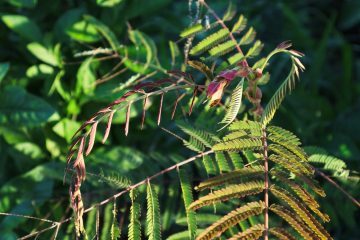
A guide to Anadenanthera peregrina, the oldest documented psychoactive plant tradition in South America.
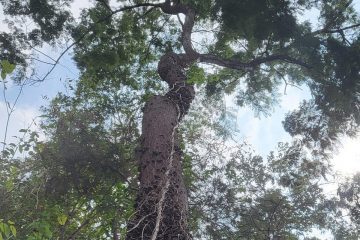
Yopo seeds come from Anadenanthera peregrina, a tall tree that grows across the savannahs of Venezuela, Colombia and Brazil. Indigenous peoples have ground these seeds into ceremonial snuff for thousands of years, which is why researchers now call the plant "ayahuasca's grandfather".
This guide covers what yopo seeds are, where the nickname comes from, what sets them apart from cebil and vilca, why safety matters so much, and how growers germinate the tree at home.
Interest in yopo seeds has grown quickly over the past year. Most of that attention comes from people who already know ayahuasca and want to understand where the older tradition began. Because reliable information is scattered across archaeology papers and forum threads, we pulled the essentials together in one place.
What are yopo seeds?
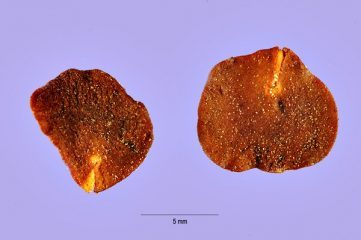
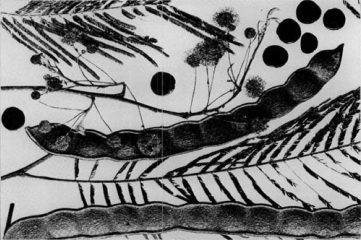
Yopo seeds are the flat, dark brown beans inside the curved pods of Anadenanthera peregrina. The tree belongs to the legume family, so the pods look a lot like oversized bean pods. Each pod holds several thin, disc-shaped seeds roughly the size of a coin.
The tree itself reaches up to 20 metres in open savannah. Moreover, it tolerates poor soil and long dry seasons, which explains its wide range across northern South America and the Caribbean islands. Botanists list it under several regional names, including yopo, jopo, cohoba and parica.
| Botanical name | Anadenanthera peregrina |
| Family | Fabaceae (legumes) |
| Native range | Venezuela, Colombia, Brazil, Guyana, the Caribbean |
| Common names | Yopo, jopo, cohoba, parica, niopo |
| Traditional use | Ceremonial snuff, prepared with an alkaline ash or lime |
| Main alkaloid | Bufotenine, with traces of DMT and 5-MeO-DMT |
| Sold as | Whole dried seeds, mainly for study and cultivation |
Why yopo seeds are called ayahuasca's grandfather
The nickname is not marketing. It comes from the archaeological record, and the dates are hard to argue with.
Archaeologists working at Inca Cueva in northwest Argentina found smoking pipes containing Anadenanthera residue dated to roughly 2000 BCE. In other words, people were using these seeds around four thousand years ago. By comparison, the oldest confirmed ayahuasca preparation is a ritual bundle from Bolivia dated to about 1000 CE. Yopo therefore predates the brew by roughly three millennia.
That gap is why the Australian Psychedelic Society and several researchers describe yopo as the grandfather of the ayahuasca tradition. The two are not the same plant, and they are not used the same way. Nevertheless, they belong to the same family of tryptamine-based practices, and the snuff came first.
Columbus's crew also recorded the practice. During the second voyage to Hispaniola, Spanish chroniclers described Taíno ceremonies using a powder they called cohoba. Consequently, yopo appears in European writing earlier than almost any other South American plant tradition.

Yopo, cebil and vilca: what is the difference?
Shoppers mix these three names up constantly, and vendors do not always help. In fact, two different species sit behind the labels.
| Name | Species | Region | What to know |
|---|---|---|---|
| Yopo | Anadenanthera peregrina | Orinoco basin, Amazon, Caribbean | The seed most often sold as yopo. Flat, round and dark. |
| Cebil | Anadenanthera colubrina var. cebil | Argentina, Bolivia, Paraguay | A separate species with a longer pod. Often confused with yopo. |
| Vilca | Anadenanthera colubrina | Andean valleys, Peru, Bolivia | The Quechua name for cebil. Same tree, different language. |
Yopo seeds | Anadenanthera peregrina
 Yopo (Anadenanthera peregrina) seeds to create a Cohoba snuff or grow a Yopo tree at home. The se...
Simply put, vilca and cebil are two names for one species, whereas yopo is a genuinely different tree. If a listing says "yopo (cebil)", the vendor is guessing. Ask which species you are buying before you order anywhere.
What is inside an Anadenanthera seed?
The chemistry surprises most people. Ayahuasca gets its effect from DMT, so newcomers assume yopo works the same way. However, the dominant alkaloid in yopo seeds is bufotenine, also written as 5-HO-DMT. DMT and 5-MeO-DMT appear only in small traces, according to the plant profile published by ICEERS, the Spanish research and drug-policy foundation.
Bufotenine behaves differently from DMT in the body. It affects blood pressure and it commonly causes nausea, so traditional ceremonies treat purging as part of the ritual rather than as a side effect. As a result, the experience described in ethnographic reports looks nothing like a mushroom experience. Anyone comparing the two should read our guide to ayahuasca history, ingredients and safety first for context.
Important: bufotenine is not a gentle molecule. Reported effects include sharp rises in blood pressure, heavy nausea and intense disorientation. Combining Anadenanthera material with MAO inhibitors, including ayahuasca or pharmaceutical MAOIs, is specifically not recommended.
How yopo seeds are traditionally used
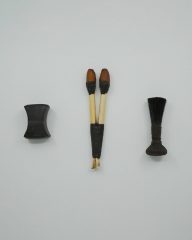
Traditional use centres on snuff, never on eating the raw seed. Shamans toast the seeds, grind them, and mix the powder with an alkaline material such as wood ash or slaked lime from burnt shells. Afterwards, the blend is blown into the nostrils through a hollow tube.
Those tubes have names worth knowing. A tepi is the two-person pipe used when one participant administers to another. A kuripe is the shorter self-applicator shaped like a V. Both tools also show up in the Amazonian tobacco snuff tradition known as rapé, which explains why European suppliers often stock them side by side.
The alkaline step is the part beginners get wrong most often. Community forums are full of contradictory ratios, and the advice ranges wildly from source to source. We are working on a separate article that maps those claims against the published literature, because a single blog paragraph cannot settle it responsibly.
Ritual context matters here as much as chemistry does. Indigenous ceremonies place the snuff inside song, fasting and a designated leader. If you are curious about that framing in a broader sense, our article on shamanism and magic mushrooms covers how ritual structure shapes an experience, and our piece on turning a session into a ceremony takes the same idea into a modern setting.
Safety first: who should avoid this plant
This is the section we would rather you read twice. Yopo seeds carry risks that many online listings never mention.
Do not use if pregnant or trying to conceive. A 2024 review in the journal Plants documents abortifacient use of Anadenanthera seeds in traditional medicine. That is a serious, documented reproductive risk.
Beyond pregnancy, several groups face clear cardiovascular and psychiatric risk. Therefore, treat the following as hard exclusions rather than as suggestions.
Legal status differs from country to country and it changes without notice. Consequently, check the current rules in your own jurisdiction before you order any ethnobotanical seed, and do not rely on a shop page for that answer.
Growing Anadenanthera peregrina from yopo seeds
Most of our customers buy yopo seeds to grow the tree, and that is genuinely rewarding. The seedlings look like delicate mimosa relatives, and the tree handles container life well for its first few years.
1
Scarify and soak
Scarify and soak
The seed coat is hard. First, nick the edge gently with a nail file or fine sandpaper. Next, soak the seeds in warm water for 12 to 24 hours until they swell noticeably. Discard any that float after a full soak, because they are usually not viable.
2
Sow shallow in free-draining mix
Sow shallow in free-draining mix
Use a sandy, well-drained mix rather than rich potting soil. Sow each seed about one centimetre deep. Moreover, keep the medium damp but never soggy, since seedlings rot fast in heavy compost.
3
Keep it warm and bright
Keep it warm and bright
Aim for 25 to 30 °C and plenty of light. A heat mat helps in northern Europe, and a propagator lid holds humidity during the first week. Germination usually starts within one to three weeks, although some seeds take longer.
Tip: sow more seeds than you need. Germination rates vary between batches because these are wild-harvested seeds, not commercial hybrids.
4
Overwinter indoors
Overwinter indoors
The tree is frost-tender. Therefore, bring pots inside before the first cold nights and reduce watering through winter. In a bright indoor spot the young tree keeps its leaves and resumes growth in spring.
Where this plant fits on the ethnobotanical shelf
Yopo sits in the same category as other traditional seeds and cacti rather than with grow kits. If you are exploring that shelf, a few of our guides pair naturally with this one.
In general, people who research yopo seeds carefully end up more interested in the botany and the archaeology than in the snuff itself. That curiosity is exactly what we want to support with accurate information.
Note: If you are suffering from a mental illness and are curious about using psilocybin or any other psychedelic therapy, please consult one of the relevant medical authorities first. Do not self-prescribe — it is vital to have the right support and guidance when using psychedelics as medicine.
Want to grow ayahuasca's grandfather yourself? Browse our yopo seeds (Anadenanthera peregrina) and start your own tree.


September 8, 2026