
You have no items in your shopping cart.

Damiana: The Ancient Love Herb — History, Effects & How to Use Turnera diffusa
Posted under: Ethnobotanicals & Natural Highs
Ethnobotanicals & Natural Highs · 8 min read
Damiana herb effects have fascinated plant lovers and herbalists for centuries. This fragrant shrub — Turnera diffusa — grows wild across Mexico and Central America, and people have been brewing it into teas, smoking it in pipes, and adding it to liqueurs since pre-Columbian times.
In this guide you will discover what damiana is, how cultures across the world have used it, what current research says about damiana herb effects, how to prepare it, and what to watch out for.
What Is Damiana? Meet Turnera diffusa
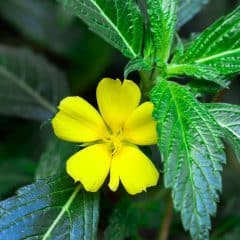
Damiana belongs to the Passifloraceae family — the same family as the passion flower. The shrub thrives in dry, rocky soils across south Texas, Mexico, the Caribbean, and Central and South America. It grows to about 60 cm tall and produces small, bright yellow flowers with a distinctive aromatic scent that sits somewhere between camomile and tobacco.
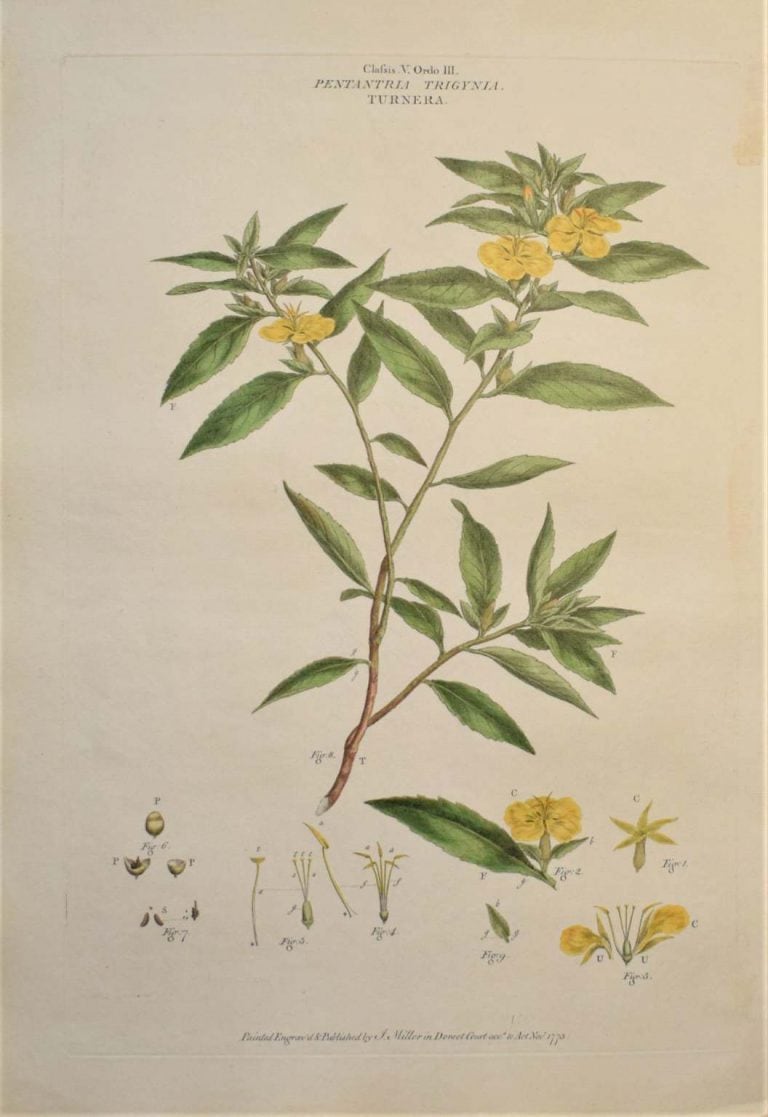
The genus Turnera counts around 135 recognised species. Of these, Turnera diffusa — formerly listed as Turnera aphrodisiaca — stands out as the most studied and commercially traded. Herbalists and researchers focus on the leaves and stems, which carry the plant’s active compounds. Specifically, understanding damiana herb effects starts with its chemistry: the leaves hold flavonoids (apigenin, acacetin, pinocembrin), caffeine, arbutine, terpenoids, and essential oils that together create its aromatic character and reported properties.
A Deep History: From the Aztecs to the Margarita
Damiana’s role as a plant medicine predates written history. By the time Spanish colonists arrived in Mesoamerica, indigenous peoples — including the Maya and the Aztec — had already spent generations preparing damiana-leaf tisanes as tonics for vitality and nervous-system balance. The Maya reportedly drank it to address “giddiness and loss of balance,” while across the region people steeped it in honey water and shared it as a traditional love tonic.
Moreover, the plant entered European awareness through colonial-era botanical records. Older nomenclature used the Latin epithet aphrodisiaca, which reflects the reputation it carried for centuries. By the nineteenth century, damiana appeared in American and British herbal pharmacopoeias as a nervous and reproductive system tonic. In Mexico, furthermore, it remains culturally rooted to this day: producers in Baja California still craft a traditional licor de damiana, and some historians credit the herb as an original ingredient in the Margarita cocktail.
Damiana Herb Effects: What Does the Science Say?
Most research on damiana has taken place in preclinical settings — cell-based and animal studies. As a result, findings remain preliminary and researchers cannot yet directly extrapolate them to humans. Nevertheless, the body of evidence continues to grow, and the results are worth understanding.
Pro-sexual effects in animal studies
Several peer-reviewed studies have investigated the damiana herb effects that traditional cultures most commonly attributed to sexuality and vitality. For instance, a 2009 study in the Journal of Ethnopharmacology found that an aqueous extract of Turnera diffusa significantly raised the percentage of sexually exhausted male rats that resumed ejaculatory behaviour, producing results comparable to yohimbine. The researchers pointed to caffeine, arbutine, and flavonoids as the key active compounds. In addition, a study in Phytomedicine showed that damiana facilitated male sexual behaviour via the nitric oxide pathway — the same pathway that sildenafil targets — at a dose of 10 mg/kg. Earlier, in vitro work in Planta Medica demonstrated that damiana leaf preparations could inhibit PDE-5 enzyme activity under laboratory conditions.
Importantly, animal study results do not automatically translate to comparable effects in humans. To date, no large-scale controlled human trials have confirmed these specific damiana herb effects.
Antioxidant and metabolic properties
Beyond sexuality, researchers have also explored other damiana herb effects. A 2023 review in Pharmaceuticals (MDPI) drew on 92 publications covering the genus Turnera and identified antioxidant, hepatoprotective, neuroprotective, hypoglycaemic, and aphrodisiac activities as the most consistently reported findings. Furthermore, a 2025 study in the Journal of Dietary Supplements reported that a T. diffusa leaf extract lowered lipid accumulation in adipocytes by 55.3% and raised glucose uptake in muscle cells by 91.3% under laboratory conditions — results that suggest possible metabolic interest, though again preclinical.
Separately, a 2022 study in Plants (MDPI) showed that damiana extract protected skin cells against UVB-induced oxidative stress by activating the AP-1 and Nrf2/ARE signalling pathways — an unexpected finding that points to the broad range of bioactivities this plant carries.
Damiana herb effects on the nervous system and mood
Traditional herbalists — including those citing the British Herbal Pharmacopoeia — describe damiana as a “nervous trophorestorative.” In other words, it works over time to tone and balance the nervous system rather than producing acute sedation. Herbalists record it for use in nervous exhaustion, fatigue, and mild low mood. Additionally, flavonoids such as apigenin — which animal studies identify as an antinociceptive agent in damiana — interact with GABA receptors in ways that may support a calming effect, though human trials in this area remain limited.
Note on health claims: Under EU food supplement regulations, producers may not market damiana products with specific medical or therapeutic claims. The traditional use information on this page serves historical and ethnobotanical purposes only. If you have a health concern, please consult a qualified healthcare professional.
How to Use Damiana — Preparation, Dosage & Damiana Herb Effects
Damiana works well in several preparations. Throughout its long history, tea has remained the most common method, since hot water efficiently extracts the water-soluble compounds including flavonoids and caffeine.
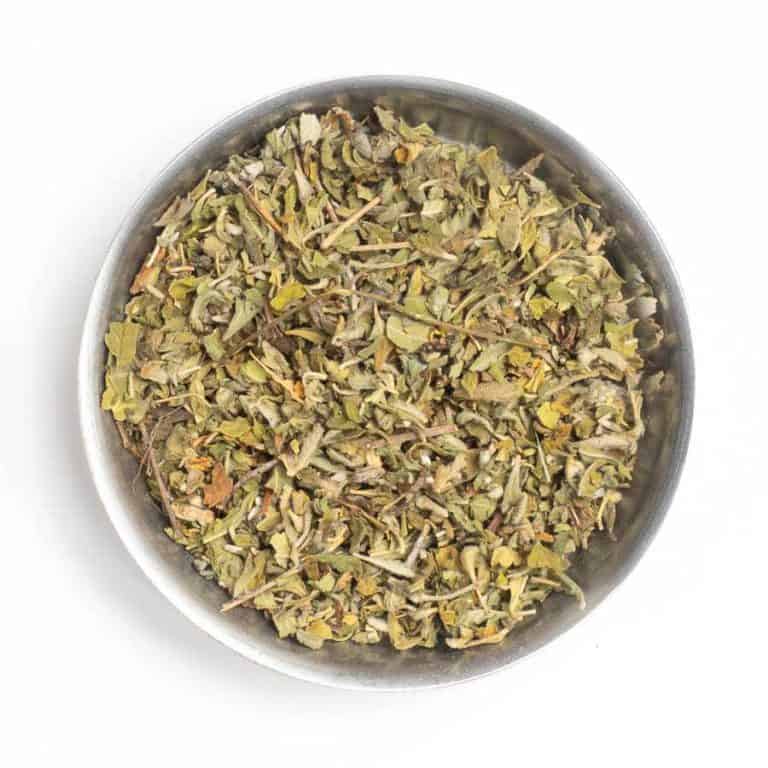
Damiana tea (shredded or powder)
1Measure 10–15 grams (about 3 teaspoons) of dried damiana leaf.
2Add to 1 litre of freshly boiled water.
3Cover and steep for 15 minutes.
4Strain and drink. Most people notice effects within 30–45 minutes.
For a lighter cup, use 1 teaspoon per cup of hot water. Adding honey or mixing with fruit juice nicely complements the slightly bitter, aromatic flavour. Traditionally, people have also smoked damiana alone or blended with other herbs.
Damiana | Turnera diffusa | 80 grams
 Damiana works as a relaxant for the muscles, improves blood circulation and works stimulating for...
Damiana extract (20x concentrate)
For those who want a more concentrated experience, the 20x extract delivers 20 times the potency of raw leaf by weight, so you need far smaller quantities to notice damiana herb effects.
1Use 0.5–1 gram of extract per litre of boiling water.
2Steep for 5 minutes — shorter than raw leaf.
3Most users feel the effects within 45 minutes.
You can also stir the extract directly into juice or fruit. Many users combine it with Blue Lotus to create a more layered, aromatic herbal blend.
Damiana extract | Turnera diffusa | 20x - 3 g
 Damiana extract 20x is derived from the leaves of Turnera diffusa, a small aromatic s...
Damiana and Other Ethnobotanical Herbs
Damiana sits in good company within the broader world of plant medicines. Indeed, it shares overlapping traditional uses with several other well-known ethnobotanical herbs:
Precautions and Practical Notes
Avoid damiana if you have liver or urinary tract conditions. High doses can produce a mild laxative effect. Do not use damiana during pregnancy. If you take medication — particularly for blood sugar or hormonal conditions — consult a physician before use. This product does not aim to diagnose, treat, cure, or prevent any disease.
Generally speaking, damiana has a long traditional history of use and most people tolerate it well at standard tea-preparation doses. However, because the herb contains small amounts of caffeine, caffeine-sensitive individuals should take note. As with all herbs, consistent long-term use at high doses is not advisable without professional guidance.
Quick Reference: Damiana (Turnera diffusa)
| Botanical name | Turnera diffusa Willd. ex Schult. |
| Family | Passifloraceae (passion flower family) |
| Origin | South Texas, Mexico, Central America, Caribbean |
| Parts used | Dried leaves and stems |
| Key compounds | Flavonoids (apigenin, acacetin, pinocembrin), caffeine, arbutine, essential oils, terpenoids |
| Reported damiana herb effects | Nervous tonic, relaxant, digestive support, traditionally used as a love herb |
| Available forms | Shredded leaf, powder, 20x extract |
| Typical tea dose | 10–15 g leaf per litre; 0.5–1 g extract per litre |
| Caution | Avoid with liver or urinary tract conditions; not for use in pregnancy |
Ready to explore? Browse our damiana and love herbs collection — sourced by Herbs of the Gods since 1999.
Further Reading & Research
For those who want to dive deeper into the science behind damiana herb effects, the following peer-reviewed studies offer a solid starting point:


May 3, 2026