
You have no items in your shopping cart.

Magic Mushroom Spore Prints – The Long-Term Spore Archive
Every spore print in our collection is made from freshly matured fruiting bodies, produced under sterile laboratory conditions and verified for viability before release. We keep stock levels intentionally small so every print you receive is fresh — no mass-produced leftovers, no guesswork. Store them correctly and they'll last for years, ready whenever you need them.
-

A+ Albino spore print
€22.50 -

A-Strain spore print
€22.50 -

Amazonas spore print
€22.50 -

B+ spore print
€22.50 -

Cambodia spore print
€22.50 -

Ecuador spore print
€22.50 -

Golden Teacher spore print
€22.50 -

Hawaii - Panaeolus cyanescens spore print
€22.00 -

Mazatapec spore print
€22.50 -

McKennaii spore print
€22.50 -

Mexican 'Dutch King' spore print
€22.50 -

Mexican 'Escondido' spore print
€22.50 -

Mexican spore print
€22.50 -

PES Hawaii spore print
€22.50 -

Thai 'Ban Hua' spore print
€22.50 -

Thai 'Koh Samui' spore print
€22.50
Want to know why serious collectors keep coming back to spore prints? Here's what makes them different.
What Makes a Spore Print Special
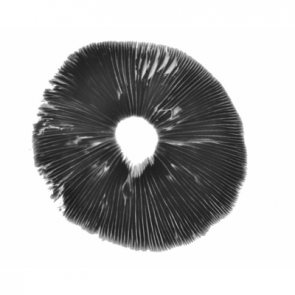
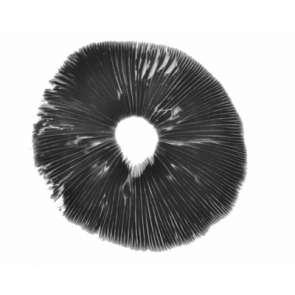
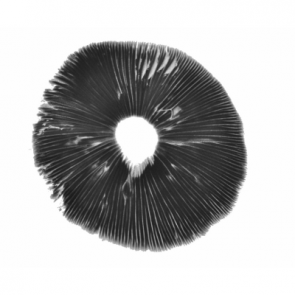
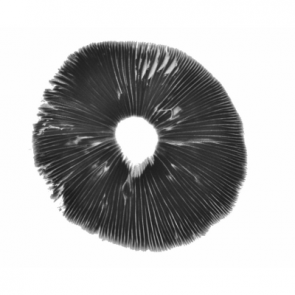
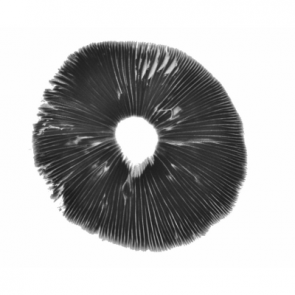
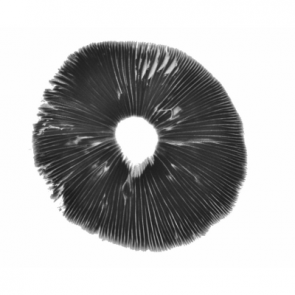
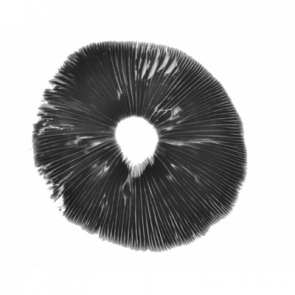
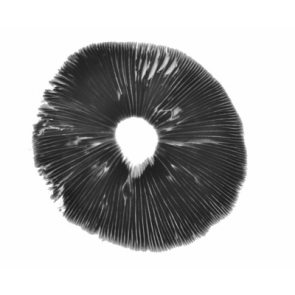
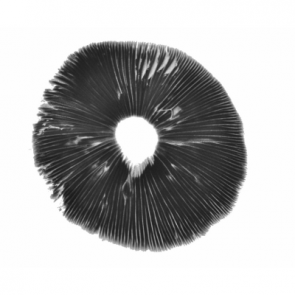
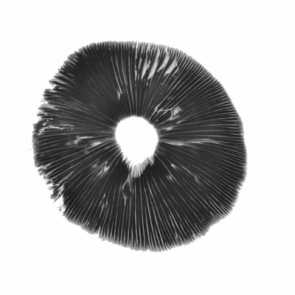
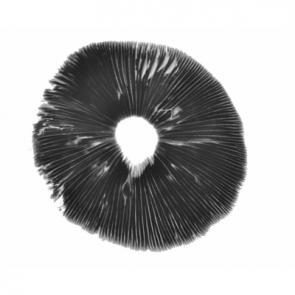
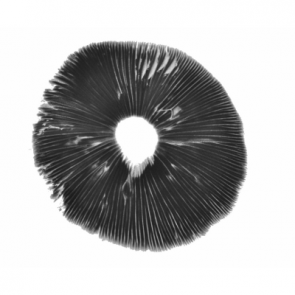
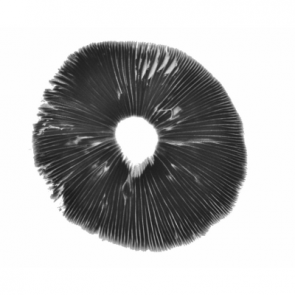
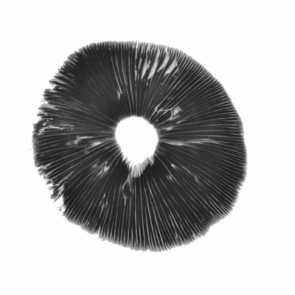
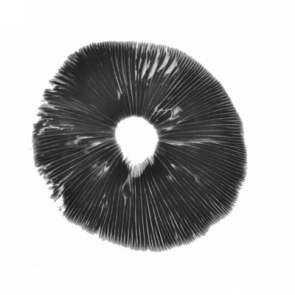
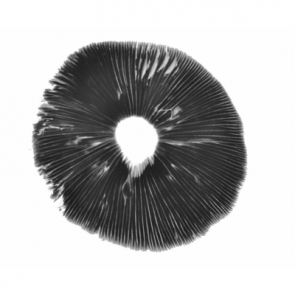
A spore print is the most direct form a spore can take. When a mature mushroom cap is placed on a sterile surface, it deposits millions of spores in a natural pattern — dry, concentrated and chemically stable. No liquid, no additives, no plastic. Just pure spore material exactly as nature releases it.
- Years of shelf life — dry spores stored correctly can remain viable for 5–10 years or more. That's a fundamentally different proposition from any liquid format.
- No refrigeration needed — store your prints in a cool, dark, dry place with a silica gel pack and they'll outlast anything in your fridge.
- Compact and lightweight — a print takes up almost no space. A full strain library fits in a single small box.
- Ideal for microscopy — scrape a tiny amount onto a slide and you have immediate, dense spore material ready for observation. No dilution, no liquid to manage.
- The starting point for everything else — prints are the source material for spore syringes, spore vials and liquid cultures. Once you have a print, you can make any other format yourself.
- Ships flat and discreet — no needles, no liquid, no bulk. Prints travel exceptionally well.
Spore Prints vs Spore Vials — Which Should You Choose?
Both formats have their place. A spore vial is ready to use immediately — draw up a syringe and you're working. A spore print is the better choice when you want to archive a strain long-term, study spore morphology up close, or create your own spore solution from scratch. Many serious researchers keep both: prints for the collection, vials for active work.
How to Use a Spore Print
- For microscopy: use a sterile scalpel or razor blade to scrape a small amount of spore material onto a glass slide. Add a drop of sterile water, apply a cover slip and observe.
- To make a spore solution: dissolve a small scraping in sterile water inside a syringe or vial using a sterile needle and laminar airflow or still air box.
- To make liquid culture: transfer spore material into a sterile nutrient broth and allow the mycelium to establish before use.
Want a full step-by-step guide? We wrote a detailed blog post covering all four methods — microscopy, agar, liquid culture and grain inoculation. Read: How to Use a Spore Print →
How to Store Your Spore Prints
- Keep prints dry — moisture is the enemy. Include a silica gel desiccant pack in your storage container.
- Store in a sealed, airtight container away from light and heat.
- Room temperature or a cool dark cupboard is fine — no need for the fridge.
- Label everything with strain name and date. Future you will be grateful.
Two Species, One Collection
Our spore print collection covers two distinct species. Psilocybe cubensis is the most widely studied mushroom in mycology, available here in a wide range of strains — each with its own spore characteristics and mycelium growth patterns under the microscope. Panaeolus cyanescens (also known as Hawaiian) is a completely different species with noticeably smaller spores and distinct germination behaviour, making it a fascinating addition to any comparative research collection. Side by side under the microscope, the two species look nothing alike.
Which Strain Should You Pick?
New to strain comparison? Start with a Psilocybe cubensis classic like Golden Teacher, B+ or Mazatapec. For more distinctive morphology within the cubensis family, McKennaii, A+ Albino and Ecuador offer interesting variation for comparative study. Want to go further? Add a Panaeolus cyanescens print to see how dramatically spore characteristics differ between species.
Want to Expand Your Collection?
Combine prints with our Spore Vials for active microscopy work, or use a print as the starting point to create your own Liquid Culture. If you want multiple strains at once, check out our Spore Packs — available with 3 or 5 vials at a reduced price, ideal for building a reference library without paying full price for each strain separately.
Shipping & Quality
We ship from Amsterdam. Every print is made in small batches from freshly matured fruiting bodies under sterile conditions and verified before it leaves our lab. Spore prints contain no psilocybin or other active compounds and are legal to ship within the EU for microscopy and research purposes. Prints are packaged flat, protected and discreet.


