You have no items in your shopping cart.



Blue Magnolia Liquid Culture - Cloud920
The Blue Magnolia liquid culture is a Psilocybe cubensis isolate first collected from the wild in Mississippi in 2011 — distinguished by intense blue bruising on handling, full-canopy fruiting clusters and a notable place in cubensis genetic research as one of the founding populations...
Availability: In stock
€19.95
Related


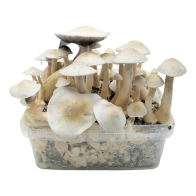
Check items to add to the cart or select all
Product Description
Details
About the Blue Magnolia liquid culture
The Blue Magnolia liquid culture is a Psilocybe cubensis isolate first collected from the wild in Mississippi in 2011 — distinguished by intense blue bruising on handling, full-canopy fruiting clusters and a notable place in cubensis genetic research as one of the founding populations identified in a study on Australian cubensis cultivar origins. Cloud920 isolated this strain under lab conditions and classifies it within its Wild Origin series — strains collected from natural habitats that retain the full range of regional genetic traits. Part of the .
Origin and natural habitat of the Blue Magnolia strain
Blue Magnolia's story begins in wild Mississippi — collected near a horse ranch in the state, growing on wood chips and horse manure, with a photograph taken in 2011 by an associate of the mycologist known as Mycotek, who subsequently gifted spores into the cultivation community. Isolations were later made by HappyDemon from this same lineage. The collection environment — horse manure-enriched wood chips in a temperate-humid Southern US setting — is characteristic of the ecological conditions that support wild P. cubensis growth across the Gulf South: warm summers, high ambient humidity and readily available equine and bovine substrate. Mississippi's position within the humid subtropical climate zone (average summer temperatures 27–32 °C, annual rainfall 1,300–1,600 mm) creates natural conditions well-suited to wild cubensis establishment. This makes Blue Magnolia one of the geographically closest Wild Origin strains to the original documented natural range of P. cubensis in North America. Some community research suggests possible genetic influence from Blue Meanie or Penis Envy lineages in Blue Magnolia's background — potentially contributing to its pronounced bruising response and above-average potency reports. Cloud920 follows the master table classification and frames this strain on its documented natural Mississippi origin, independent of unresolved lineage questions.
Visual signature of Blue Magnolia
Blue Magnolia produces broad, rounded-to-convex caps measuring 3–5 cm in diameter, though large caps have been documented by community growers. Cap colour ranges from pale bluish-toned to golden-brown — the subtle blue hue sets it visually apart from most other P. cubensis isolates at equivalent maturity. Stems are thick, dense and meaty, white to bluish-gray, with intense blue bruising on contact — among the most pronounced bruising responses in Cloud920's Wild Origin range. Spore prints are dark purple-brown to dark brown. The fruiting pattern tends toward dense clusters and full canopy formations, yielding visually striking material for microscopy observation. For a Wild Origin comparison from a North American subtropical habitat with a contrasting visual profile, see the .
Blue Magnolia potency profile
No independent laboratory data for Blue Magnolia has been published through Oakland Hyphae Psilocybin Cup records or peer-reviewed literature. Community reports describe potency as above-average — some growers compare it to Penis Envy lineage strains, an assessment that is consistent with the strain's suspected multi-lineage background. These ratings should be treated as anecdotal. As with all P. cubensis strains, substrate composition, harvest timing and drying method are the primary determinants of measurable alkaloid concentration.
What you receive in your Cloud920 syringe
You receive one 10cc syringe of Cloud920 Blue Magnolia mycelium, packaged with a separately sealed sterile needle. The syringe contains QC-verified mycelium suspended in Cloud920's nutrient broth, produced in a lab-controlled environment with viability, sterility and morphology checks on every batch. For sterile inoculation accessories and lab tools compatible with this Wild Origin culture, visit our laboratory supplies section.
How to inoculate with this liquid culture
Cloud920 recommends 2–3 cc per small grain bag, 3–4 cc per medium bag and 4–5 cc per large bag. Blue Magnolia colonizes at a notably fast rate — community reports describe jars reaching readiness in approximately 18 days from spore inoculation, with liquid culture inoculations completing even faster. Fruiting temperature is reported around 21–23 °C for closely related variants. Store the syringe cool, dark and upright, and use within the shelf life printed on the label.
Microscopy and research use only
This Blue Magnolia liquid culture is sold for microscopy and mycological research. Cultivation of psilocybin-producing fungi is regulated or prohibited in many jurisdictions — verify your local legislation before use.
Frequently asked questions
Why is Blue Magnolia classified as Wild Origin rather than Hybrid Fusion?
Cloud920's master table classifies Blue Magnolia as Wild Origin based on its documented natural collection: a wild Mississippi isolate first photographed in 2011 and introduced to cultivation through community spore-gifting. While some community sources note possible Blue Meanie or Penis Envy genetic influence in its background, these lineage connections are unverified. Cloud920 applies its Wild Origin classification on the basis of the confirmed natural habitat origin rather than speculative parentage claims.
How is a liquid culture different from a spore syringe?
A spore syringe contains spores that must first germinate before mycelium can form. A liquid culture already contains live, expanding mycelium — shortening colonization by roughly two weeks and reducing contamination risk.
How should I store this Cloud920 syringe?
Refrigerate at 2–8 °C, upright, in the original sleeve. Keep away from direct light and freezing temperatures. Use within the shelf life printed on the label.
Is this Cloud920 culture lab-verified?
Yes — every Cloud920 batch is produced in a lab-controlled environment with QC verification on viability, sterility and morphology.
Additional Info
Additional Info
| Productcode | LCS.C920-PSCU-BMAG |
|---|---|
| Weight (KG) | 0.0290 |
| Form | Culture Syringe |
| Contents (ml) | 10ml |
| Mushroom Strain | Blue Magnolia |
| Species | Psilocybe cubensis |
| Potency | Average / High |
| Difficulty | Easy |
| Origin | Geographic |
Bundle Promotions
-
Blue Magnolia LC + Grow Bag Combo
 X1Blue Magnolia Liquid Culture Syringe – Cloud920+
 X1All-in-One Mushroom Grow Bag 2000ml - Cloud920©
€49.45 €46.98
5% discount.
-€2.47 discount on buying this offer.
You may also be interested in the following products: