You have no items in your shopping cart.



Blue Magnolia — Spore Swab Cloud920®
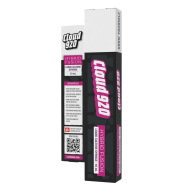
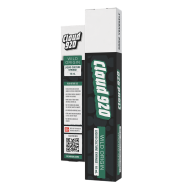
The Blue Magnolia spore swab gives you access to one of the most distinctive wild-origin cubensis strains in the Cloud920® collection. First collected in 2011 near the Mississippi River, Blue Magnolia is known for its massive fruiting bodies, intense blue bruising and lighter-than-average spore deposits — making a pre-loaded swab the most practical way to capture and transfer its genetics. Two individually sealed swabs, ready for agar work and microscopy.
Availability: In stock
Regular Price: €16.50
Special Price €14.90
Product Description
Details
Blue Magnolia — Origin & Genetics
Cloud920® Genetics: Wild Origin
Blue Magnolia has one of the more specific and verifiable origin stories in modern cubensis cultivation. In 2011, community mycologists Doc and Mycotek collected wild Psilocybe cubensis specimens growing on bovine and equine dung near a horse ranch in the Mississippi River region of the southern United States. The enriched Gulf Coast soils and warm, humid conditions of that region produced something clearly different from the standard cubensis lines circulating at the time: massive fruiting bodies with dense stems, unusually intense blue bruising, and a genetics profile that responded well to isolation work.
That original Mississippi collection was stabilised over subsequent generations by the community, producing what is now referred to as Blue Magnolia Classic — the foundation of the Blue Magnolia line. From there, further isolations followed: Blue Magnolia Rust, with its distinctive rust-orange caps, and other community variants. What ties them all together is the wild-collected genetic base from that 2011 Mississippi find — a remider that the cubensis world still has surprises to offer when you look in the right place.
Why a Spore Swab Is the Smart Choice for Blue Magnolia
Blue Magnolia is documented as a light spore emitter. Cultivators who have worked with it report that caps tend to stay partially veiled or open slowly, and that spore deposits on foil are noticeably sparser than what you get from a prolific printer like JMF or B+. That pattern is consistent across the Blue Magnolia line — the genetics that produce such dense, meaty fruits do not seem to invest equally in spore output.
A pre-loaded spore swab removes the uncertainty. Each swab is loaded directly from gill tissue under sterile conditions, giving you a reliable, workable amount of Blue Magnolia spore material on every tip — no guessing how dense the deposit is, no risk of scraping an almost-empty print. For a strain with this kind of growth potential, getting the agar work started cleanly from a controlled spore source is the right way to do it.
Morphology & Spore Characteristics
- Species: Psilocybe cubensis, wild Mississippi collection (2011)
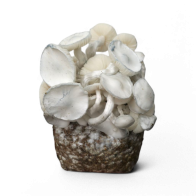
- Cap: Large, 50–100+ mm diameter. Convex to broadly convex, becoming nearly flat at full maturity. Pale cream to off-white when young, developing light golden-brown tones toward the centre with age. Surface smooth and slightly tacky when humid
- Stem: Thick and dense, 80–150 mm. White to pale cream. Bruises an intense, deep blue on contact — one of the most vivid bruising reactions in the cubensis family, and a consistent trait across the Blue Magnolia line
- Spores: Purple-brown in mass, standard cubensis morphology. Subellipsoid with visible germ pore at 1000× magnification. Deposits on foil are lighter and less dense than most standard cubensis strains
- Spore production: Low to moderate. Blue Magnolia is a light spore emitter — prints are possible but sparse. Spore swabs are the recommended collection method for consistent results
Under 400–1000× magnification, Blue Magnolia spores follow standard cubensis morphology: smooth-walled ellipsoids with a clear germ pore and the characteristic purple-brown pigmentation. What sets the microscopy experience apart is the contrast between what you see under the lens — typical, well-formed spores — and the exceptional fruit morphology this strain produces above ground. Side by side with a Mississippi wild-type reference, Blue Magnolia shows stable, consistent spore structure across generations of cultivation, a sign of well-preserved wild genetics.
What Makes Blue Magnolia Different from Other Cubensis
Most cubensis strains you encounter in cultivation have lab or community origins — isolations, crosses, or selections made at someone's workbench. Blue Magnolia is different: it was found growing wild, in its own environment, on natural substrate, before anyone touched it. That wild-origin background gives it a genetic profile shaped by real ecological pressure rather than deliberate selection, and that shows in its growth: robust, vigorous, and unusually large in the fruit department.
The intense blue bruising is also worth noting. Across the cubensis family, bruising intensity varies considerably and is often used informally as a proxy for the presence of psilocybin-containing compounds. Blue Magnolia consistently ranks among the strongest bruisers in the cubensis world — the stems turn a deep, vivid blue almost immediately on contact. For anyone studying bruising reactions comparatively across strains, Blue Magnolia is one of the most visually clear examples you can work with.
What's in the Pack
- 2× sterile cotton spore swabs, individually sealed
- Each swab is pre-loaded with Psilocybe cubensis Blue Magnolia spores collected directly from gill tissue
- Ready to use — no syringe, no liquid, no preparation needed
Spore swabs contain no psilocybin or psilocin and are sold exclusively for microscopy and taxonomic research purposes.
How to Use This Spore Swab
Work in a still-air box or under a laminar flow hood. Open the sterile wrapper, hold the swab by the handle, and streak the tip across a prepared agar plate in a zigzag pattern. Because Blue Magnolia is a light spore emitter, use a confident, even stroke across the full surface of the plate — do not press hard, but cover the plate fully to ensure good spore distribution.
Seal your plate immediately with Parafilm, label with strain name and date, and incubate at 21–23 °C. Expect germination within 5–14 days. Run at least two plates per swab to give yourself a margin — with lighter spore loads, having backup plates is good practice.
New to spore swabs? Read our full step-by-step spore swab guide →
Recommended Supplies
- Petri dishes — run 2–3 plates per swab to account for Blue Magnolia's lighter spore load
- Additional Info
Additional Info
| Productcode | MCS.SPSWA.C920-BMAG |
|---|---|
| Weight (KG) | 0.0050 |
| Form | Swab |
| Contents (ml) | No |
| Mushroom Strain | Blue Magnolia |
| Species | Psilocybe cubensis |
| Potency | High |
| Difficulty | Moderate |
| Origin | No |
You may also be interested in the following products: