You have no items in your shopping cart.



Mexican Liquid Culture - Cloud920
The Mexican cubensis liquid culture is a Psilocybe cubensis isolate tracing its roots to wild dung-inhabiting populations across Mexico's subtropical regions — one of the longest-standing wild-origin strains in cultivation, reflecting geographic diversity from states including Oaxaca and...
Availability: In stock
€19.95
Related



Check items to add to the cart or select all
Product Description
Details
About the Mexican cubensis liquid culture
The Mexican cubensis liquid culture is a Psilocybe cubensis isolate tracing its roots to wild dung-inhabiting populations across Mexico's subtropical regions — one of the longest-standing wild-origin strains in cultivation, reflecting geographic diversity from states including Oaxaca and Chiapas. Cloud920 isolated this strain under lab conditions and classifies it within its Wild Origin series — strains collected from natural habitats that retain the full range of regional genetic traits. Part of the .
Origin and natural habitat of the Mexican cubensis strain
Psilocybe cubensis occurs naturally across Mexico's warm, humid lowlands — a broad band stretching from the Gulf Coast through the Pacific foothills, encompassing the states of Oaxaca, Chiapas, Veracruz and Tabasco. In these regions, the fungus colonizes cattle and horse dung left in open pastureland during and after the rainy season, when temperatures hold between 22 and 28 °C and relative humidity stays consistently above 80%. The Mexican cubensis isolates traded in cultivation communities since the early 2000s reflect this dung-loving, subtropical origin. The specific isolator of the commercial strain is unknown, but the geographic source is well-established: wild Mexican populations on bovine dung in cattle-grazing ecosystems that have supported P. cubensis for centuries. Indigenous groups in the region — including the Chol, Lacandon Maya and Mazatecs of Oaxaca — have documented historical familiarity with psilocybin-producing fungi found in these same agricultural landscapes. An important distinction: this P. cubensis wild isolate should not be confused with Psilocybe mexicana, which is a distinct species that does not belong to the cubensis group.
What makes this Mexican cubensis culture distinctive
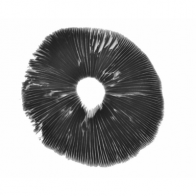
Mexican cubensis produces golden-brown caps — reddish-cinnamon when young — that flatten from a convex-umbonate shape to 2–8 cm in diameter with maturity. Stems are 4–15 cm long and 0.5–1.5 cm thick, white to yellowish. Bruising is light blue to bluish-green, and spore prints range from purple-brown to violet-black. Colonization proceeds at a medium pace typical of the species, with 3–5 reliable flushes from a single inoculation. Its Wild Origin value lies in being one of the reference populations from which later Mexican-origin crosses were developed — a strain that connects modern cultivation directly to subtropical Mexican grasslands and their natural genetic diversity. For a Wild Origin comparison from North America's Pacific Northwest forests, explore the .
Mexican cubensis potency profile
No strain-specific laboratory potency data for the Mexican cubensis isolate is available from the Oakland Hyphae Psilocybin Cup or peer-reviewed literature. This strain is generally considered moderate for the species — consistent with the Shroomery consensus that most P. cubensis isolates fall within a comparable potency band, and that substrate composition, harvest timing and drying protocol have a greater influence on the final result than strain genetics alone.
What you receive in your Cloud920 syringe
You receive one 10cc syringe of Cloud920 Mexican cubensis mycelium, pre-loaded with a sterile needle. The syringe contains QC-verified mycelium suspended in Cloud920's nutrient broth, produced in a lab-controlled environment with viability, sterility and morphology checks on every batch. For compatible lab tools and inoculation equipment, visit our laboratory supplies section.
How to inoculate with this liquid culture
Cloud920 recommends 2–3 cc per small grain bag, 3–4 cc per medium bag and 4–5 cc per large bag. Visible mycelial growth typically appears within 1–2 weeks under stable conditions, with full colonization of a small to medium bag completing in roughly one month at 22–26 °C. Store the syringe cool, dark and upright, and use within the shelf life on the label.
Microscopy and research use only
This Mexican cubensis liquid culture is sold for microscopy and mycological research. Cultivation of psilocybin-producing fungi is regulated or prohibited in many jurisdictions — verify your local legislation before use.
Frequently asked questions
Why is the Mexican cubensis classified as Wild Origin rather than Heritage?
Cloud920's Wild Origin classification reflects the strain's verifiable wild geographic source: cattle-grazing ecosystems in subtropical Mexico where P. cubensis grows naturally on bovine dung. Wild Origin strains are defined by this direct link to a natural collection habitat, in contrast to Heritage strains that have been shaped primarily by decades of human cultivation selection.
How is a liquid culture different from a spore syringe?
A spore syringe contains spores that must first germinate before mycelium can form. A liquid culture already contains live, expanding mycelium — shortening colonization by roughly two weeks and reducing contamination risk.
How should I store this Cloud920 syringe?
Refrigerate at 2–8 °C, upright, in the original sleeve. Keep away from direct light and freezing temperatures. Use within the shelf life printed on the label.
Why does this product say "for microscopy and mycological research"?
Cultivation of psilocybin-producing fungi is regulated or prohibited in many jurisdictions. This syringe is sold for microscopy and mycological research purposes — check your local legislation before use.
Is this Cloud920 culture lab-verified?
Yes — every Cloud920 batch is produced in a lab-controlled environment with QC verification on viability, sterility and morphology.
Additional Info
Additional Info
| Productcode | LCS.C920-PSCU-MEXI |
|---|---|
| Weight (KG) | 0.0290 |
| Form | Culture Syringe |
| Contents (ml) | 10ml |
| Mushroom Strain | Mexican |
| Species | Psilocybe cubensis |
| Potency | Average / High |
| Difficulty | Easy |
| Origin | Geographic |
Bundle Promotions
-
Mexican LC + All-in-One Grow Bag
 X1Mexican Cubensis Liquid Culture Syringe – Cloud920+
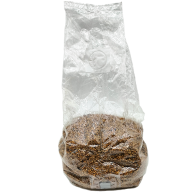
 X1All-in-One Mushroom Grow Bag 2000ml - Cloud920©
€49.45 €46.98
5% discount.
-€2.47 discount on buying this offer.
You may also be interested in the following products: