You have no items in your shopping cart.



Panaeolus cyanescens "Hawaii" Liquid Culture - Cloud920
The Panaeolus cyanescens Hawaii liquid culture belongs to a different genus from Psilocybe cubensis — Panaeolus (family Bolbitiaceae) — and is among the most potent psilocybin-producing mushrooms available as a liquid culture.
Availability: Out of stock
€19.95
Related



Check items to add to the cart or select all
Product Description
Details
About the Panaeolus cyanescens Hawaii liquid culture
The Panaeolus cyanescens Hawaii liquid culture belongs to a different genus from Psilocybe cubensis — Panaeolus (family Bolbitiaceae) — and is among the most potent psilocybin-producing mushrooms available as a liquid culture. Lab analysis records 0.7% psilocybin and 0.1% psilocin on dry weight; community consensus rates experienced potency at 2-4× cubensis. The Hawaii isolate is immediately distinguished from all Psilocybe by its jet-black spore print. Formerly marketed as Copelandia — a deprecated synonym. Cloud920 supplies this Panaeolus cyanescens Hawaii liquid culture as a 10cc syringe. See the liquid culture syringe range.
Cloud920 classifies this Panaeolus cyanescens isolate within its Wild Origin series — strains collected from natural habitats that retain the full range of regional genetic traits.
The species — Panaeolus cyanescens
Described by Saccardo in 1887 as Copelandia cyanescens and reclassified by Singer in 1951, this species is in a completely different evolutionary lineage from any Psilocybe. Caps are small (1.5-4 cm), conical to bell-shaped, fading from light brown to off-white or tan when dry. Stems are slender (2-4 mm, 5-12 cm long), proportionally longer than cubensis. Bruising is intense blue — darker and faster than cubensis. The jet-black spore print immediately distinguishes it from all Psilocybe species, which produce dark purple-brown prints. The genus is coprophilous and pantropical.
Origin of the Hawaii strain
Hawaii's P. cyanescens population is believed to have established via cattle imports from the Philippines in the early 1900s. The Hawaii isolate was widely documented in Western cultivation communities from the 1970s onward — one of the earliest available non-cubensis psilocybin cultures — and remains the best-characterised geographic strain of the species, distinct from but the same species as the Jamaica isolate in this range.
Growth profile — advanced, dung-loving, tropical
Panaeolus cyanescens is rated advanced difficulty, requiring manure-based substrate (plain grain bags underperform) and warm fruiting temperatures of 24-29 °C. Colonisation is fast: 5-12 days. Total inoculation-to-harvest time is 20-30 days (spawn run 7-12d, primordia 3-5d, fruiting 5-7d). Yield is medium by fresh weight; flushes are less discrete than cubensis, tending toward continuous production. Compare with the .
Panaeolus cyanescens Hawaii potency profile
Lab analysis by Hofmann and Stijve, cited in the Tripsitter species database, places P. cyanescens at 0.7% psilocybin and 0.1% psilocin on dry weight, with total tryptamines above 0.8%. PMC research (PMC10238702) corroborates the high potency of this species. The key potency driver is the elevated psilocin ratio compared with cubensis: psilocin crosses the blood-brain barrier directly, driving faster onset. Community consensus rates the experienced effect at 2-4× cubensis by equivalent dry weight. Note that individual fruiting bodies are small — potency per gram dry weight, not per mushroom, is the relevant metric.
What you receive in your Cloud920 syringe
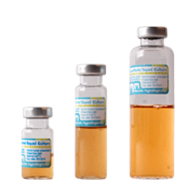
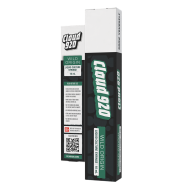
You receive one 10cc syringe of Cloud920 Panaeolus cyanescens Hawaii liquid culture, pre-loaded with a sterile needle. This rare non-cubensis Copelandia-lineage isolate is produced with full QC on viability, sterility and morphology every batch. Prepare your workspace with tools from our laboratory supplies.
How to inoculate with this liquid culture
Cloud920 recommends 2-3 cc per small grain bag, 3-4 cc per medium bag and 4-5 cc per large bag. Use pasteurised manure-based substrate — a manure and casing mix is the most documented approach. Maintain fruiting temperature at 24-29 °C and ensure high, stable humidity during pinning; this species is more sensitive to humidity drops than cubensis. Transition to fruiting conditions promptly once colonisation is complete. Store the syringe refrigerated at 2-8 °C, upright, and use within the shelf life printed on the label.
Microscopy and research use only
This Panaeolus cyanescens Hawaii liquid culture is sold for microscopy and mycological research. Cultivation of psilocybin-producing fungi is regulated or prohibited in many jurisdictions — verify your local legislation before use.
Frequently asked questions
Does Panaeolus cyanescens need a different substrate than cubensis?
Yes — P. cyanescens is dung-loving and performs best on pasteurised manure-based substrate with a casing layer, at warm fruiting temperatures of 24-29 °C. Plain grain bags without a manure component typically underperform for this species.
How is a liquid culture different from a spore syringe?
A spore syringe contains spores that must first germinate before mycelium can form. A liquid culture already contains live, expanding mycelium — shortening colonisation by roughly two weeks and reducing contamination risk.
How should I store this Cloud920 syringe?
Refrigerate at 2-8 °C, upright, in the original sleeve. Keep away from direct light and freezing temperatures. Use within the shelf life printed on the label.
Why does this product say "for microscopy and mycological research"?
Cultivation of psilocybin-producing fungi is regulated or prohibited in many jurisdictions. This syringe is sold for microscopy and mycological research purposes only — check your local legislation before use.
Is this Cloud920 culture lab-verified?
Yes — every Cloud920 batch is produced in a lab-controlled environment with QC verification on viability, sterility and morphology before the syringe is filled and sealed.
Additional Info
Additional Info
| Productcode | LCS.C920-PACY-HAWA |
|---|---|
| Weight (KG) | 0.1000 |
| Form | Culture Syringe |
| Contents (ml) | 10ml |
| Mushroom Strain | Panaeolus 'Copelandia' cyanescens |
| Species | Panaeolus cyanescens |
| Potency | Very High |
| Difficulty | Easy |
| Origin | Geographic |
You may also be interested in the following products: