You have no items in your shopping cart.
7 Alternative Ways to Access Altered States (Without Psychedelics)
Posted under: Trip Guides & Preparation
Breathwork, meditation, sensory deprivation, holotropic breathing, and more — non-psychedelic routes to expanded awareness (2026 Update)
Altered states of consciousness are not exclusive to psychedelics. Human cultures throughout history have developed a rich variety of techniques for shifting perception, accessing deeper awareness, and producing states that feel meaningfully different from ordinary waking consciousness. Many of these methods are non-pharmacological — they require no substances at all.
This guide covers seven well-documented alternative ways to access altered states. Some are ancient, some are modern, and all have genuine effects on brain activity, perception, or emotional experience that are supported by research. Whether you are curious about these approaches on their own terms or as complements to a psychedelic practice, there is real value in understanding what each one involves.
In this guide: Seven alternative ways to access altered states — breathwork, meditation, sensory deprivation, holotropic breathing, rhythmic drumming, lucid dreaming, and plant-based (non-psychedelic) approaches.
Each method is explained clearly, with notes on the science, the experience, and how to get started safely.
| Methods covered | 7 techniques, ranging from accessible to more intensive |
| Substances required? | No — all methods are non-pharmacological |
| Suitable for beginners? | Most are — specific notes on each |
| Research basis | Neuroscience, clinical research, or established traditional practice |
1. Breathwork: Simple, Accessible, and Powerful
Breathwork is the broadest category on this list — it encompasses a wide range of practices that use controlled breathing patterns to shift physiological and psychological states. From basic diaphragmatic breathing through to intensive techniques, breath is one of the most direct levers available for influencing the nervous system.
The reason breathing works so well for accessing altered states is structural: the breath is the only involuntary process we can voluntarily control, giving us direct access to the autonomic nervous system. Slow, deep breathing activates the parasympathetic nervous system and reduces cortisol and adrenaline. Rapid or intensive breathing patterns alter blood CO₂ levels, causing changes in cerebral blood flow and producing altered perceptual states.
Basic techniques like box breathing (four counts in, four counts hold, four counts out, four counts hold) are immediately accessible and produce meaningful shifts in focus and calm within minutes. More intensive practices — described further below under holotropic breathing — produce much stronger effects but also require more preparation.
Starting point: Try five minutes of slow 4-7-8 breathing (inhale for 4, hold for 7, exhale for 8) in a quiet space. Most people notice a clear state shift within the first two rounds.
2. Deep Meditation: Changing the Brain from the Inside
Meditation is, in the most fundamental sense, a technology for producing altered states. The altered states it produces are not dramatic — they do not involve visions or intense emotional experiences in most cases — but they are measurable, reproducible, and deeply meaningful to practitioners who engage with them seriously.
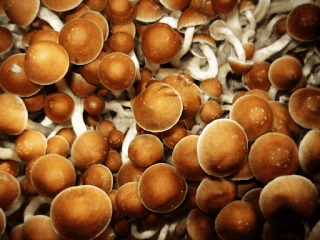
Neuroimaging studies have shown that advanced meditators produce brain activity patterns during meditation that are genuinely unusual — characterised by high-amplitude gamma wave activity, increased coherence between brain regions, and changes in the default mode network that are remarkably similar to those produced by psilocybin. In fact, researchers at the National Institutes of Health have noted significant overlap between the neural signatures of deep meditation and psychedelic states.
The catch is that these states typically require years of practice to access reliably. However, even beginners who meditate consistently for eight weeks show measurable changes in brain structure and function, reduced anxiety, and improved emotional regulation. Meditation is also a powerful integration tool for people who have had psychedelic experiences — it provides a way to continue accessing and deepening the insights that arose during those experiences.
For those interested in how meditation relates to the psychedelic experience specifically, our post on set and setting touches on how meditative practices can prepare and support a psilocybin experience.
3. Holotropic Breathwork
Holotropic Breathwork is a specific technique developed by psychiatrist Stanislav Grof and his wife Christina Grof in the 1970s, partly as a response to the prohibition of LSD research. Grof had spent years conducting LSD-assisted therapy and, when that became impossible, sought a non-pharmacological method that could produce comparable depth of experience.
The method involves intensive, sustained breathing — faster and deeper than normal — combined with evocative music, bodywork support, and a session structure that typically lasts two to three hours. Participants lie down with an eye mask, breathe continuously, and allow whatever arises to move through them. The experiences that result can range from physical release and emotional catharsis to visual imagery, biographical memory work, and in experienced practitioners, profoundly expansive states of consciousness.
Holotropic Breathwork is generally safe when facilitated properly, but it is not suitable for everyone. People with cardiovascular conditions, epilepsy, severe psychiatric conditions, or recent trauma should consult a healthcare provider before participating. It should always be experienced in a group setting with trained facilitators, not attempted alone.
4. Sensory Deprivation / Float Tanks
Sensory deprivation tanks — also called float tanks or isolation tanks — remove most external sensory input by having you float in a pod or tank filled with warm, highly saline water in total darkness and silence. Without constant sensory input to process, the brain begins to generate its own — producing vivid imagery, unusual thought patterns, and in many people, a profound sense of spaciousness and mental quiet.
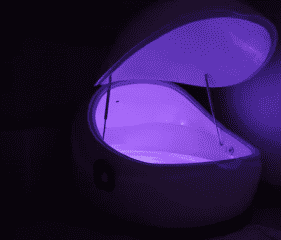
Regular float users report reduced anxiety, improved sleep, enhanced creativity, and, for some, experiences that are qualitatively similar in texture (though typically less intense) to mild psychedelic states. Research has shown that even a single 90-minute float session produces measurable reductions in cortisol, blood pressure, and state anxiety. Some studies have explored floatation REST (Reduced Environmental Stimulation Therapy) as a clinical tool for anxiety disorders, with promising results.
Floatation tanks are available at dedicated float centres in most major cities. The first experience can feel uncomfortable initially — most people go through a period of restlessness before the mind settles — but this typically passes within the first 20 minutes. Subsequent sessions tend to go more quickly and deeply.
5. Rhythmic Drumming and Sound
Rhythmic drumming at specific tempos (typically around 4–7 beats per second) has been used in shamanic and traditional ceremonial contexts around the world for thousands of years as a method of inducing altered states. The neurological mechanism is not fully understood, but research suggests that repetitive auditory rhythms can entrain brainwave patterns — particularly theta waves (4–8 Hz), which are associated with hypnagogic and deep meditative states.
Studies by researcher Michael Harner, who developed a systematic approach called "core shamanism," found that a significant proportion of participants entered states involving vivid imagery and unusual perceptual experiences following 15–20 minutes of rhythmic drumming with eyes closed. These experiences are qualitatively different from psychedelic states but share certain structural features — particularly the sense of accessing material that is not normally available to ordinary consciousness.
Sound baths using singing bowls, gongs, or binaural beats work through related mechanisms and are much more accessible as a starting point. Many cities have regular sound bath events, and there is a wide range of recorded binaural beat sessions available online. These are gentler but can still produce noticeable shifts in awareness and relaxation. Our post on shamanism and magic mushrooms provides useful context for the traditional use of sound in ceremonial settings.
6. Lucid Dreaming
A lucid dream is a dream in which you become aware that you are dreaming — and, in more developed practice, can influence or direct the experience. From a neurological perspective, lucid dreaming involves elements of both dreaming and waking consciousness occurring simultaneously, producing states that are genuinely altered relative to either. The imagery and narrative in lucid dreams can be extraordinarily vivid, emotionally significant, and in experienced practitioners, as rich and meaningful as any other non-ordinary experience.

Lucid dreaming is a learnable skill. Common techniques include reality testing (asking yourself throughout the day whether you are dreaming, to build the habit of questioning), the Wake Back to Bed method (setting an alarm for 5–6 hours after sleep onset, staying briefly awake, then returning to sleep with the intention to become lucid), and the Wake Induced Lucid Dream technique for experienced practitioners.
The draw of lucid dreaming as an altered state is its complete accessibility — it requires no substances, no facilitator, and no financial investment. The limitation is that it takes consistent practice over weeks to months to achieve reliably, and the depth and stability of early experiences are often limited. However, for the patient practitioner, it offers something genuinely unique: direct, interactive access to the imagery and narrative of one's own unconscious.
7. Extreme Physical States: Endurance, Cold, and Fasting
The body itself can produce altered states through physiological means — and several of these have been deliberately used across cultures and traditions. Prolonged physical endurance (particularly at the edge of one's capacity), extended cold exposure, and fasting all alter neurochemistry in ways that shift perception and access states quite different from ordinary waking consciousness.

Endurance exercise at high intensity for extended periods produces surges of endocannabinoids (not endorphins, contrary to the popular "runner's high" explanation) that create states of pain relief, heightened sensory awareness, and sometimes feelings of expanded consciousness. Extended fasting, beyond the initial hunger phase, produces ketosis and shifts in brain metabolism that many people describe as mental clarity and unusual perceptual sensitivity. Cold exposure — particularly cold water immersion — produces rapid shifts in the autonomic nervous system and the release of noradrenaline that many practitioners describe as producing a state of alert, clear aliveness unlike anything else.
These approaches are the most physically demanding on this list and carry real risks if taken to extremes. Sensible, graduated practice — building cold tolerance slowly, not fasting for extended periods without medical supervision — is important. They are mentioned here because they are legitimate and ancient routes to altered states, not just modern wellness trends.
Combining Approaches
Many of these techniques work well in combination. Meditation and breathwork are natural complements. Holotropic Breathwork uses evocative music (an extension of rhythmic sound). Floatation tanks pair well with meditation practice. Several practitioners use non-pharmacological altered states as preparation for or integration of psychedelic experiences — building a stable inner landscape before a more intensive experience, and then using meditation and breathwork to continue processing what arose.
For anyone curious about psychedelics specifically, our post on alternative ways to access altered states is a useful resource. And for those interested in microdosing as a gentler entry point into psilocybin, our guide to what microdosing is explains the approach and the current research clearly. The broader world of the most common types of psychedelics is also worth exploring for context.
Curious about psilocybin? Explore our range of magic truffles and microdosing products — thoughtfully selected from our Amsterdam shop, since 2007.
Note: If you are suffering from a mental illness and are curious about using psilocybin or any other psychedelic therapy, please consult one of the relevant medical authorities first. Do not self-prescribe — it is vital to have the right support and guidance when using psychedelics as medicine.


March 23, 2026