You have no items in your shopping cart.
The Most Common Types of Psychedelics: An Educational Overview
Posted under: Psychedelic Culture
An Educational Overview of the Major Types of Psychedelics — Natural and Synthetic (2026 Update)
In this guide: The word "psychedelic" covers a surprisingly broad range of substances — from mushrooms that have been used in ceremony for thousands of years, to compounds synthesized in a laboratory less than a century ago. Each works differently in the brain, comes from a different source, and carries its own cultural history.
This post is a factual, educational overview of the most common types of psychedelics: what they are, where they come from, how they work, and what makes them distinct from one another. It is not a how-to guide and does not encourage illegal use of any substance.
Psychedelics are a class of psychoactive substances that alter perception, mood, and thought — often significantly. The term itself was coined in 1957 by British psychiatrist Humphry Osmond, from the Greek words for "mind" (psyche) and "manifesting" (delos). Today it covers both classic hallucinogens that act primarily on the serotonin system and a broader set of substances that produce altered states through different mechanisms.
Understanding the different types of psychedelics — and how they differ from one another — is useful context for anyone curious about this field, whether from a scientific, historical, or personal perspective. As research continues to expand, it has become increasingly important to be able to distinguish between substances that are often grouped together but are actually quite different.
The legal status of these substances varies considerably by country and by substance. Some are fully legal in certain jurisdictions, others are decriminalized, and many remain prohibited. Always research the rules in your specific location before engaging with any of these topics beyond reading about them.
Classic Psychedelics: The Serotonergic Group
The largest and most studied category of psychedelics consists of substances that work primarily by activating the 5-HT2A serotonin receptor in the brain. These are often called "classic" or "serotonergic" psychedelics. Despite their chemical diversity, they share a broadly similar mechanism and produce overlapping experiential effects — visual and sensory changes, altered sense of time, shifts in emotional tone, and changes in how the self is perceived. The differences lie in duration, intensity, character, and source.
Psilocybin (Magic Mushrooms)
Psilocybin is the psychoactive compound found naturally in over 200 species of mushrooms worldwide, the most widely known of which is Psilocybe cubensis. When ingested, the body converts psilocybin to psilocin — the compound that actually crosses the blood-brain barrier and produces the experience. Effects typically begin within 20–60 minutes and last 4–6 hours.
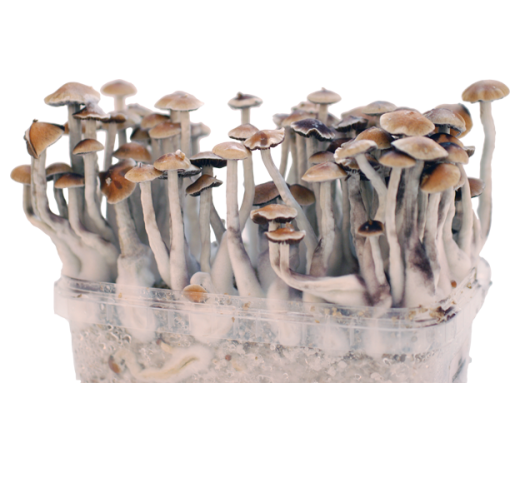
Psilocybin mushrooms have a long history of ceremonial and spiritual use — most notably among indigenous Mesoamerican cultures, where they were used in healing rituals long before Western science knew they existed. Modern clinical research has investigated psilocybin for treatment-resistant depression, addiction, and end-of-life anxiety, with results that have attracted significant attention from regulatory agencies in Australia, Europe, and North America.
Magic truffles — sold legally in the Netherlands — contain the same active compounds (psilocybin and psilocin) as mushrooms. They are the underground sclerotia of certain Psilocybe species and produce identical effects. For a more detailed look at the science, the What Are Magic Mushrooms? post covers the biochemistry, species overview, and effects in full. The brain mechanisms are explored further in Mushrooms & The Mind: How Psychedelics Work in the Brain.
| Source | Natural — fungi (mushrooms and truffles) |
| Mechanism | 5-HT2A serotonin receptor agonist (via psilocin) |
| Duration | 4–6 hours |
| Legal status | Varies widely; magic truffles legal in Netherlands |
LSD (Lysergic Acid Diethylamide)
LSD was first synthesized in 1938 by Swiss chemist Albert Hofmann at Sandoz Laboratories in Basel. Hofmann accidentally discovered its psychoactive properties in 1943 — an event now commemorated annually as "Bicycle Day" on April 19. LSD is derived from ergot, a fungus that grows on rye and other grains, making it semi-synthetic: it has a natural starting material but requires significant chemical modification to become active.
LSD acts on serotonin, dopamine, and adrenaline receptors, though the 5-HT2A interaction is considered primarily responsible for its psychedelic effects. One of its most distinctive features is duration — a full experience typically lasts 8–12 hours, considerably longer than psilocybin. It is active at extremely small amounts: doses are measured in micrograms (millionths of a gram).
Before prohibition halted research in the late 1960s, LSD was studied extensively in psychiatry — particularly for alcohol dependence and anxiety disorders — with results that researchers at the time found promising. Contemporary interest in LSD-assisted therapy has been revived, though it lags behind the psilocybin research pipeline in terms of regulatory progress. The post Mushrooms vs. LSD — Chemistry, Biology & Personal Experiences compares these two substances directly.
| Source | Semi-synthetic (derived from ergot fungus alkaloids) |
| Mechanism | 5-HT2A agonist + dopamine and adrenergic activity |
| Duration | 8–12 hours |
| Legal status | Prohibited in most countries |
Mescaline (Peyote and San Pedro)
Mescaline is a naturally occurring alkaloid found in several cacti, most famously peyote (Lophophora williamsii) and San Pedro (Echinopsis pachanoi). Peyote grows primarily in the Chihuahuan Desert of northern Mexico and Texas; San Pedro is native to the Andes of South America. Both have been used in ceremonial and spiritual contexts by indigenous cultures for thousands of years — peyote particularly in the Native American Church and Huichol traditions of Mexico.
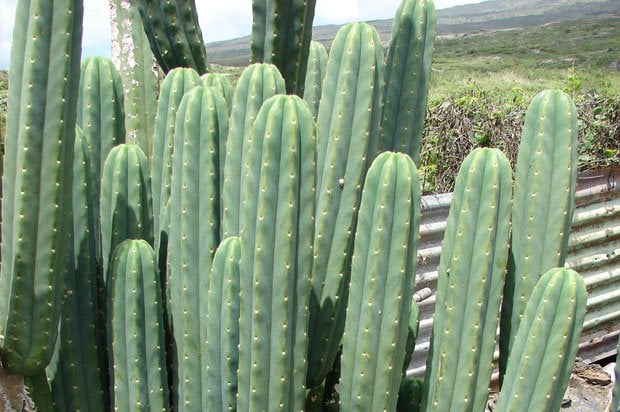
Mescaline produces similar perceptual effects to psilocybin and LSD via the same serotonin pathway, but its character is often described as warmer and more body-felt than LSD, and its duration is notably long — typically 10–12 hours. It was the first psychedelic to be isolated and chemically identified, accomplished by German chemist Arthur Heffter in 1897.
It is important to acknowledge the deep cultural significance that peyote holds for indigenous communities who depend on it as a sacrament. Responsible engagement with these subjects requires awareness of that context. The post All About Psychedelic Cacti provides further background on San Pedro and related species.
| Source | Natural — peyote cactus, San Pedro cactus |
| Mechanism | 5-HT2A serotonin receptor agonist |
| Duration | 10–12 hours |
| Legal status | Varies; peyote legally protected for Native American ceremonial use in the USA; prohibited in most other contexts in many countries |
DMT and Ayahuasca
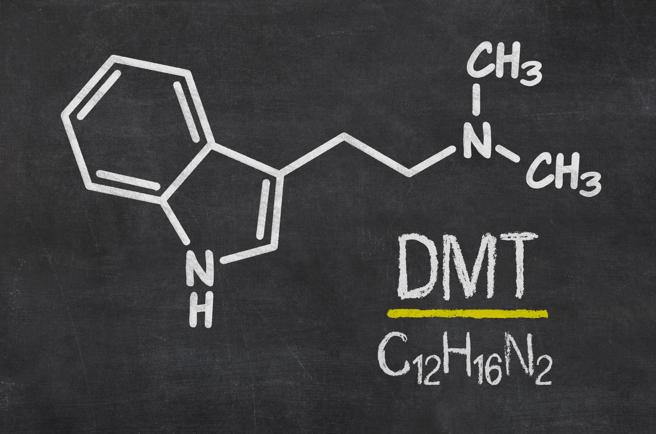
DMT (dimethyltryptamine) is one of the most chemically widespread psychedelics in nature. It is found in dozens of plant species across the globe and, intriguingly, in trace amounts in the human body itself — though its physiological role there remains debated. When smoked or vaporized, DMT produces a very brief but extraordinarily intense experience — typically 10–20 minutes. When taken orally on its own, DMT is inactive because enzymes in the digestive system called monoamine oxidases (MAOs) break it down before it can reach the brain.
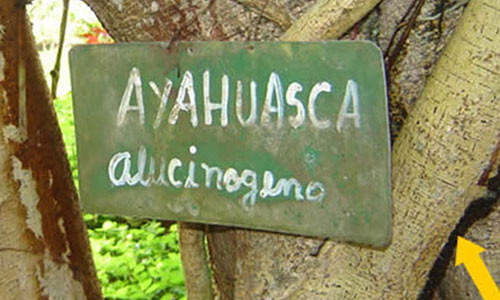
Ayahuasca is a traditional Amazonian preparation that solves this problem through a remarkable botanical pairing. The brew combines a DMT-containing plant (most commonly Psychotria viridis) with the vine Banisteriopsis caapi, which contains harmala alkaloids that inhibit MAO — allowing the DMT to survive digestion and become orally active. The result is an experience lasting 4–6 hours, traditionally used in healing ceremonies across the Amazon basin and increasingly practiced in therapeutic and retreat contexts worldwide. For a full account, see the Ayahuasca: History, Use, Effects & Safety post.
| Source | Natural — found in many plant species worldwide |
| Mechanism | 5-HT2A agonist (+ sigma-1 receptor activity) |
| Duration | 10–20 min (smoked); 4–6 hours (ayahuasca) |
| Legal status | DMT prohibited in most countries; ayahuasca legal in certain religious and ceremonial contexts in some nations |
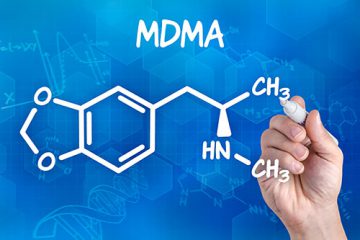
MDMA (3,4-Methylenedioxymethamphetamine)
MDMA occupies an interesting position in the psychedelics conversation. It is often grouped with classical psychedelics, but its mechanism is fundamentally different: rather than acting primarily on serotonin receptors, MDMA causes a massive release of serotonin, dopamine, and norepinephrine from nerve terminals while simultaneously inhibiting their reuptake. The result is a distinctive combination of empathy, emotional openness, increased sociability, and mild perceptual alterations — which is why it is sometimes called an "entactogen" (meaning "touching within") rather than a classical psychedelic.
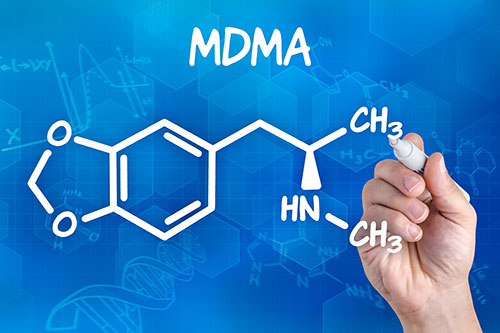
MDMA was first synthesized in 1912 by Merck and rediscovered by chemist Alexander Shulgin in the 1970s, who introduced it to psychotherapists as an adjunct to talk therapy. Its potential in trauma treatment — particularly PTSD — has been the focus of intense clinical research by organizations including MAPS (Multidisciplinary Association for Psychedelic Studies). Phase 3 trials showed significant reductions in PTSD symptoms, though regulatory decisions in the United States in 2024 resulted in a request for further data before approval.
A more detailed look at synthetic psychedelics and how they differ from plant-based ones is available in the Synthetic Psychedelics 101 post.
| Source | Synthetic |
| Mechanism | Serotonin, dopamine, and norepinephrine release and reuptake inhibition |
| Duration | 3–5 hours |
| Legal status | Schedule I in USA; controlled in most countries; under clinical investigation |
Ketamine
Ketamine is a dissociative anesthetic that has been used in medicine since the 1960s, approved for human use in many countries as a surgical anesthetic. Unlike classical psychedelics, it works primarily as an NMDA receptor antagonist — blocking glutamate, the brain's main excitatory neurotransmitter. This produces a dissociative state in which the user may feel detached from their body and surroundings, with perceptual distortions that differ meaningfully in character from serotonergic psychedelics.
Ketamine's medical status sets it apart from most other substances in this overview: it is legally prescribed in many countries. In 2019, the FDA approved esketamine (a nasal spray formulation derived from ketamine) specifically for treatment-resistant depression. Ketamine infusion clinics have proliferated in several countries, offering supervised intravenous sessions for depression and other conditions. The Ketamine Assisted Therapy 101 post explains the clinical model in more detail.
| Source | Synthetic |
| Mechanism | NMDA receptor antagonist (dissociative) |
| Duration | 45–90 minutes (infusion); up to several hours (oral) |
| Legal status | Legal as prescription medication in many countries; controlled for non-medical use |
Salvia Divinorum
Salvia divinorum is a plant in the sage family native to the mountainous cloud forests of Oaxaca, Mexico, where it has been used for centuries by the Mazatec people in healing and divination practices. Its active compound, salvinorin A, is unique among psychedelics: it produces its effects not through the serotonin system, but by acting as a potent kappa-opioid receptor agonist — making it pharmacologically unlike any other psychedelic substance.
When the leaves are smoked or vaporized, effects are nearly immediate, extremely intense, and very brief — typically 5–15 minutes. The character of the experience is often described as radically dissociative and difficult to put into words, quite unlike the visual and emotionally warm quality of serotonergic psychedelics. Traditional Mazatec use involved chewing fresh leaves or preparing an infusion for longer, subtler effects.
Salvia divinorum is legal in some countries and controlled or banned in others. Its legal status varies considerably even within regions that broadly permit psychedelic research.
| Source | Natural — Salvia divinorum plant (Oaxaca, Mexico) |
| Mechanism | Kappa-opioid receptor agonist (not serotonergic) |
| Duration | 5–15 minutes (smoked/vaporized); up to 1 hour (oral) |
| Legal status | Legal in some countries; controlled in others — check local laws |
How These Substances Compare
Despite the diversity within the psychedelics category, some common threads run through most of these substances. First, research consistently shows that the classical psychedelics (psilocybin, LSD, mescaline, DMT) are not physiologically addictive and have low acute toxicity profiles in clinical settings. Second, context — the setting, the person's mindset, and the presence or absence of trained support — plays an outsized role in shaping outcomes for nearly all of them. Third, they are not recreational substances in the conventional sense; even those who use them informally typically report that the experiences require preparation and integration to be meaningful.
The differences between them — in duration, mechanism, origin, and character — matter both for practical and research purposes. A session with ayahuasca in an Amazonian context is a fundamentally different experience than a clinical ketamine infusion for depression, even if both are sometimes described as "psychedelic." Understanding these distinctions helps cut through the oversimplification that often surrounds the topic in popular media.
For a broader perspective on how these substances intersect with mental health, the post Mushrooms & The Mind is a good starting point, and the Synthetic Psychedelics 101 piece digs deeper into the lab-derived compounds.
Interested in psilocybin specifically? Explore our range of magic truffles — legally available in the Netherlands and one of the most studied natural psychedelics in modern research.
Note: If you are suffering from a mental illness and are curious about using psilocybin or any other psychedelic therapy, please consult one of the relevant medical authorities first. Do not self-prescribe — it is vital to have the right support and guidance when using psychedelics as medicine.


May 3, 2021