
You have no items in your shopping cart.

Photos of the Albino A+ Psilocybe cubensis
Posted under: Strain Guides
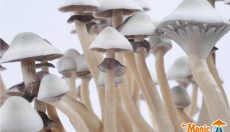
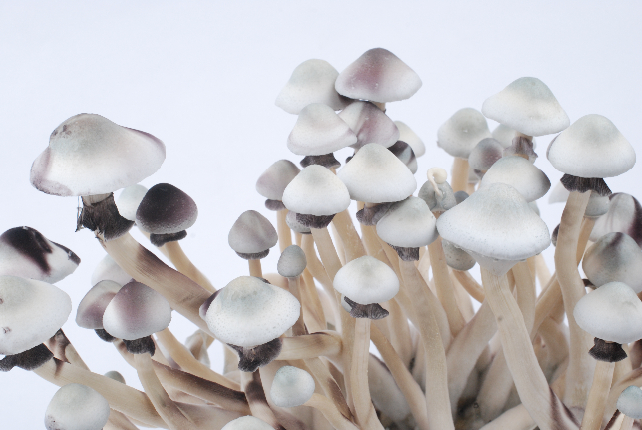
The Albino A+ is one of the most eye-catching Psilocybe cubensis varieties you can find. Its ghostly white caps, slender stems and dark spore print make it a favourite among collectors and microscopy enthusiasts alike. Here is a closer look at what this strain actually looks like.
Albino A+ photos
These photos are taken directly from a Magic Mushrooms Shop Albino A+ grow. They show the strain from young pins all the way through to fully open caps with visible dark spores.
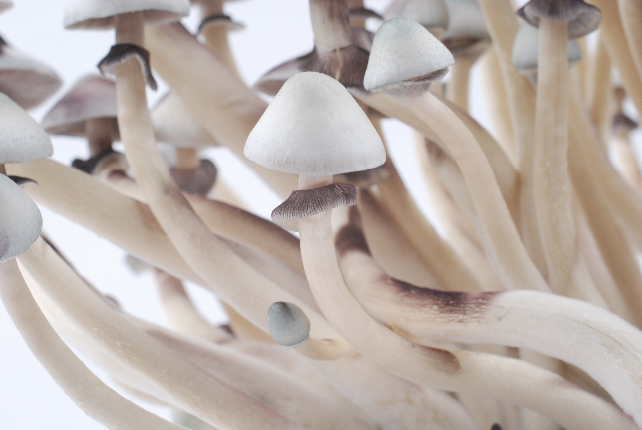
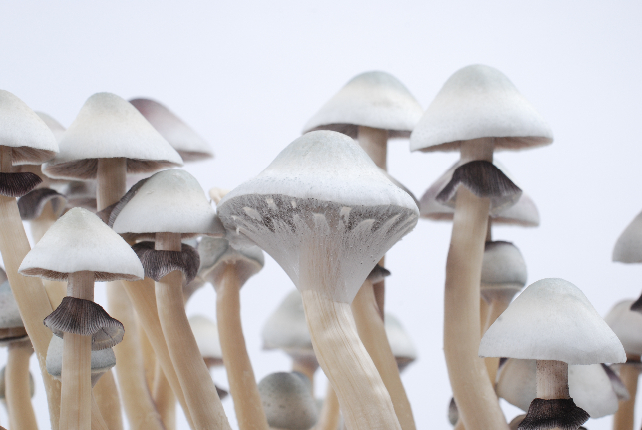
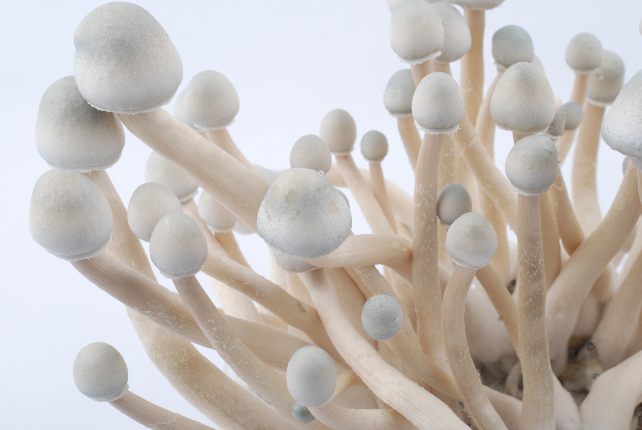
Albino or leucistic?
Despite the name, Albino A+ is not a true albino — it is a leucistic mutation of the original A+ cubensis strain. Leucism means the fruiting body has reduced pigment, but the spores still carry full colour. That is why the caps and stems look ghostly white, while the spore print comes out dark brown to almost black.
This contrast between pale fruits and dark spores is exactly what makes Albino A+ so interesting for microscopy work and spore collections. The dark spores stand out clearly on the foil, making the print easy and satisfying to work with.
Leucistic mutations can appear in many cubensis strains. Another example available in our shop is the Jedi Mind Fuck leucistic grow kit — pale fruits, same classic cubensis character.
Keeping the white colour
If you grow Albino A+ yourself, indirect light is your best friend. Strong direct sunlight can cause the caps to take on more pigment and turn slightly yellow. A bright room without direct sun is the sweet spot for keeping the fruits as white as possible.
Do not grow in complete darkness either — cubensis needs some light to orientate and form normal caps. If you can read a book in that room without a lamp, there is enough light.
What collectors say
Reviews from our customers describe the Albino A+ as producing beautiful, ghost-like mushrooms — and confirm that the spore print quality is excellent for microscopy work and long-term archiving.
Want to add Albino A+ to your spore collection? Order the Albino A+ spore print — lab-produced, sterile, and ready to work with.


March 23, 2026