
You have no items in your shopping cart.

Light for Mushroom Grow Kits: The Complete Guide
Posted under: Growing & Cultivation
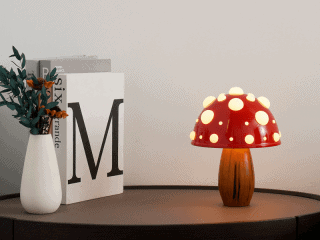
How to use light correctly at every stage — and why indirect sunlight is often all you need.
The right light for a mushroom grow kit is one of the most common questions we get from new growers. Do you need a special lamp, or does a bright spot in your living room do the job? Fortunately, the answer is simpler than most people expect. This guide explains exactly how light works at each stage of mushroom cultivation, what kind of light works best, and when indirect sunlight is already more than enough.
Good to know: all ready-to-grow kits in our shop are already fully colonized and past the incubation phase. In other words, from the moment your kit arrives, you are in the fruiting stage — and that is precisely where light starts to matter.

Why Light Matters for Mushroom Grow Kits
Mushrooms do not perform photosynthesis. Instead, they use light as a signal. When mycelium receives light, it understands that it has reached the surface and that conditions are right to form fruiting bodies. As a result, the right light for a mushroom grow kit is not about power or intensity — it is about giving a clear, consistent cue.
Light also guides direction. Because mushrooms grow toward their light source, even overhead lighting helps you get straight stems and nicely opened caps. Without sufficient light, or with light coming from the wrong angle, fruits can grow twisted or lean strongly to one side.
Colonization vs Fruiting: Two Very Different Light Needs
Stage 1: Colonization — No Light Needed
During colonization, the mycelium is growing through the substrate for the first time. This phase works best in complete darkness, since light is not needed and can even trigger premature pinning before the block is ready.
However, if you ordered one of our ready-to-grow kits, you can skip this step entirely. The colonization has already been completed before shipping, so your kit arrives fully ready to fruit.
Stage 2: Fruiting — This Is Where Your Grow Kit Starts
The fruiting stage is when your kit needs light for the very first time. Moreover, all of our grow kits begin exactly here. As soon as you set up the kit in its bag or fruiting environment, give it a gentle day/night rhythm.
Tip: With our fully colonized grow kits, the best light setup is one you can keep consistent. A bright room with indirect sunlight already does this naturally — therefore, no timer or lamp is required for most home growers.
Light for Mushroom Grow Kits: Is Indirect Sunlight Enough?
Yes — for most home growers, regular indirect sunlight is completely sufficient. Mushrooms need far less light than plants do, and furthermore, the threshold for triggering fruiting is surprisingly low. A normally lit room with a window comfortably exceeds that threshold.
⚠️ One important exception: do not place your grow kit in direct sunlight. Sun through a window heats up plastic bags and substrate very quickly, drying out the surface and stressing the mycelium. Indirect is the keyword here.
When to Upgrade to Artificial Light
Indirect sunlight works well for most growers. However, some situations call for a dedicated lamp. Consider adding artificial light for your mushroom grow kit if any of the following apply:
What Artificial Light to Choose for Your Grow Kit
Choosing the right artificial light for a mushroom grow kit does not have to be complicated or expensive. In fact, a basic LED lamp is all most growers ever need.
For more background on why blue-rich light works so well for fungi, this overview of mushroom lighting requirements is a useful read.
How Bright Should the Light Be for Your Grow Kit?
Understanding light intensity helps you avoid both underlit and overlit setups when choosing light for your mushroom grow kit. In general, mushrooms need far less brightness than most people assume.
Beyond intensity, the direction of light matters just as much. Even, overhead light produces straight-stemmed, well-formed mushrooms, whereas side lighting causes fruits to lean and twist toward the source.
Grow Kit Light Needs: Cubensis vs Panaeolus
Our grow kits cover two main species. Both benefit from the same basic lighting principles. Nevertheless, their tolerance levels differ slightly, so it is worth knowing which one you are growing.
Psilocybe cubensis
Panaeolus cyanescens
Not sure which kit suits you best? Have a look at our full range of magic mushroom grow kits to compare your options.
Common Lighting Mistakes to Avoid
Quick Reference: Light for Mushroom Grow Kits
| Situation | Light Setup | What to Do |
|---|---|---|
| Bright room, natural light | Indirect sunlight only | Place kit away from direct sun. No lamp needed. Works for most home setups. |
| Dim room or winter months | 6000–6500K LED + timer | Add a small daylight LED above the kit. Set a timer for 12h on / 12h off. |
| Colonization phase (DIY only) | Dark / no light | Store in a dark cupboard. Our kits skip this — they arrive fully colonized. |
| Fruiting phase (all kits) | Gentle, overhead light | Light the whole surface evenly from above for straight, healthy growth. |
Pro tip: Start simple — place your kit in the brightest indirect light spot in your home. If results are not what you hoped for, adding a small 6500K LED on a timer is then the single most effective upgrade you can make.
Grow Bright, Grow Right
Getting the light right for your mushroom grow kit does not require expensive equipment or complicated schedules. A bright spot out of direct sun is enough for most people to achieve strong, healthy flushes. However, if your space is dark or you want maximum control, a small daylight LED and a timer are all you need to take things to the next level. Simply give your kit a consistent "day and night," and it will do the rest.
Want to learn more about what else affects your harvest? In that case, read our guide on temperature and humidity for magic mushroom grow kits — the two other factors that work hand in hand with light.
Ready to start? Browse our fully colonized magic mushroom grow kits — everything is prepared, so all you need to do is find a bright spot and let nature do the work.


March 23, 2026