
You have no items in your shopping cart.

Psilocybe caerulescens — The Sacred Landslide Mushroom
Posted under: Strain Guides
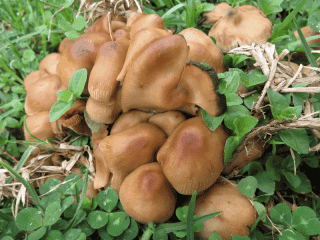
Species Profile — The Sacred Landslide Mushroom of the Mazatec
Psilocybe caerulescens — the derrumbe, or landslide mushroom — is one of the oldest known sacred fungi in the world. Mazatec healers in Oaxaca, Mexico, have used it in healing ceremonies for centuries. It is also the very species that María Sabina served during her veladas — the same night that introduced psilocybin mushrooms to the Western world.
In this guide, we cover everything worth knowing: what it looks like, where it grows, how it feels, and why it matters.
Psilocybe caerulescens is not the most widely cultivated magic mushroom, and it is certainly not the easiest to find. However, few species carry as much cultural weight. The derrumbe grows where the earth has been torn open — on landslides, eroded hillsides, and disturbed forest floors. For the Mazatec people, that connection to disrupted ground is not just ecological. It is also spiritual: this is a mushroom that grows in the wound, and brings something new into being.

What Is Psilocybe caerulescens?
Psilocybe caerulescens is a psilocybin-containing mushroom native to Mexico and parts of Central and South America. Its common English name is the landslide mushroom. In Spanish, people call it derrumbe — which also means landslide. The Mazatec name is even more beautiful: 'nti' si´tho´, which roughly translates as "the dear little one who springs forth."
Together with Psilocybe mexicana and Psilocybe aztecorum, it is one of the mushrooms most likely used by the ancient Aztecs. Today, Mazatec shamans still use it in traditional velada ceremonies for healing and divination. In terms of psilocybin content, it sits in the medium-to-high range — between 0.8% and 2.46% psilocybin equivalent by dry weight.
| Scientific name | Psilocybe caerulescens Murrill |
| Common names | Landslide mushroom, derrumbe, 'nti' si´tho´ (Mazatec) |
| Active compounds | Psilocybin, psilocin, baeocystin |
| Potency | Medium–High (0.8–2.46% PCBE) |
| First described | 1923, near Montgomery, Alabama (Murrill) |
| Native range | Mexico (Oaxaca, Puebla, Michoacán), Central & South America, SE USA |
| Season | June through October |
| Elevation | 900–1,800 metres |
How to Identify Psilocybe caerulescens
Accurate identification is essential before interacting with any wild mushroom. Psilocybe caerulescens has a distinctive appearance, but it shares some features with toxic species. Therefore, always look at multiple characteristics together — never rely on one feature alone.
Cap
The cap measures 2–6 cm across. In young specimens, it is conical to bell-shaped. As the mushroom matures, it flattens and develops a broad, low central bump — a shape mycologists call umbonate. The surface is smooth with a gelatinous outer layer (called a pellicle) that gives the cap a slightly slimy feel when wet. The colour ranges from caramel brown to yellowish-brown in dry conditions, darkening to a chestnut brown when moist.
Gills and Stem
The gills are closely spaced. They start off whitish and gradually mature to a purplish-brown colour as the spores develop. The stem is 4–10 cm tall, slender, and whitish to pale brown. Like all psilocybin-containing Psilocybe species, the stem bruises blue when damaged — a reliable indicator of psilocybin content, caused by the oxidation of psilocin.
Spore Print
The spore print is a key identification step. Psilocybe caerulescens produces a dark purplish-brown to purple-black print. This feature, combined with the blue bruising reaction, clearly separates it from most dangerous lookalikes — which typically leave a rust-brown or white spore print. For more detail on why spores don't contain psilocybin, we cover that separately on the blog.
To make a spore print, remove the cap and place it gill-side down on white paper. Cover it with a glass and leave it for 4–8 hours. A purplish-black print, combined with blue bruising on the stem, strongly suggests a psilocybin-containing Psilocybe species. However, always verify with an experienced mycologist before drawing conclusions.
Where Does Psilocybe caerulescens Grow?
Psilocybe caerulescens has a unique ecological niche. Unlike many other psilocybin mushrooms that favour dung or rotting wood, this species prefers disturbed, bare ground — especially the muddy orangish-brown clay soils found on landslides, eroded hillsides, road cuttings, and riverbanks. Moreover, it often grows where the plant cover is sparse or absent altogether.
In its primary range — the Oaxaca, Puebla, and Michoacán regions of Mexico — it fruits from June through October, following the seasonal rains. It favours elevations between 900 and 1,800 metres, where semi-tropical humidity combines with cooler mountain air. Consequently, the Sierra Mazateca region of Oaxaca remains one of the most reliable places to encounter it in the wild.
Outside Mexico, the species also appears in Venezuela, Brazil, Colombia, Costa Rica, Guatemala, Panama, and Ecuador. In the United States, it has been found in Georgia, Alabama, South Carolina, and several other southern states — first documented near Montgomery, Alabama in 1923, growing on sugarcane mulch.
⚠️ Psilocybe caerulescens grows in the same types of disturbed habitat as potentially toxic species like Galerina marginata. Galerina contains deadly amatoxins and produces a rust-brown spore print. Never confuse the two. If in doubt, do not pick — and always consult a qualified mycologist for identification.
The Mazatec Sacred Tradition Behind Psilocybe caerulescens
For the Mazatec people of Oaxaca, Psilocybe caerulescens is not simply a mushroom. It is a medicine, a teacher, and a messenger. The Mazatec call it 'nti' si´tho´ — the diminutive 'nti' expresses tenderness and reverence, while si´tho´ means "that which springs forth." In other words, the name itself carries respect.
Mazatec healers, known as curanderos and curanderas, use the mushrooms in all-night ceremonies called veladas. During a velada, the healer sings, chants, and prays while under the influence of the mushrooms — navigating a state of consciousness the tradition considers a form of dialogue with spiritual forces. Healing, diagnosis, and guidance for the community all take place within this context. You can read more about how ceremony shapes the mushroom experience in our dedicated guide.
It was precisely this tradition that R. Gordon Wasson witnessed in 1955, when healer María Sabina conducted a velada in Huautla de Jiménez. Furthermore, it was this same night that introduced psilocybin to modern Western science — leading directly to Albert Hofmann's isolation of the compound in 1958. In that sense, Psilocybe caerulescens sits at the very origin of everything we now know about psychedelic mushrooms.
Effects of Psilocybe caerulescens
Because Psilocybe caerulescens is rarely cultivated outside of Mexico, most reported effects come from its use in traditional contexts or from comparisons with other medium-to-high potency Psilocybe species. Its active compounds — psilocybin, psilocin, and baeocystin — are the same as those found in other psilocybin mushrooms.
The general timeline of a psilocybin experience applies here as well. First, effects begin within 20–60 minutes. Then, intensity builds steadily over the first hour. The peak — typically characterised by vivid visual phenomena, deep introspection, and altered time perception — occurs around 2–3 hours in. After that, effects gradually soften, and the experience usually ends within 4–6 hours total. For a full breakdown of what to expect at each stage, see our 5 trip levels guide.
Users who specifically describe the derrumbe experience often report it as more visually intricate and emotionally grounded than Psilocybe cubensis. However, individual experiences vary widely based on dose, set, and setting. Because of this, preparation and a safe environment matter enormously. Our dosage guide is a good place to start.
| Onset | 20–60 minutes after ingestion |
| Peak | 2–3 hours |
| Total duration | 4–6 hours |
| Afterglow | Up to 24 hours (calm, reflective) |
| Reported character | Visually rich, introspective, emotionally deep |
⚠️ We do not encourage or facilitate illegal activity. Psilocybin mushrooms are controlled substances in many countries, including the Netherlands and most of Europe. Always check the laws in your country before taking any action. The information on this page is educational and historical in nature.
Psilocybe caerulescens and Conservation
This is a species that deserves care. Mycologists Roger Heim and Gordon Wasson already documented the effects of deforestation on mushroom biodiversity in the Mazatec region as far back as the 1950s. Today, the picture is more serious. Deforestation and habitat loss in Oaxaca threaten several Psilocybe species — including caerulescens — with local extinction.
In the Sierra Mazateca today, you can still find two types of psilocybin mushrooms in Huautla de Jiménez: the San Isidro (Psilocybe cubensis, grown on cow manure) and the derrumbe (Psilocybe caerulescens, found on bagasse and mudslide soil). The third traditional species, Psilocybe mexicana, is nowadays difficult to obtain. As a result, protecting these ecosystems is not only an environmental issue — it is also a cultural one. You can learn more about Mexican magic mushroom traditions in our dedicated post.
Want to explore psilocybin mushrooms responsibly? Discover our mushroom grow kits, learn about safe dosing, or find out why people take magic mushrooms.


March 23, 2026