
You have no items in your shopping cart.

Psychedelics and Relationships: Benefits, Risks & How to Prepare Together
Posted under: Trip Guides & Preparation
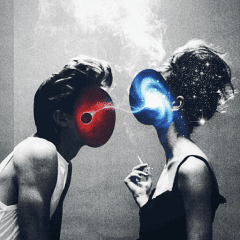
Psychedelics and Relationships: Benefits, Risks, and How to Prepare Thoughtfully (2026 Update)
Psychedelics and relationships share a long, complex history. Some couples describe shared psychedelic experiences as the most meaningful moments in their partnership. Others find that psychedelics surface truths the relationship was not ready to face. This guide explores both sides honestly: what psychedelics can offer couples, where the real risks lie, and how to prepare with care.
In this guide: The benefits and risks of psychedelics and relationships — including emerging couples psychedelic therapy, practical preparation advice, and how to support each other through integration.
This guide is educational. We do not encourage anyone to use psychedelics outside of safe, legal contexts.
Why Couples Explore Psychedelics Together
The reasons couples explore psychedelics and relationships together are diverse. Some feel curious after reading about the therapeutic potential of psilocybin or MDMA. Others have had individual experiences and want to share that part of themselves with a partner. Some discuss it within couples therapy first. And some simply hope that shared vulnerability might break patterns that conventional approaches have not shifted.
This interest is not new. In the 1980s, researchers like Ann Shulgin documented how MDMA could dissolve defensive barriers between partners. MDMA allowed couples to communicate with unusual honesty and empathy. However, this work largely stopped when MDMA was scheduled in 1985.
Today, the conversation is returning with force. In February 2026, MAPS and Columbia University announced the first formal study of MDMA-assisted couples therapy. As MAPS director Philippe Lucas noted, "MDMA-assisted couples therapy might be MDMA's most compelling, impactful, and natural application." Research into MDMA for PTSD is also creating broader understanding of how psychedelics affect interpersonal dynamics.
What Psychedelics Offer Relationships
Increased Empathy and Openness
Both psilocybin and MDMA increase empathy and emotional openness. Research consistently shows that these substances reduce the defensive self-protection that blocks honest communication. For couples, this opens space for conversations that feel impossible in ordinary states.
A 2024 placebo-controlled study found that psilocybin significantly increased emotional empathy in depressed patients for at least two weeks after a single dose. This matters for psychedelics and relationships because, unlike conventional antidepressants, psilocybin enhances social connection rather than dulling it.
People describe being able to truly hear their partner — without constructing a defence or counter-argument. They describe feeling their partner's experience as if it were their own. For couples stuck in reactive patterns, this quality holds profound value. Our guide on mushrooms and the mind explores the neuroscience behind these effects.
Surfacing Unspoken Truths
Psychedelics have a reputation for surfacing what is true but unspoken. This can be beautiful — bringing unvoiced love, gratitude, or care to light. It can also be uncomfortable. Resentments, unmet needs, or realities that both partners quietly avoid may surface suddenly.
However, this is not necessarily harmful. Many couples describe post-psychedelic honesty as having cleared the air completely. Months of ordinary conversation had not managed what one session achieved. Still, it does require readiness and emotional maturity from both partners.
Renewed Connection
One of the most consistent reports from couples who explore psychedelics and relationships together is a feeling of deep reconnection. Partners who have grown distant — through stress, conflict, or daily routine — often describe remembering why they chose each other. The ordinary noise that separates people temporarily falls away.
A 2021 review in Frontiers in Psychiatry identified eight pathways through which MDMA supports couples. These include empathy, communication, openness, bonding, social intimacy, and relationship satisfaction. The same pathways apply — in a gentler way — to psilocybin experiences shared between partners.
Where the Risks Lie
A shared psychedelic experience is not a relationship cure. Instead, it acts as an amplifier. It amplifies both what works and what does not. For healthy relationships that have become stuck, psychedelics can genuinely catalyse reconnection. For relationships with deeper problems — dishonesty, unresolved trauma, or fundamental incompatibility — psychedelics may surface these issues faster than either partner expects.
Divergent Experiences
One underappreciated risk of psychedelics and relationships: two people in the same room, taking the same substance, often have very different experiences. One partner may feel gentle and loving. The other may go through something challenging and deeply inward. This mismatch can create confusion during the session. As a result, careful integration afterward becomes essential.
Vulnerability and Power
Psychedelic experiences create profound vulnerability. In a healthy, trusting relationship, vulnerability is a doorway to connection. However, in relationships with unhealthy power dynamics, that vulnerability can be misused — consciously or not.
Important: Never feel pressured by a partner into a psychedelic experience you do not genuinely want. Consent must be clear and freely given. A psychedelic experience is not something to be pushed into by another person.
Relationship-Ending Realisations
It is honest to acknowledge that for some couples, a psychedelic experience surfaces the realisation that the relationship has run its course. This feels painful. However, many people who have been through it describe the experience as ultimately honest and clarifying. The psychedelic does not create this reality. It reveals what was already there.
Psychedelic Couples Therapy: The Research
A small but growing number of therapists now work with couples using psychedelic-assisted therapy. This happens primarily where legal frameworks allow — such as psilocybin services in Oregon, ketamine clinics across the US, or within clinical trials.
In a therapeutic setting, both partners work with trained facilitators. These professionals support them through difficult moments, help navigate divergent experiences, and provide structured integration afterward. This differs significantly from couples sharing a psychedelic experience privately.
The research is early but encouraging. A pilot trial combining MDMA with Cognitive Behavioural Conjoint Therapy (CBCT) for PTSD found improvements in PTSD symptoms, relationship satisfaction, social intimacy, and posttraumatic growth. A 2024 follow-up study confirmed lasting positive gains in relationship satisfaction and safety. Additionally, 67% of participants in psychedelic-assisted therapy reported improved relationships overall.
Ketamine-assisted couples therapy is already legally available at clinics across the United States. Meanwhile, the new MAPS–Columbia study aims to document real-world approaches, screening practices, and risk-mitigation strategies from practitioners already facilitating MDMA-assisted couples sessions.
How to Prepare for a Shared Experience
If you and your partner are considering a shared psychedelic experience, preparation shapes everything. The quality of what follows depends directly on how carefully you prepare. For psychedelics and relationships to work well together, follow these steps:
For broader preparation guidance, our post on set and setting is essential reading. Also, our guide on turning your experience into a ceremony offers a practical framework for intentional use.
Tip: After a shared psychedelic experience, journal independently before talking together. This helps each partner find and own their own thoughts first. It tends to produce more honest and less reactive dialogue when you do come together.
Integration: The Work That Matters Most
As with any psychedelic experience, what happens afterward matters as much as the session itself. For couples, integration involves both individual processing and shared dialogue. Do not expect clarity within days. Integration often unfolds over weeks and months.
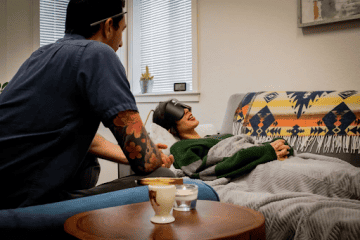
Things that support couples integration include:
If challenging realisations arose during the experience, a skilled couples therapist can help you navigate them wisely. Psychedelics open doors. Integration is how you walk through them with care. For more on the ongoing effects of psilocybin, read our article on psilocybin and the brain.
Also explore microdosing as a gentler entry point. Some couples use sub-perceptual doses to open communication channels before committing to a full shared session. Our complete guide to magic truffles explains how psilocybin truffles work in practice.
Curious about psilocybin in a legal, accessible context? Explore our magic truffles range — legal in the Netherlands and available for responsible, intentional use.
Note: If you experience mental health challenges and feel curious about psilocybin or other psychedelic therapy, please consult a medical professional first. Do not self-prescribe. The right support and guidance matter when exploring psychedelics as medicine.


March 23, 2026