
You have no items in your shopping cart.

Lion’s Mane Mushroom: Benefits, Compounds and How to Use It
Posted under: Medicinal & Functional Mushrooms
Everything you need to know about lion's mane — compounds, traditional use, research, and how to choose a supplement (2026 Update)
Lion's mane (Hericium erinaceus) ranks among the most popular medicinal mushrooms today. This white, shaggy fungus has a long history in Eastern herbalism — and modern researchers now study its unique compounds in laboratories around the world. In this guide you will learn what makes lion's mane special, what science currently explores, and how you can add it to your daily routine.
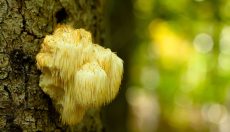
Lion's mane (Hericium erinaceus) grows on hardwood trees and looks like a flowing white mane.
For centuries, traditional Eastern herbalists valued this mushroom for the stomach and the mind.
Today, wellness enthusiasts worldwide choose lion's mane as a gentle daily addition to their routine.
Below you will find the key compounds, what researchers explore, and practical tips for getting started.
| What is lion's mane? | A non-psychoactive functional mushroom with a rich history in traditional Eastern herbalism, now widely studied by modern researchers. |
| Key compound groups | (1-3)(1-6) beta-D-glucans, hericenones, erinacines (hericerins), hericenes. |
| Main research areas | Nerve growth factors, cognitive function, mood, immune balance, gut ecology, and metabolic markers — all mainly in preclinical models. |
| How you can take it | Organic powders, capsules, and tinctures. Browse our medicinal mushrooms collection. |
| Important note | Research still focuses on lab work and small human trials. Lion's mane is a supplement, not a medicine or cure. |
Lion's Mane Compounds of Interest
This species contains several groups of bioactive molecules. Scientists focus on (1-3)(1-6) beta-D-glucans, hericenones, erinacines (also called hericerins), and hericenes. Together, these compounds give lion's mane its unique biochemical profile and explain why researchers find it so interesting.
Beta-glucans
Beta-glucans appear in many functional fungi, including lion's mane. In laboratory settings, these natural fibres bind to receptors on immune cells such as macrophages and natural killer cells. Researchers study this interaction to better understand how the immune system responds to external challenges.
In experimental models, these polysaccharides also show antioxidant activity. Scientists continue to explore what this means outside the lab. Want to learn more about functional fungi and immunity? Read our post on medicinal mushroom supplements and the immune system.
Hericenones: from the fruiting body
Hericenones sit mainly in the fruiting body of lion's mane. Researchers explore their potential connection to nerve growth factor (NGF) — a protein involved in nerve cell maintenance. Cell and animal studies investigate whether hericenones stimulate NGF production. However, translating lab findings to everyday human use requires much more research.
Because hericenones also appear in studies on inflammatory pathways, they feature regularly in scientific literature about long-term brain research.
Erinacines / hericerins: mycelium compounds
Erinacines occur mainly in the mycelium of lion's mane. These diterpenoid compounds attract research interest because preclinical models suggest some of them may reach brain tissue. Scientists study whether erinacines play a role in nerve cell formation and protection against oxidative stress.
This connection with neuroplasticity explains why many people view lion's mane as a "nootropic." Some also combine it with microdosing protocols. Still, larger human trials must confirm these early observations before anyone can draw firm conclusions.
Hericenes: antioxidant profile
Hericenes form another compound group that researchers study for antioxidant and anti-inflammatory activity in experimental models. Early-stage work explores how these compounds interact with metabolic and cardiovascular markers in animals. This area remains in its infancy.
What Researchers Study About Lion's Mane
The different compound groups in lion's mane explain why this mushroom attracts broad research interest. At the same time, most evidence comes from animal models, cell studies, and a handful of small human trials. Therefore, view these findings as promising research directions — not proven health outcomes.
Cognitive function and nerve growth
A few small clinical trials have explored lion's mane extracts in older adults. A well-known 2009 double-blind study in Phytotherapy Research observed differences in cognitive test scores after daily use for several weeks. New trials continue to investigate this area — including a 2026 study registered at ClinicalTrials.gov that examines lion's mane extract and cognitive function.
In animal and cell models, researchers investigate the relationship between lion's mane compounds and nerve growth factor (NGF) as well as brain-derived neurotrophic factor (BDNF). These proteins play a role in learning, memory, and brain flexibility. Early-stage mood research also exists, but larger studies must follow.
Immune balance in lab research
Beta-glucans from lion's mane function as biological response modifiers in laboratory settings. In simple terms, researchers study whether these compounds help the immune system respond to challenges. Animal models show interesting patterns, but scientists emphasise that lab results do not automatically apply to daily human use.
Gut ecology and inflammation markers
Researchers also explore lion's mane in animal models of gut inflammation. Some studies observe changes in inflammatory markers and gut microbiome diversity. As a result, some people add this mushroom to their wellness routine alongside a balanced diet and regular movement. However, human data remains very limited in this area.
Other early-stage research areas
Important: None of these research areas have produced EU-authorised health claims for lion's mane. The findings above describe ongoing scientific investigation, not proven supplement benefits.
How to Use Lion's Mane
At Magic Mushrooms Shop you can choose lion's mane in powder, capsule, or tincture form. Each option makes it easy to fit into your day. Powder works well if you like to stir a scoop into coffee, tea, or a smoothie. Capsules offer a fixed dose without any mushroom taste.
| Product | How it fits your day |
|---|---|
| Lion's Mane powder — Mushrooms4Life | Add a scoop to your morning drink or smoothie for a simple daily ritual. |
| Lion's Mane capsules — Mushrooms4Life | Take organic capsules with water, once or several times per day. Ideal for travel or a neutral taste. |
| Full medicinal mushrooms range | Combine lion's mane with reishi, chaga, or cordyceps in your daily routine. |
Getting started: Begin with a small daily amount. Stay consistent for four to six weeks and pay attention to how your body responds. Most research that reports observations involves daily use over several weeks or months.
Safety, Side Effects, and Lion's Mane Interactions
Existing human studies report generally good tolerance. Side effects mostly involve mild digestive discomfort such as bloating or nausea. However, lion's mane contains bioactive compounds that interact with various body systems.
If you take prescription medication — especially for blood sugar, blood pressure, blood clotting, or autoimmune conditions — talk to your doctor or pharmacist before you start. People with a mushroom allergy should also consult a healthcare professional first. Learn more about fascinating mushroom facts to broaden your understanding of the fungal kingdom.
Disclaimer: Lion's mane is a food supplement. It does not diagnose, treat, cure, or prevent any disease. Do not exceed the recommended daily dose. Supplements do not replace a varied, balanced diet or a healthy lifestyle. Always consult your doctor or pharmacist before you combine supplements with medication or use them alongside a medical condition.
Ready to explore lion's mane and other functional fungi? Visit our medicinal mushrooms collection and choose the product that fits your routine.


March 23, 2026