You have no items in your shopping cart.
Germany Approves EU’s First Psilocybin Compassionate Use Programme
Posted under: Psilocybin Science & News
Germany — Psilocybin Therapy | Updated March 2026
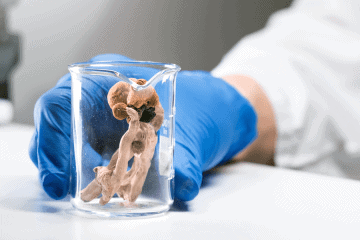
Germany has approved the first psilocybin therapy Compassionate Use programme in the EU — offering a supervised clinical pathway for people with treatment-resistant depression who have run out of options.
In this article, we explain what this psilocybin therapy programme involves, who it is for, and what the research shows so far.
Imagine trying antidepressant after antidepressant for years. One medication, then another. Multiple rounds of therapy. Everything the system has to offer. And still, the depression remains. For millions of people, that is not a hypothetical — it is daily reality. In Germany alone, an estimated 2 to 4 million people live with treatment-resistant depression, a form where standard treatments simply do not work. Psilocybin therapy is now offering a new direction for exactly this group.
On 11 July 2025, the Bundesinstitut für Arzneimittel und Medizinprodukte (BfArM) — Germany's federal medicines authority — approved the first ever psilocybin therapy Compassionate Use programme in the European Union. Not as part of a clinical trial, but as a serious therapeutic option for patients with no remaining alternatives. For anyone following the global rise of psychedelic research, this is a landmark moment.
What is Compassionate Use psilocybin therapy?
Compassionate Use — known in German as a Härtefallprogramm — is a regulatory pathway that gives patients access to a medicine that has not yet received full market approval. It is specifically designed for people in serious medical situations with no other viable options. A treating physician applies for individual patient approval from the relevant authority.
Unlike a clinical trial, where strict protocols and random assignment are central, psilocybin therapy via Compassionate Use allows more room for personalised care. The treatment can be tailored to each patient's specific situation — a significant advantage for an experience as deeply personal as this. To understand more about the molecule itself, our guide to psilocybin is a good starting point.
Who is behind Germany's psilocybin therapy programme?

The initiative came from Prof. Dr. Gerhard Gründer, head of the Department of Molecular Neuroimaging at the Zentralinstitut für Seelische Gesundheit (ZI) in Mannheim — one of Europe's leading psychiatric research institutes. He partnered with Canadian company Filament Health, which supplies the botanical psilocybin preparation PEX010. This is a standardised extract derived from actual mushrooms, rather than a synthetic compound. More about the difference between natural and synthetic psilocybin can be found at the MIND Foundation, one of the key research partners in this field.
A second location for psilocybin therapy is the OVID Clinic in Berlin, led by Dr. Andrea Jungaberle. This day clinic was specifically designed for psilocybin-assisted therapy and combines medical supervision with in-depth psychotherapeutic support before and after each session.
PEX010 is a botanical psilocybin extract — derived from real mushrooms. Curious about the active compounds in magic mushrooms and how they differ from synthetic versions? Read our in-depth psilocybin guide.
Who qualifies for psilocybin therapy in Germany?
The psilocybin therapy programme is exclusively available to adults with a clinically confirmed diagnosis of treatment-resistant depression (TRD). In practice, that means:
Demand is expected to far exceed available places — a pattern already seen in Switzerland, where the Swiss Federal Office of Public Health runs a comparable Compassionate Use framework.
How does psilocybin therapy work — the three phases
Every psilocybin therapy session takes place in a clinical day-care setting — never on an outpatient or home basis. A complete course of treatment consists of three phases, each considered equally essential to the outcome.
1
Preparation
Preparation
Several preparatory sessions take place with the treating therapist. Expectations are explored, the patient's personal history is mapped out, and a therapeutic intention is established together. Building trust and creating a sense of safety are the foundation of everything that follows.
2
The psilocybin session
The psilocybin session
The patient receives a dose of typically 25 mg psilocybin (via PEX010), taken orally. The session lasts 6 to 8 hours in a calm, carefully arranged room, with continuous supervision by trained guides. Music and an eye mask are often part of the protocol — designed to support inward attention and reduce external distractions. The ZI Mannheim published a full overview of the clinical approach on their website.
3
Integration
Integration
After the session, several integration therapy sessions follow. Experiences are processed, insights are anchored, and connections are made to everyday life. Research consistently shows that this phase is crucial — without proper integration, the lasting impact of psilocybin therapy is significantly reduced.
⚠️ This three-phase structure — preparation, session, integration — is inseparable from the therapeutic effect. It is precisely why psilocybin therapy cannot be safely or meaningfully replicated outside a professional clinical context.
What does the research say about psilocybin therapy?

The scientific foundation for this psilocybin therapy programme is substantial. The EPIsoDE study — conducted by ZI Mannheim, Charité Berlin and the MIND Foundation — examined psilocybin in 144 patients with treatment-resistant depression. Approximately 30% of participants showed significant improvement after a single 25 mg psilocybin session combined with psychotherapy. That is a remarkable result, precisely because this group had already failed to respond to standard treatments.
Moreover, Prof. Gründer published a paper in 2026 in European Psychiatry on the implementation pathway for psilocybin therapy in European healthcare. The full article is available via ScienceDirect — a further signal that this is not a temporary experiment, but a serious direction for the psychiatry of the future.
Why Germany's psilocybin therapy matters for Europe
Germany is the largest economy in Europe and has one of the most influential medicines authorities in the EU. When the BfArM approves a psilocybin therapy programme, it sends a powerful signal to other European countries. Additionally, this programme demonstrates something essential: psilocybin does not work like an ordinary pill. It is a guided therapeutic experience, where mindset, setting, and psychotherapeutic support are at least as important as the molecule itself. That understanding is now spreading through mainstream psychiatry.
For those who want to understand more about how psilocybin works in the brain, this is a particularly important moment to follow. You can also keep up with global developments via Psychedelic Alpha, which tracks regulatory news across all major markets.
Psilocybin therapy at a glance
| Locations | ZI Mannheim and OVID Clinic Berlin |
| Target group | Adults with treatment-resistant depression (TRD) |
| Dose | Typically 25 mg psilocybin (PEX010 by Filament Health) |
| Administration | Oral, in clinical day-care setting, always with certified therapeutic supervision |
| How to access | Via treating psychiatrist — individual application to BfArM required |
| Status | Active since July 2025 — first psilocybin therapy programme of its kind in the EU |
The bigger picture for psilocybin therapy in Europe
Germany is not the first country in the world to offer psilocybin therapy outside of clinical trials. Switzerland, Australia and Canada were earlier. However, as an EU member state with a leading role in European medicines policy, Germany's move carries particular weight. International companies such as Compass Pathways and Usona Institute are meanwhile working toward full market approval — the FDA has already granted both Breakthrough Therapy status in the US. Full European approval is expected within 3 to 5 years.
In the meantime, Compassionate Use offers a narrow but real pathway for the people who need it most. Furthermore, every patient helped through this psilocybin therapy programme contributes to the body of knowledge that will eventually open the door for many more after them. The science is building, the institutions are moving, and the conversation is shifting — not because of hype, but because of results.
Want to learn more about the science of psilocybin?
Read our in-depth guide on what psilocybin is and how it works.
Disclaimer
⚠️ This article is for informational purposes only. The psilocybin therapy described on this page takes place exclusively in a certified clinical setting, under the direct supervision of trained and licensed medical professionals. Psilocybin is a powerful substance that affects everyone differently. Self-medication — attempting to replicate this experience at home or without professional guidance — is not safe and is not something we encourage under any circumstances. If you are struggling with depression or any other mental health condition, always consult a qualified healthcare professional first. Never attempt psilocybin use outside of a supervised, therapeutic context with a certified practitioner.


March 17, 2026