
O seu carrinho de compras está vazio

Psychedelic Cacti: Complete Guide to San Pedro, Peyote & Peruvian Torch
Posted under: Ethnobotanicals & Natural Highs
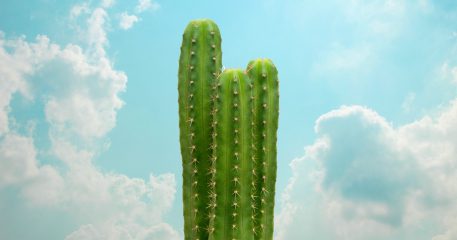
San Pedro, Peyote, and Peruvian Torch — A Complete Guide to Psychedelic Cacti (2026 Update)
Cacti and psychedelics might not be the first combination that comes to mind, but some of the world's most ancient and respected plant medicines grow as towering green columns in the deserts of the Americas. Psychedelic cacti have been used in traditional ceremonies for thousands of years — and they continue to attract curiosity from researchers and spiritual seekers alike. This guide covers the three main species you are likely to encounter: San Pedro, Peyote, and the Peruvian Torch.
In this guide: A complete overview of psychedelic cacti — their active compound (mescaline), the three main species, their traditional and contemporary use, effects, cultivation basics, and safety considerations.
This article is for educational purposes. Legal status varies widely by country and even by species — always check local laws before purchasing or cultivating any psychedelic plant.
What Makes a Cactus Psychedelic?
The key compound found in all three main psychedelic cacti is mescaline (3,4,5-trimethoxyphenethylamine). Mescaline is a naturally occurring psychedelic phenethylamine — the same class of compounds that includes dopamine and adrenaline. Unlike psilocybin (which acts on serotonin receptors), mescaline works primarily on the 5-HT2A receptor but through a structurally distinct pathway.
According to research documented at Erowid's cactus library, mescaline produces rich visual experiences, strong emotional and empathic effects, and a long-lasting experience that can stretch over 8–12 hours. It is one of the oldest known psychedelics used by humans, with archaeological evidence of cactus use in ceremonies dating back at least 5,700 years.
For context on how mescaline fits into the broader psychedelic landscape, see our guide on the most common types of psychedelics.
San Pedro Cactus (Echinopsis pachanoi)
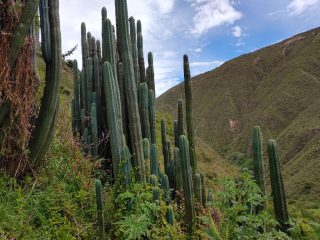
The San Pedro cactus is the most accessible and widely cultivated of the psychedelic cacti. It is a tall, columnar cactus native to the Andes mountains of Peru, Ecuador, and Bolivia, typically growing at altitudes of 2,000–3,000 metres. San Pedro has been used in Andean shamanic traditions for at least 3,000 years, often in healing ceremonies where the curandero (healer) works with the cactus to diagnose illness and restore balance.


Appearance and Identification
San Pedro grows as a blue-green columnar cactus with four to eight ribs and small, non-threatening spines. It can grow quickly — often 30 to 40 centimetres per year — and can reach several metres in height when cultivated in suitable conditions. The flowers are large, white, and bloom at night.
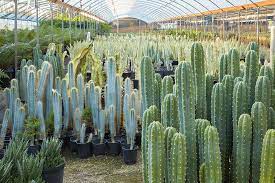
It is frequently found in garden centres across Europe and North America as an ornamental plant, often without any explicit reference to its psychoactive properties. This wide commercial availability reflects its legal status in many countries — the plant itself is often legal, even if the extraction or consumption of mescaline is not.
Mescaline Content in San Pedro
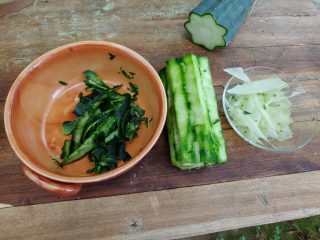
The mescaline content in San Pedro varies significantly depending on genetics, growing conditions, age, and which part of the plant is used. The outer green skin and the area just below it typically contain the highest concentration of active alkaloids. The white core contains significantly less.
If you are interested in growing San Pedro, our dedicated guide on how to grow San Pedro cactus covers everything from propagation to long-term care. For understanding the user experience, see the San Pedro cactus user guide.
Peyote (Lophophora williamsii)
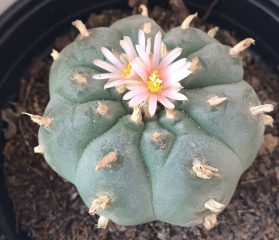
Peyote is perhaps the most famous psychedelic cactus in the world. It is a small, spineless, button-shaped cactus native to the Chihuahuan Desert of Mexico and southern Texas. For thousands of years, it has been central to the spiritual practices of indigenous peoples across Mexico and the American Southwest, particularly the Huichol (Wixáritari) people.
Appearance and Growth
Unlike the towering San Pedro, Peyote is small and grows close to the ground. A mature peyote plant looks like a small, flat, segmented green disc with distinctive geometric patterns on its surface — a visual quality that may itself inspire the geometric visions associated with mescaline. It grows extremely slowly, typically taking 10 to 15 years to reach maturity from seed.
This slow growth has conservation implications. Wild peyote populations in Mexico and Texas have been significantly reduced by both over-harvesting and habitat loss. Cultivating peyote — where legal — is a more sustainable choice than wild harvesting.
Cultural and Spiritual Significance
Peyote holds an irreplaceable place in the spiritual life of many Native American communities. The Native American Church, which has members across the United States and Canada, uses peyote as a sacrament in healing ceremonies that blend indigenous and Christian elements. In the United States, Native American Church members have a specific legal exemption allowing them to use peyote ceremonially.
Non-indigenous use of peyote is a topic of ongoing conversation within both indigenous communities and the broader psychedelic community. Many indigenous leaders have asked non-indigenous people to respect the plant's sacred status and avoid recreational use out of respect for its traditional context.
Legal note: Peyote and mescaline are Schedule I controlled substances in the United States. In Mexico, Peyote is protected for indigenous ceremonial use but its collection by non-indigenous people is restricted. Always research the specific laws in your country.
Peruvian Torch (Echinopsis peruviana)
The Peruvian Torch is closely related to San Pedro — so closely, in fact, that the two are sometimes confused. Both are tall, columnar Echinopsis cacti native to the Andes. However, the Peruvian Torch typically grows at higher altitudes and develops a bluer-green colouring, with longer and more prominent spines.
In terms of mescaline content, the Peruvian Torch is reported by many ethnobotanists to be one of the most potent of the commonly available psychedelic cacti. It is widely available as an ornamental plant in Europe and has similar legal status to San Pedro in most jurisdictions.
Like San Pedro, the Peruvian Torch has a history of use in Andean traditional medicine, though it is less documented than its close relative. In practice, it is often used in the same contexts and prepared in the same ways.
Comparing the Three Main Psychedelic Cacti
| Cactus | Origin | Size | Growth Speed | Traditional Use |
|---|---|---|---|---|
| San Pedro | Andes (Peru, Ecuador) | Tall columnar, to 6m | Fast (30–40cm/year) | Andean healing ceremonies |
| Peyote | Mexico / Texas | Small button, <15cm | Very slow (10–15 years to maturity) | Huichol and Native American Church |
| Peruvian Torch | High Andes (Peru) | Tall columnar, to 6m+ | Fast, similar to San Pedro | Andean traditional medicine |
Effects of Mescaline Cacti
Because all three cacti share mescaline as their primary active compound, the effects are broadly similar. However, each cactus also contains a range of other alkaloids that may shape the overall character of the experience.
Common Effects
The mescaline experience is typically described as warmer and more grounded than LSD, and longer-lasting than psilocybin. The emotional depth is often compared to psilocybin, but with a clearer, more visual quality.
Duration
This is one of the most significant practical factors. A full mescaline experience typically lasts 8–12 hours — considerably longer than most other common psychedelics. This demands careful planning. You will need a full day free of responsibilities, and ideally the following day should be light as well.
Set and setting are critical for any psychedelic experience. Our guide on what is set and setting explains the key principles, even though it focuses on magic mushrooms — the same principles apply to mescaline cacti.
Safety Considerations
Mescaline from psychedelic cacti is not considered physically addictive and has no established lethal dose in humans. However, the intensity and duration of the experience mean that safety considerations are important.
Important: Never drive or operate machinery during or after a mescaline experience. The duration of 8–12 hours means you should plan for a full day and night of rest.
Cultivation Overview
San Pedro and Peruvian Torch are among the easiest cacti to grow. They tolerate a wide range of conditions, grow quickly, and are available as cuttings or seeds from many botanical suppliers. Peyote is considerably more demanding — slow to grow, sensitive to overwatering, and requiring precise conditions.
For full cultivation guidance on San Pedro specifically, our detailed guide on how to grow San Pedro cactus walks through every step. For insights into working with San Pedro from a user perspective, the San Pedro cactus user guide is essential reading.
Tip: San Pedro and Peruvian Torch cuttings root readily when left to dry for a week and then planted in well-draining cactus mix. They need bright light and minimal water, especially in winter.
Mescaline Cacti in Modern Research
While psilocybin and MDMA have attracted the most clinical research attention in recent years, mescaline is beginning to receive renewed scientific interest. Researchers are exploring its potential applications in treating depression, PTSD, and addiction — conditions where other psychedelics have already shown promise.
The cultural and historical depth of mescaline use also makes it an important subject for anthropology and consciousness studies. Shamanism involving psychedelic plants like those discussed here has a continuous history stretching back thousands of years. Our guide on shamanism and magic mushrooms explores the broader context of plant medicine in spiritual traditions.
Curious about other psychedelic plant medicines? Explore our magic truffles collection — a well-studied, legally available psychedelic option with a long history of traditional use.
Note: If you are suffering from a mental illness and are curious about using psilocybin or any other psychedelic therapy, please consult one of the relevant medical authorities first. Do not self-prescribe — it is vital to have the right support and guidance when using psychedelics as medicine.


March 23, 2026