
Votre panier est vide.

Champignons médicinaux : profil produit et guide complet
Publié sous: Champignons médicinaux & fonctionnels
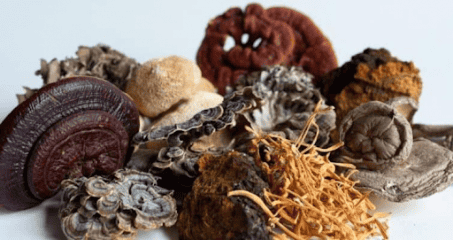
Un guide pratique des produits à base de champignons médicinaux : chaga, reishi, hericium (crinière de lion) et bien d'autres (mise à jour 2026)
Les champignons médicinaux comme le chaga, le reishi, l'hericium (crinière de lion), le cordyceps et la queue de dinde (Trametes versicolor) appartiennent à un tout autre univers que celui des champignons psychoactifs. Partout dans le monde, on consomme ces champignons fonctionnels sous forme de gélules, de teintures, de poudres et d'infusions. Ce guide t'aide à comprendre chaque espèce majeure, à choisir le bon format de produit et à juger la qualité avant d'acheter.
Dans ce guide : un aperçu clair des principales espèces de champignons médicinaux et des produits qui en sont issus. Tu découvriras ce que les chercheurs étudient pour chacune, comment on les utilise généralement et ce qu'il faut vérifier sur l'étiquette.
Nous renvoyons aussi vers nos fiches détaillées par espèce pour ceux qui veulent aller plus loin.
Qu'est-ce qui rend un champignon « médicinal » ?
Le terme « champignon médicinal » désigne les champignons qui contiennent des composés bioactifs documentés. Les groupes les plus importants sont les polysaccharides (en particulier les bêta-glucanes), les triterpènes et les stérols. Ces composés ne produisent aucun effet psychoactif. Les médecines traditionnelles les apprécient pour le bien-être général, et les chercheurs actuels continuent d'explorer leur potentiel.
Les guérisseurs chinois, japonais et d'autres traditions asiatiques utilisent les champignons médicinaux depuis des milliers d'années. La science moderne étudie aujourd'hui bon nombre de ces usages traditionnels tout en mettant au jour de nouveaux mécanismes. En 2026, les champignons médicinaux comptent parmi les segments qui progressent le plus vite sur le marché des compléments alimentaires. La qualité des produits s'est elle aussi nettement améliorée en dix ans. Tu peux en apprendre davantage sur le règne des champignons dans notre article sur le fonctionnement du mycélium, ou découvrir 10 faits fascinants sur les champignons.
Il est important de préciser que les champignons médicinaux et les champignons magiques appartiennent au même règne biologique, mais que leurs effets n'ont rien à voir.
Hericium / crinière de lion (Hericium erinaceus)
L'hericium, ou crinière de lion, est aujourd'hui le champignon médicinal dont on parle le plus. Ses principaux composés bioactifs, les héricénones et les érinacines, intéressent les chercheurs qui étudient le facteur de croissance nerveuse (NGF) et le facteur neurotrophique dérivé du cerveau (BDNF). Des études en laboratoire et sur l'animal examinent si ces composés jouent un rôle dans l'entretien des cellules nerveuses.
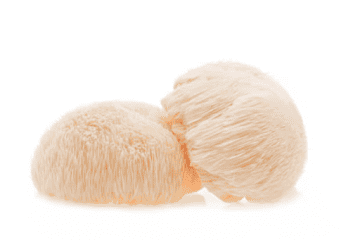
Un essai en double aveugle contre placebo publié en 2009 dans Phytotherapy Research a montré des résultats encourageants chez des personnes âgées présentant des troubles cognitifs légers. Les recherches sur l'hericium se poursuivent, et beaucoup de gens le prennent désormais chaque jour comme complément nootropique. Lis notre fiche complète sur l'hericium (crinière de lion) pour approfondir le sujet.
On trouve l'hericium sous forme de gélules, de poudre, de teinture ou de champignon séché entier. Beaucoup d'utilisateurs préfèrent les produits à double extraction. Ils combinent une extraction à l'eau et à l'alcool pour capter un spectre plus large de composés.
Reishi (Ganoderma lucidum) : le champignon médicinal de la détente
Les guérisseurs chinois traditionnels appellent le reishi le « champignon d'immortalité » depuis plus de 2 000 ans. Ses principaux composés bioactifs sont les triterpènes (en particulier les acides ganodériques) et les polysaccharides de type bêta-glucanes. Les chercheurs étudient ces composés pour leur rôle potentiel dans le soutien du bien-être général.
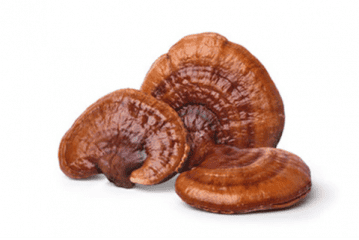
Le reishi n'est pas stimulant : les utilisateurs lui prêtent plutôt un côté apaisant. Voilà pourquoi il est si populaire comme complément du soir. Traditionnellement, on associe le reishi à la relaxation et à l'équilibre général. La teneur en triterpènes compte pour cet usage traditionnel, et c'est l'extraction à l'alcool ou la double extraction qui la préserve le mieux. Consulte notre guide complet du champignon reishi pour plus de détails.
Le reishi pousse sous forme de champignon ligneux en console. Sa chair est amère et coriace : personne ne le mange comme aliment. Les teintures, les gélules et les poudres d'extrait restent la façon classique de prendre du reishi.
Chaga (Inonotus obliquus)
Le chaga ne ressemble pas à un champignon classique. Il forme un sclérote stérile, une masse de tissu fongique qui pousse sur les bouleaux dans les forêts froides du Nord. L'extérieur paraît noir et carbonisé, tandis que l'intérieur brille d'un orange doré. En Russie et en Europe du Nord, on prépare du thé de chaga depuis des siècles.
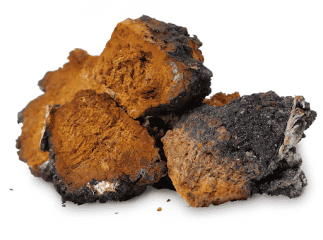
Les principaux composés bioactifs du chaga comprennent l'acide bétulinique (issu du bouleau), la mélanine et toute une gamme de polysaccharides. Les chercheurs s'intéressent au chaga pour sa forte teneur en antioxydants et pour ses usages traditionnels. L'infusion ou la décoction de chaga reste le format le plus traditionnel. Tu peux consulter notre fiche complète sur le champignon chaga pour en savoir plus.
Cependant, le chaga pousse lentement et les populations sauvages souffrent de la surcueillette. Quand tu achètes des produits à base de chaga, choisis des fournisseurs qui s'approvisionnent dans des forêts gérées ou certifiées durables.
Cordyceps (C. sinensis et C. militaris)
Le cordyceps attire les sportifs et les passionnés de fitness qui cherchent des moyens naturels de soutenir leur entraînement. La forme sauvage (Cordyceps sinensis) parasite des larves de chenilles en haute altitude, au Tibet. Elle reste extrêmement rare et chère. La plupart des produits du commerce utilisent du Cordyceps militaris cultivé, qui offre un profil bioactif similaire à un prix bien plus bas.
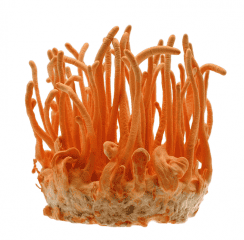
Certaines études cherchent à savoir si le cordyceps influence l'absorption d'oxygène pendant l'effort. L'adénosine et ses dérivés suscitent un intérêt particulier chez les chercheurs. Parmi les champignons médicinaux, le cordyceps est l'un de ceux qu'on associe le plus fortement à la performance physique dans l'usage traditionnel.
Queue de dinde (Trametes versicolor)
La queue de dinde (Turkey Tail) fait partie des champignons médicinaux les plus étudiés pour sa relation avec le système immunitaire. Elle contient deux polysaccharides bien connus : le PSK (polysaccharide K) et le PSP (polysaccharide peptide). Au Japon, le PSK fait l'objet d'études cliniques et d'une utilisation en milieu de santé professionnel depuis les années 1980.
La queue de dinde pousse partout dans les forêts tempérées du monde. On la repère et on l'identifie assez facilement. En complément, elle coûte moins cher que la plupart des autres champignons médicinaux. Pour ceux qui s'intéressent au soutien traditionnel des défenses immunitaires, la queue de dinde offre l'un des plus longs historiques de recherche disponibles.
Maitake (Grifola frondosa)
Le maitake, aussi appelé « poule des bois » ou « champignon qui danse », occupe une place à part dans la phytothérapie japonaise et chinoise. Contrairement à la plupart des champignons médicinaux, il est délicieux et s'utilise très bien en cuisine. Les praticiens traditionnels l'apprécient pour la vitalité et le bien-être général.
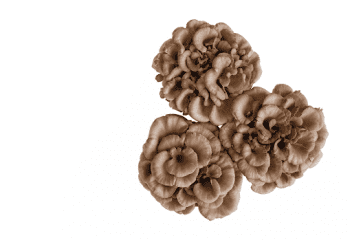
Le maitake contient une fraction de bêta-glucanes unique que les chercheurs continuent d'étudier. Le champignon apporte aussi des minéraux comme le potassium, le calcium et le magnésium, ainsi que les vitamines B2, D2 et la niacine. Tu peux déguster le maitake frais dans tes recettes ou le prendre en gélules ou en teinture au quotidien.
Bien choisir le format du produit
Les produits à base de champignons médicinaux existent sous plusieurs formats. Le choix compte, car la méthode d'extraction et la partie du champignon utilisée influencent ce que ton corps absorbe réellement.
Astuce qualité : choisis des produits qui précisent la teneur en bêta-glucanes, et pas seulement en « polysaccharides », un terme qui peut inclure de simples amidons sans aucun intérêt fonctionnel. Une méthode d'extraction clairement indiquée sur l'étiquette est le signe d'un produit fiable.
Comment débuter avec les champignons médicinaux
Si tu veux essayer les champignons médicinaux, choisis une seule espèce qui correspond à ce qui t'intéresse. Prends-la chaque jour pendant quatre à six semaines avant d'en évaluer les résultats. La plupart des études qui rapportent des résultats positifs portent sur une prise quotidienne régulière pendant des semaines ou des mois, et non sur des prises ponctuelles.
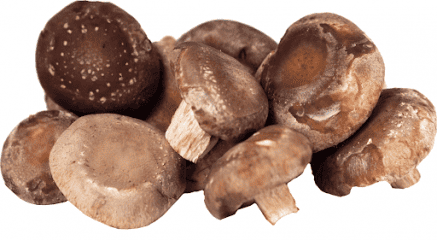
Les champignons médicinaux présentent en général un bon profil de sécurité et la plupart des gens les tolèrent bien. Pourtant, demande conseil à un professionnel de santé avant de commencer si tu prends des médicaments sur ordonnance ou si tu as une pathologie existante. Pour un éclairage centré sur les défenses immunitaires, lis notre article sur comment renforcer ton système immunitaire avec des compléments de champignons médicinaux.
Découvre toute notre gamme de
: gélules, teintures et poudres de marques de confiance. Nous sommes au service de la communauté des champignons depuis 2007.
Avertissement : les informations de cet article reflètent l'usage traditionnel et les recherches scientifiques en cours. Ces produits ne permettent pas de diagnostiquer, traiter, guérir ou prévenir une maladie. Ne dépasse pas la dose journalière recommandée. Les compléments alimentaires ne remplacent pas une alimentation variée et équilibrée ni un mode de vie sain. Consulte ton professionnel de santé si tu as des questions sur ta situation personnelle.


Février 12, 2024