Votre panier est vide.
Thérapie à la kétamine : les bases pour bien débuter
Publié sous: Science & Actus sur la Psilocybine
La kétamine a commencé sa carrière comme anesthésique chirurgical. Aujourd'hui, c'est l'un des outils les plus prometteurs en santé mentale. Si tu souffres de dépression résistante, de stress post-traumatique (TSPT) ou d'anxiété chronique, la thérapie assistée par la kétamine peut t'offrir le soulagement rapide que tu cherches.
Dans ce guide, tu vas découvrir ce qu'est la kétamine, comment se déroulent les séances de thérapie et ce que tu dois savoir avant de te lancer.
| Première autorisation | 1970 (comme anesthésique) |
| Première étude sur la dépression | 2000 (Yale / Berman et al.) |
| Spray nasal approuvé par la FDA | Spravato (eskétamine) – 2019 |
| Méthodes courantes | Perfusion intraveineuse, injection intramusculaire, pastille sublinguale, spray nasal |
| Durée type d'une séance | 40 à 60 minutes |
| Fourchette de prix (cure complète) | 3 300 à 27 300 $ selon la méthode et l'assurance |
Qu'est-ce que la kétamine ?
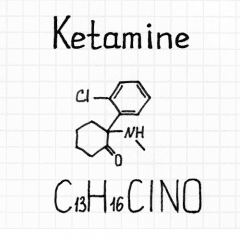
La kétamine est un anesthésique dissociatif et un antidouleur. Les médecins l'utilisent en chirurgie et en médecine vétérinaire depuis les années 1970. Ces dernières années, cependant, les chercheurs ont découvert qu'elle pouvait aussi améliorer la santé mentale, et ce rapidement.
Alors, comment ça marche ? La kétamine bloque les récepteurs NMDA dans le cerveau. Cette action augmente le glutamate, un neurotransmetteur qui aide le cerveau à former de nouvelles connexions neuronales. Résultat : elle stimule la neuroplasticité et peut interrompre les schémas de pensée ruminatifs liés à la dépression et à l'anxiété.
Contrairement aux antidépresseurs classiques qui ciblent la sérotonine, la kétamine agit via le système glutamatergique. Grâce à cette voie différente, certains patients ressentent un soulagement en quelques heures au lieu de plusieurs semaines. Cette action rapide la rend particulièrement précieuse pour les personnes souffrant de dépression résistante, de TSPT, de TOC, d'idées suicidaires et de douleurs chroniques.
L'histoire de la kétamine
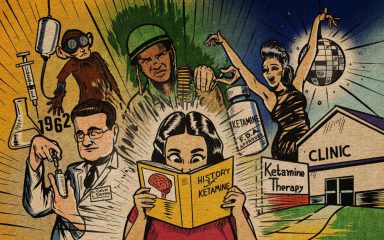
La kétamine a été synthétisée pour la première fois en 1962 par Parke-Davis (aujourd'hui rattaché à Pfizer). L'objectif était de créer une alternative plus sûre à la phencyclidine (PCP), avec moins d'effets secondaires hallucinogènes. La FDA l'a approuvée comme anesthésique en 1970, et l'armée américaine l'a rapidement adoptée comme anesthésique de champ de bataille pendant la guerre du Vietnam.
Dans les années 1970 et 1980, l'usage récréatif de la kétamine s'est répandu. Elle a alors été classée comme substance contrôlée de l'annexe III (Schedule III) aux États-Unis. Pourtant, au début des années 1990, des chercheurs de l'Université Yale ont remarqué quelque chose d'étonnant : des patients en convalescence après une opération disaient se sentir émotionnellement « plus légers » après avoir reçu de la kétamine.
En 2000, le premier essai clinique contrôlé par placebo a confirmé qu'une faible dose de kétamine pouvait réduire rapidement les symptômes dépressifs. Les études menées entre 2000 et 2006 ont approfondi ce résultat. Puis, en 2019, la FDA a approuvé Spravato (spray nasal d'eskétamine) spécifiquement pour la dépression résistante. Aujourd'hui, des centaines d'études dans le monde continuent d'explorer les applications de la kétamine en santé mentale.
Qu'est-ce que la thérapie assistée par la kétamine ?
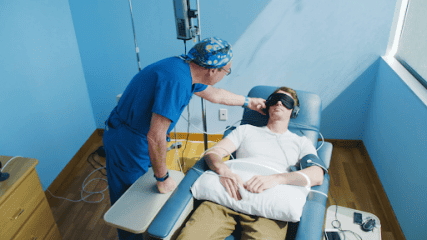
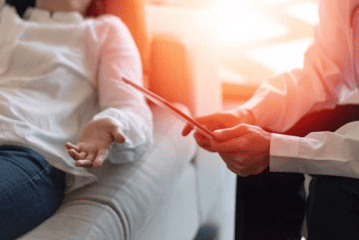
La thérapie assistée par la kétamine (KAP) associe la kétamine à une psychothérapie. Pendant une séance, un clinicien t'administre une faible dose de kétamine, généralement par voie intraveineuse, pendant que tu te détends dans un cadre confortable. Certains praticiens proposent aussi des masques de sommeil ou des écouteurs pour approfondir l'expérience.
La kétamine induit un état dissociatif qui peut faire baisser tes défenses émotionnelles. Dans cet état, les thérapeutes t'aident à traiter des pensées, des souvenirs et des schémas difficiles que la thérapie par la parole seule n'atteint pas toujours. Beaucoup de personnes racontent se sentir plus ouvertes et moins « bloquées » pendant ces séances.
Sur le plan neurologique, la kétamine augmente la plasticité synaptique. Elle active le système glutamatergique et aide le cerveau à créer de nouvelles voies neuronales. Des taux anormaux de glutamate sont associés à la dépression : rétablir l'équilibre de ce système peut donc améliorer rapidement l'humeur. De plus, le glutamate joue un rôle dans la perception de la douleur, ce qui explique pourquoi la kétamine aide aussi contre les douleurs chroniques.
Les résultats varient d'une personne à l'autre. Certaines personnes constatent une amélioration dès la première séance, tandis que d'autres ont besoin d'une cure complète. Le nombre de séances dépend de ton état, de ta réponse au traitement et des recommandations de ton thérapeute.
Quels sont les effets de la kétamine ?
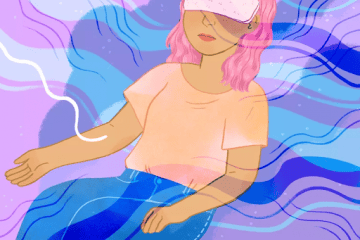
L'expérience dépend de la dose. À doses thérapeutiques (sous-anesthésiques), la plupart des gens décrivent toute une palette d'effets. Voici les plus courants :
Certaines personnes ressentent aussi des effets secondaires temporaires : nausées, vertiges, vision floue ou double, confusion et mauvaise coordination. Ces effets sont généralement de courte durée et disparaissent à la fin de la séance.
Astuce : écouter une musique apaisante pendant ta séance peut aider à orienter l'expérience dans une direction positive et à réduire l'inconfort.
Les méthodes d'administration
La kétamine peut être administrée de plusieurs façons. Chaque méthode a son propre délai d'action, sa durée et son coût.
⚠️ Important : la FDA a exprimé des inquiétudes concernant la kétamine préparée en pharmacie magistrale et prescrite en ligne sans suivi médical suffisant. Assure-toi toujours que ton traitement est supervisé par un professionnel agréé.
Comment te préparer à une séance
Une bonne préparation fait une vraie différence. Suis ces étapes pour tirer le meilleur de ta séance de thérapie à la kétamine.
1
Reste à jeun avant ta séance
Reste à jeun avant ta séance
Évite de manger pendant au moins 6 à 8 heures avant ton rendez-vous. Limite aussi les liquides dans les heures qui précèdent. Cela aide ton corps à bien absorber la kétamine et réduit le risque de nausées.
2
Porte des vêtements confortables
Porte des vêtements confortables
Choisis des vêtements amples et décontractés qui te permettent de bouger et de respirer facilement. Tu seras assis ou allongé pendant toute la séance, alors le confort est essentiel.
3
Définis ton intention
Définis ton intention
Prends quelques instants pour réfléchir à la raison pour laquelle tu suis ce traitement. Tu cherches à soulager une dépression ? À traiter un traumatisme ? À obtenir de nouvelles prises de conscience ? Une intention claire aide à guider l'expérience.
4
Prépare une playlist
Prépare une playlist
La musique peut façonner ta séance de façon puissante. Crée une playlist apaisante et apporte un casque pour t'isoler des distractions extérieures. Beaucoup de cliniques proposent aussi leurs propres playlists soigneusement choisies.
5
Pratique la pleine conscience
Pratique la pleine conscience
Une courte méditation ou un exercice de respiration avant ta séance peut apaiser ton système nerveux. Même cinq minutes de respiration profonde t'aident à arriver dans un état d'esprit plus réceptif et ouvert.
Astuce : dors bien et mange un repas léger et nutritif la veille. Évite l'alcool et les drogues récréatives pendant au moins 24 heures avant la séance.
Où la thérapie à la kétamine est-elle légale ?
La kétamine est approuvée comme anesthésique depuis les années 1970. Son utilisation pour traiter des troubles psychiatriques relève de la prescription « hors AMM » (hors autorisation de mise sur le marché, « off-label »). Cela signifie qu'un médecin agréé peut légalement la prescrire, même si elle n'est pas spécifiquement autorisée pour cet usage.
La grande exception est Spravato (spray nasal d'eskétamine). La FDA l'a approuvé en 2019 spécifiquement pour la dépression résistante. Aux États-Unis, la kétamine est une substance contrôlée de l'annexe III (Schedule III) : les cliniques doivent donc détenir un enregistrement DEA et respecter des règles strictes de stockage et de suivi.
Le statut légal varie selon les pays. Au Royaume-Uni, par exemple, le gouvernement a proposé en janvier 2025 de faire passer la kétamine de la classe B à la classe A. Dans la plupart des pays, l'usage médical sous supervision professionnelle reste légal. Cependant, la réglementation de la thérapie à domicile ou en télémédecine diffère nettement d'une région à l'autre. Consulte cette ressource pour savoir si la thérapie est disponible là où tu vis.
Sécurité, risques et coût
Administrée à faible dose dans un cadre clinique supervisé, la thérapie à la kétamine présente un profil de sécurité favorable. La plupart des effets secondaires, comme les nausées, les vertiges et la dissociation temporaire, sont légers et de courte durée.
Il existe toutefois des risques importants à connaître :
⚠️ Ne pratique pas l'automédication avec la kétamine. Elle peut provoquer de graves effets secondaires physiques et psychologiques. Fais toujours appel à un professionnel de santé agréé.
Combien ça coûte ?
Le coût de la thérapie à la kétamine varie beaucoup selon la méthode, le lieu et la prise en charge par l'assurance. Voici un aperçu général pour une cure complète aux États-Unis :
| Méthode | À ta charge (cure complète) | Avec assurance |
|---|---|---|
| Injection intramusculaire | 3 300 à 6 050 $ | Rarement remboursée |
| Perfusion intraveineuse | 4 675 à 13 500 $ | Rarement remboursée |
| Spray nasal Spravato | 16 800 à 27 300 $ | 2 940 à 9 450 $ |
Spravato est le plus susceptible d'être pris en charge par l'assurance, car il est approuvé par la FDA. Les thérapies par perfusion et par injection restent généralement à ta charge. Certaines cliniques proposent des facilités de paiement pour rendre le traitement plus accessible.
La thérapie à la kétamine est-elle faite pour toi ?
La thérapie assistée par la kétamine n'est pas un remède miracle. Mais pour les personnes qui n'ont pas répondu aux antidépresseurs classiques, elle offre une alternative scientifiquement fondée, avec des résultats rapides. Les recherches se multiplient : une étude de l'Université de Floride de 2025 a montré que plus de 80 % des patients atteints de TSPT rapportaient un meilleur sommeil, moins d'anxiété et moins de déclencheurs traumatiques après un traitement à la kétamine.
Si cette voie t'intéresse, commence par consulter un professionnel de santé mentale qualifié. Il pourra évaluer si la thérapie à la kétamine convient à ta situation et t'orienter vers un plan de traitement sûr et supervisé.
⚠️ Remarque : si tu souffres d'un trouble mental et que la kétamine, la psilocybine ou toute autre thérapie psychédélique t'intrigue, consulte d'abord un professionnel de santé. Ne t'auto-prescris rien. Un accompagnement et des conseils adaptés sont essentiels quand on explore les psychédéliques comme médicament.
Curieux du potentiel thérapeutique des psychédéliques ?
Découvre le Magic Mushrooms Shop : produits de confiance, kits de culture et ressources pédagogiques.


Février 12, 2024