
Votre panier est vide.

Focus sur le crapaud Bufo Alvarius : 5-MeO-DMT, cérémonies et conservation (mise à jour 2026)
Publié sous: Plantes ethnobotaniques & highs naturels
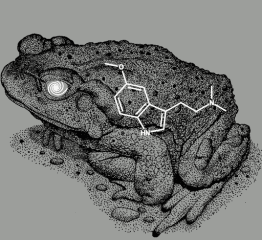
Le crapaud du désert de Sonora, la 5-MeO-DMT, les cérémonies du crapaud (Bufo) et les enjeux urgents de conservation que tu dois connaître. (Mise à jour 2026)
Dans cet article : le crapaud Bufo alvarius, aussi appelé crapaud du désert de Sonora ou crapaud du fleuve Colorado, produit l'une des substances psychédéliques les plus puissantes que l'on connaisse : la 5-MeO-DMT. Son venin est au cœur de cérémonies, de recherches cliniques et de sérieuses préoccupations en matière de conservation.
Voici tout ce que tu dois savoir sur le crapaud, sur la substance et sur le débat autour de son utilisation durable.
| Nom scientifique | Incilius alvarius (anciennement Bufo alvarius) |
| Noms communs | Crapaud du désert de Sonora, crapaud du fleuve Colorado |
| Habitat | Désert de Sonora, États-Unis et Mexique |
| Composé psychoactif | 5-MeO-DMT (5-méthoxy-N,N-diméthyltryptamine) |
| Durée de l'expérience | Environ 15 à 30 minutes |
| Statut de conservation | Quasi menacé (UICN) ; protégé en Californie et au Nouveau-Mexique |
Faisons connaissance avec le crapaud Bufo alvarius
Le crapaud du désert de Sonora est l'un des plus grands crapauds d'Amérique du Nord : il peut atteindre 19 cm de long. Il vit dans les prairies désertiques et les zones de broussailles du désert de Sonora, qui s'étend sur une partie du sud-ouest des États-Unis et du nord-ouest du Mexique. Principalement nocturne, il sort après les pluies d'été pour se nourrir et se reproduire.
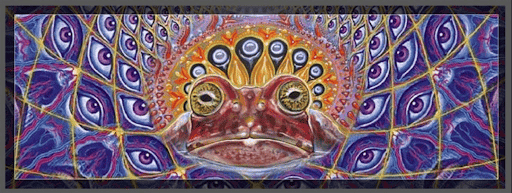
À presque tous égards, c'est un crapaud ordinaire, remarquable surtout par sa taille et par la niche écologique qu'il occupe. Cependant, les glandes parotoïdes de sa peau produisent une sécrétion venimeuse qui contient, entre autres composés, une concentration importante de 5-méthoxy-N,N-diméthyltryptamine : la 5-MeO-DMT.
Ce composé, une fois vaporisé et inhalé, provoque l'un des états de conscience modifiés les plus intenses que des êtres humains aient jamais décrits. L'expérience dure généralement de 15 à 30 minutes, mais elle est souvent décrite comme l'une des plus profondes, et des plus difficiles, de la vie d'une personne.
Qu'est-ce que la 5-MeO-DMT ?
La 5-MeO-DMT est une tryptamine, proche de la DMT (diméthyltryptamine), mais dotée d'un groupe méthoxy qui modifie sensiblement ses effets. Alors que la DMT est associée à des expériences visuelles très vives et à des rencontres avec des entités, la 5-MeO-DMT produit plutôt quelque chose de bien différent : une dissolution du sentiment de soi si complète qu'on la décrit souvent comme une rencontre directe avec la conscience pure, ou avec le rien et le tout à la fois.
Les personnes qui ont vécu une expérience de 5-MeO-DMT la décrivent souvent avec des mots qui échappent au langage ordinaire : une fusion avec l'univers, la prise de conscience du caractère illusoire de l'identité individuelle, la sensation d'être au-delà du temps et de l'espace. Ces expériences sont souvent précédées d'une période de forte intensité physique et émotionnelle.
La 5-MeO-DMT existe aussi naturellement dans plusieurs espèces de plantes, ce qui signifie que des versions synthétiques sont disponibles sans passer par le crapaud. C'est un point essentiel dans le débat sur la conservation.
Pour un aperçu plus large de la DMT et des substances apparentées, consulte notre article sur les types de psychédéliques les plus courants.
Les cérémonies du crapaud (Bufo)
Ces dernières années, les cérémonies utilisant le venin de Bufo alvarius, souvent appelées « cérémonies du Bufo » ou « cérémonies du crapaud », se sont multipliées, en particulier au Mexique et dans les milieux du bien-être et des retraites psychédéliques en Europe, en Amérique du Nord et en Amérique du Sud.
Le format varie. La plupart du temps, il y a un facilitateur, un cadre préparé et une seule inhalation du venin vaporisé. L'expérience étant très brève mais très intense, la cérémonie est souvent plus simple qu'une cérémonie d'ayahuasca ou de psilocybine qui dure plusieurs heures. Pourtant, le besoin d'une préparation soignée, d'un dépistage et d'un accompagnement à l'intégration est plutôt plus grand encore, car l'intensité de l'expérience peut être écrasante, surtout pour les personnes psychologiquement vulnérables ou qui se lancent sans préparation.
L'idée que les cérémonies du Bufo auraient des racines indigènes est remise en question. Certains chercheurs ont noté qu'il existe peu de preuves documentées d'un usage précolombien du venin de crapaud comme sacrement, et que le format actuel des cérémonies pourrait être une synthèse plus récente. Toutefois, la présence de l'image du crapaud dans certaines formes d'art mésoaméricain continue de faire l'objet de discussions savantes.
Le problème de la conservation
La popularité croissante des cérémonies du Bufo a créé un sérieux problème de conservation. Le crapaud du désert de Sonora n'est pas classé comme espèce en danger, mais sa collecte est interdite en Californie et au Nouveau-Mexique, et ses populations subissent une pression croissante due à la perte d'habitat, à la mortalité routière et à la collecte commerciale de son venin.

Prélever le venin d'un crapaud ne le tue pas forcément, mais le processus stresse l'animal. Une collecte à grande échelle, que ce soit pour des facilitateurs de cérémonies ou pour des opérateurs commerciaux, peut avoir un impact réel sur les populations locales de crapauds. Les grenouilles et les crapauds comptent parmi les groupes de vertébrés les plus menacés au monde, et toute pression supplémentaire sur les populations sauvages doit être prise au sérieux.
Ce problème est aggravé par l'existence d'une alternative facilement accessible : la 5-MeO-DMT de synthèse. Fabriquée en laboratoire, elle est chimiquement identique au composé présent dans le venin de crapaud et produit les mêmes effets. Il n'y a aucune raison pharmacologique d'utiliser du venin de crapaud quand de la 5-MeO-DMT de synthèse est disponible.
Plusieurs chercheurs, défenseurs autochtones de la conservation et organisations de réduction des risques estiment que les facilitateurs de cérémonies devraient passer à la 5-MeO-DMT de synthèse, un choix plus éthique qui protège les populations sauvages de crapauds tout en rendant la même expérience accessible. Cette position gagne du terrain dans les communautés psychédéliques.

Important : le crapaud du désert de Sonora est une espèce protégée dans certaines régions des États-Unis. Collecter, harceler ou blesser des crapauds sauvages peut entraîner de lourdes conséquences juridiques. Si les expériences de 5-MeO-DMT t'intéressent, pense aux alternatives de synthèse et renseigne-toi toujours sur le statut légal dans ton pays.
La recherche clinique sur la 5-MeO-DMT
Au-delà du contexte des cérémonies, la 5-MeO-DMT est de plus en plus étudiée comme agent thérapeutique potentiel. Les premières recherches suggèrent qu'elle pourrait avoir des effets antidépresseurs rapides et favoriser des expériences mystiques aux effets psychologiques positifs durables.
Une étude publiée dans Frontiers in Psychiatry a examiné les effets psychologiques de la consommation naturaliste de 5-MeO-DMT et a constaté chez les participants une réduction significative de la dépression et de l'anxiété, ainsi qu'une hausse durable de la satisfaction de vivre. L'étude a aussi montré que la profondeur de l'expérience mystique permettait de prédire l'ampleur du bénéfice thérapeutique, ce qui concorde avec les résultats des recherches sur la psilocybine.
Ces recherches sont préliminaires, et des essais contrôlés plus vastes sont nécessaires avant de pouvoir valider la moindre allégation thérapeutique. Cependant, les premiers résultats sont prometteurs et attirent de plus en plus l'attention des chercheurs intéressés par les traitements psychédéliques à action rapide.
Quelle différence avec la psilocybine ?
La psilocybine et la 5-MeO-DMT ont des effets assez différents, bien que ce soient toutes deux des tryptamines. La psilocybine provoque généralement une expérience de quatre à six heures, riche en visuels, en complexité émotionnelle et en introspection. La 5-MeO-DMT provoque une expérience beaucoup plus courte mais souvent plus extrême, moins visuelle, davantage axée sur une dissolution complète de l'identité ordinaire.
Certains décrivent les expériences de psilocybine comme une conversation profonde avec l'inconscient, et la 5-MeO-DMT comme une réinitialisation complète du système. Aucune n'est meilleure par nature : ce sont des outils différents, avec des usages différents. Les deux demandent du respect, de la préparation et, idéalement, un accompagnement compétent.
Pour en savoir plus sur la psilocybine, consulte notre guide sur ce que sont les champignons magiques et comment ils agissent.
La psilocybine et ses effets te intriguent ? Découvre notre gamme de
et nos ressources pédagogiques sur le blog de Magic Mushrooms Shop.
Remarque : si tu souffres d'une maladie mentale et que tu es curieux d'essayer la psilocybine ou toute autre thérapie psychédélique, consulte d'abord les autorités médicales compétentes. Ne t'automédique pas : il est essentiel d'être bien entouré et bien guidé quand on utilise des psychédéliques comme médicament.


Janvier 4, 2024