
Votre panier est vide.

Comment utiliser une hotte à flux laminaire – Le guide complet de mycologie
Publié sous: Culture & Cultivation
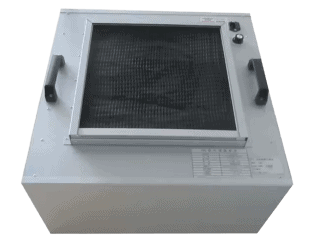
Le guide complet pour utiliser une hotte à flux laminaire en culture stérile de champignons : ce que c'est, quand en avoir besoin et comment en tirer le meilleur.
Dans ce guide : tout ce que tu dois savoir sur la hotte à flux laminaire : son fonctionnement, quand la choisir plutôt qu'une still air box, un guide d'utilisation pas à pas et les bonnes pratiques pour garder les contaminations à distance de ta culture.
Tu débutes en technique stérile ? Commence par nos guides sur comment utiliser une sporée et comment préparer des boîtes de Pétri à l'agar. Pour avoir une vision complète de la stérilisation, consulte comment stériliser le matériel de culture.
Si tu as déjà passé un peu de temps dans la communauté de la culture de champignons, tu as forcément entendu parler de la hotte à flux laminaire, citée avec les boîtes d'agar, les grains colonisés et les
. On la présente comme la référence absolue du travail stérile, l'équipement qui sépare les cultivateurs sérieux des amateurs occasionnels. Mais qu'est-ce qu'une hotte à flux laminaire exactement, quand en as-tu vraiment besoin et comment l'utiliser correctement ? Ce guide répond à toutes ces questions en détail.
Qu'est-ce qu'une hotte à flux laminaire ?
Une hotte à flux laminaire, aussi appelée poste de travail propre ou « flow hood », est un poste de travail fermé qui crée un environnement pratiquement exempt de contamination pour les tâches sensibles. Pour cela, elle aspire l'air ambiant à travers un filtre HEPA (High-Efficiency Particulate Air), qui retient 99,97 % des particules en suspension jusqu'à 0,3 micron. L'air filtré circule ensuite sur le plan de travail en un flux constant et uniforme : c'est la partie « laminaire ». Comme l'air se déplace dans une seule direction, sans turbulence, les contaminants sont sans cesse chassés loin de tes boîtes ouvertes, de tes bocaux et de tes cultures, au lieu de pouvoir s'y déposer.
Résultat : un espace de travail qui reproduit l'environnement d'une salle blanche de laboratoire professionnel (classe ISO 5 / Class 100), pour une fraction du coût et de l'encombrement. En culture de champignons, cela veut dire que tu peux ouvrir des boîtes de Pétri, couler de l'agar, transférer du mycélium ou inoculer des bocaux de grains sans risque notable de contamination aéroportée sur ton travail.
Flux horizontal ou flux vertical
Il existe deux configurations principales, et la différence compte pour ta façon de travailler :
| Hotte à flux horizontal | Le filtre HEPA est monté à l'arrière ; l'air propre souffle horizontalement vers toi. C'est le type le plus courant en culture de champignons. Le flux d'air de l'arrière vers l'avant garantit que tes mains et tes outils restent en aval des surfaces critiques, donc tu ne souffles pas de contamination sur tes échantillons ouverts par accident. |
| Hotte à flux vertical | Le filtre HEPA est monté sur le dessus ; l'air souffle vers le bas sur le plan de travail. Plus courante dans les laboratoires pharmaceutiques et cliniques. Utile quand tu travailles avec du matériel plus haut ou quand l'encombrement de la hotte doit être réduit au minimum. |
Pour la plupart des cultivateurs amateurs et des petites productions commerciales, une hotte à flux horizontal est le meilleur choix. Elle offre un accès facile et dégagé au plan de travail et oriente le flux d'air de façon à repousser toute contamination venue de la pièce loin de tes cultures ouvertes.
Astuce : si tu hésites entre horizontal et vertical, pense à l'endroit où seront tes mains. Dans une hotte horizontale, travaille près de la face du filtre : la zone la plus propre se trouve juste devant le filtre HEPA, et elle devient un peu moins maîtrisée à mesure que tu avances. Garde le matériel à au moins 15 cm de l'ouverture avant.
Hotte à flux laminaire ou still air box : laquelle te faut-il ?
Une still air box (SAB) repose sur un autre principe : dans un bac fermé, l'air ne bouge plus du tout, donc les particules en suspension retombent au lieu de tourbillonner sur ton travail. C'est une solution économique, facile à fabriquer soi-même, et parfaitement suffisante pour de nombreuses tâches de culture, notamment pour inoculer des bocaux de grains avec des
ou travailler avec des sporées.
Une hotte à flux laminaire remplace activement l'air autour de ton travail par un flux constant d'air filtré HEPA. C'est une approche fondamentalement plus fiable : au lieu d'espérer que l'air se soit assez calmé, tu disposes d'un environnement continu et contrôlé. La contrepartie, c'est le coût et la place : une hotte de qualité coûte plusieurs centaines d'euros, voire plus, alors qu'une SAB se construit pour presque rien.
| Caractéristique | Still air box | Hotte à flux laminaire |
|---|---|---|
| Coût | Très faible (DIY avec un bac de rangement) | Plus élevé (300–1000 €+ pour un appareil de qualité) |
| Fonctionnement | Stoppe les mouvements d'air pour que les particules retombent | Remplace l'air par un flux continu filtré HEPA |
| Rapidité de travail | Plus lent : il faut attendre que l'air se calme après chaque mouvement | Plus rapide : air propre en continu, tu travailles à ton rythme |
| Idéal pour | Débutants, inoculations simples, petits volumes | Travail sur agar, transferts de cultures, productions en grand volume ou commerciales |
| Travail sur boîtes d'agar | Possible mais difficile | Idéal : la référence pour les transferts sur agar |
| Sensibilité à la qualité de l'air de la pièce | Élevée : la pièce doit être très propre et sans courants d'air | Faible : la hotte compense la plupart des contaminations de la pièce |
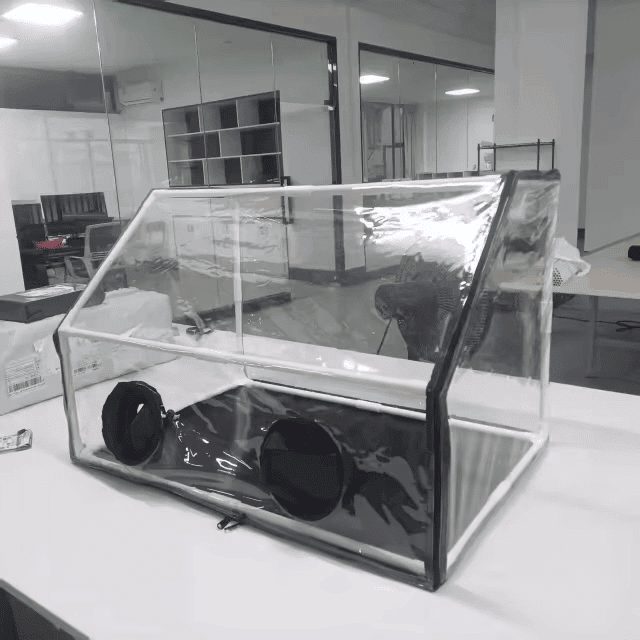 Les still air boxes (SAB) existent sous différentes formes.
En résumé : commence avec une still air box. Quand tu seras prêt à travailler régulièrement avec des boîtes d'agar, à préparer des
ou à passer à plus grande échelle, la hotte à flux laminaire est la mise à niveau qui supprime presque toute l'incertitude du travail stérile.
Quand utiliser une hotte à flux laminaire
Une hotte à flux laminaire est le bon outil dès que tu fais un travail très sensible aux contaminations aéroportées, en particulier toute tâche où des surfaces restent exposées à l'air libre plus de quelques secondes. Voici les usages les plus courants en culture de champignons :
se passent sur une boîte d'agar à l'intérieur de la hotte, ce qui en fait l'un des matériaux de départ les plus courants pour les utilisateurs de hotte. La boîte ouverte reste exposée plusieurs secondes, donc un flux laminaire propre est indispensable.
dans un environnement sans contamination. La culture liquide est une technique prisée pour une colonisation rapide, et une hotte rend le processus fiable.
Remarque : une hotte à flux laminaire protège ton travail des contaminants aéroportés, elle ne te protège pas toi de ce que tu manipules. Si tu manipules quoi que ce soit de potentiellement dangereux, utilise plutôt un poste de sécurité microbiologique (PSM), qui filtre l'air à la fois loin de tes échantillons et loin de ton visage. Pour la culture standard avec des spores de Psilocybe cubensis ou d'espèces gourmet, une hotte horizontale classique est sans danger.
Comment utiliser une hotte à flux laminaire : pas à pas
Posséder une hotte n'est que la moitié du chemin. C'est une bonne technique dans la zone d'air propre qui garde vraiment les contaminations à l'écart. Suis ces étapes à chaque fois.
1
Choisis une pièce propre et peu fréquentée
Choisis une pièce propre et peu fréquentée
Ta hotte produit de l'air propre, mais elle ne peut pas compenser une pièce pleine de spores en suspension, de poils d'animaux ou de fenêtres ouvertes. Ferme toutes les fenêtres et les portes, éteins les ventilateurs et la climatisation, et sors les animaux avant de commencer. Plus la pièce est propre, moins ton filtre HEPA a de travail et plus il durera longtemps.
2
Allume la hotte et laisse-la tourner 15 à 30 minutes
Allume la hotte et laisse-la tourner 15 à 30 minutes
Avant de toucher à quoi que ce soit de stérile, laisse à la hotte le temps d'évacuer les particules qui ont pu se déposer sur la surface du filtre ou dans le caisson depuis ta dernière session. Cette période de chauffe garantit que le flux laminaire est bien établi et que l'environnement à l'intérieur de la hotte est propre. Certains cultivateurs la font tourner 30 minutes complètes avant tout travail sur agar ; 15 minutes suffisent généralement pour des inoculations.
3
Nettoie toutes les surfaces à l'alcool isopropylique 70 %
Nettoie toutes les surfaces à l'alcool isopropylique 70 %
Pendant que la hotte chauffe, essuie le plan de travail et les parois intérieures avec de l'alcool isopropylique à 70 %. Ne pulvérise pas directement sur le filtre HEPA : cela peut abîmer le matériau du filtre avec le temps. Essuie avec un chiffon non pelucheux ou du papier absorbant, et laisse l'alcool s'évaporer complètement avant de commencer. N'utilise pas d'IPA à 99 % : la teneur plus élevée en eau de l'IPA à 70 % ralentit l'évaporation et prolonge le temps de contact avec les parois cellulaires des micro-organismes, ce qui en fait un désinfectant plus efficace. Tu peux aussi utiliser des lingettes imbibées d'alcool pour nettoyer rapidement un endroit précis pendant la session. Consulte notre guide complet sur les méthodes de stérilisation et de désinfection pour mieux comprendre pourquoi la concentration compte.
4
Prépare tes outils et ton matériel en dehors de la hotte
Prépare tes outils et ton matériel en dehors de la hotte
Rassemble tout ce dont tu as besoin avant le début de ta session : tes
,
, bocaux ou boîtes, scalpels, un briquet torche au butane, lingettes imbibées d'alcool et tout autre matériel. Essuie l'extérieur de chaque objet avec de l'IPA à 70 % et laisse sécher. Place les objets sur un support ou un plateau devant la hotte, pas encore à l'intérieur, pour pouvoir les rentrer au fur et à mesure sans passer sans cesse les bras dedans et dehors, ce qui perturbe le flux d'air.
5
Mets des gants et un masque
Mets des gants et un masque
Les gants en nitrile éliminent la contamination par les empreintes digitales et permettent de désinfecter facilement tes mains par pulvérisation entre deux étapes. Un masque chirurgical réduit fortement le nombre de particules que tu expires au-dessus des récipients ouverts. C'est particulièrement important quand tu te penches sur le plan de travail d'une hotte horizontale : ton souffle part vers l'avant, dans la zone d'air propre, au lieu d'être repoussé par le flux d'air. Rassemble tout ton
avant de démarrer une session.

6
Travaille près de la face du filtre HEPA, la zone propre
Travaille près de la face du filtre HEPA, la zone propre
Dans une hotte à flux horizontal, l'air le plus propre se trouve juste à la face du filtre et devient de moins en moins propre à mesure que tu t'approches de l'ouverture avant. Place tes éléments les plus sensibles (boîtes de Pétri ouvertes, boîtes d'agar, bocaux de grains sans couvercle) aussi près que possible du fond du plan de travail. Garde le matériel à au moins 15 cm de l'ouverture avant. Évite de placer de gros objets entre le filtre et tes cultures ouvertes, car ils peuvent créer des turbulences et des zones d'ombre où le flux laminaire se brise.
7
Stérilise à la flamme tous les outils métalliques avant chaque utilisation
Stérilise à la flamme tous les outils métalliques avant chaque utilisation
Même dans une hotte, la lame de ton scalpel, ton anse d'inoculation ou ton aiguille doivent être stérilisés à la flamme avant chaque transfert. Tiens la pointe métallique dans la flamme d'un briquet torche au butane jusqu'à ce qu'elle devienne rouge-orangé, puis laisse-la refroidir cinq à dix secondes avant de toucher un substrat ou de l'agar. Un outil chaud tue le mycélium au contact. Repasse à la flamme entre chaque transfert, sans jamais supposer qu'un outil est encore stérile parce que tu l'as posé sur une surface propre.
8
Travaille avec des gestes lents et maîtrisés
Travaille avec des gestes lents et maîtrisés
Des mouvements rapides à l'intérieur de la hotte créent des turbulences qui perturbent le flux laminaire. Cela peut attirer de l'air non filtré de la pièce dans la zone propre, exactement ce que tu veux éviter. Bouge lentement et méthodiquement. Évite de passer le bras au-dessus de récipients ouverts ; déplace plutôt le récipient pour pouvoir l'atteindre directement. Ne parle pas, n'éternue pas et ne tousse pas en direction de ton travail ouvert : tourne la tête sur le côté, loin de la hotte, si nécessaire.
9
Limite au maximum le temps d'exposition des récipients ouverts
Limite au maximum le temps d'exposition des récipients ouverts
Même dans une hotte, plus l'exposition est courte, plus le risque de contamination est faible. Une fois les bocaux ouverts, remets les couvercles rapidement. Ne soulève le couvercle d'une boîte de Pétri que de ce qu'il faut pour le transfert, et referme-la aussitôt. Travaille un récipient à la fois plutôt que d'en avoir plusieurs ouverts en même temps, sauf si la tâche l'exige.
10
Nettoie et éteins correctement après chaque session
Nettoie et éteins correctement après chaque session
Une fois terminé, essuie à nouveau le plan de travail avec de l'IPA à 70 %. Retire tout le matériel de la hotte. Laisse-la tourner encore cinq minutes pour évacuer les particules générées pendant ta session, puis éteins-la. Ne laisse jamais de matériel stérilisé dans la hotte lorsqu'elle est éteinte : sans flux d'air, toute contamination qui se dépose dessus pendant l'arrêt ne peut pas être évacuée.
Ce qu'il te faut : checklist du matériel pour hotte à flux laminaire
| Article | Utilité | Remarques |
|---|---|---|
| Hotte à flux laminaire (horizontale) | Crée la zone d'air propre stérile | À acheter toute faite ou à construire soi-même avec un module de soufflerie HEPA |
| Alcool isopropylique 70 % + lingettes imbibées d'alcool | Désinfecte les surfaces, les outils et les gants | Ne pas pulvériser directement sur le filtre HEPA. Les lingettes à l'unité sont pratiques pour nettoyer ponctuellement pendant une session |
| Gants en nitrile stériles | Évite la contamination par les empreintes digitales sur les surfaces stériles | Repulvérise de l'IPA entre chaque transfert |
| Masque chirurgical | Réduit les particules expirées au-dessus des récipients ouverts | Un simple masque jetable suffit. Disponible avec notre |
| Briquet torche au butane | Stérilise à la flamme les outils d'inoculation en métal | Un briquet torche donne une flamme plus chaude et plus propre qu'un briquet jetable |
| Scalpel ou anse d'inoculation | Pour les transferts sur agar et le clonage de tissu | Stérilise à la flamme avant chaque utilisation. Découvre nos |
| Transfèrent les spores directement sur les boîtes d'agar dans la hotte | L'un des moyens les plus simples de démarrer une nouvelle culture : il suffit de passer le swab sur la surface de l'agar | |
| Mycélium à colonisation rapide, prêt pour l'inoculation | Essuie l'aiguille et le flacon à l'IPA avant utilisation. Idéal pour l'inoculation de grains | |
| Sporées ou seringues de spores | Autres matériaux génétiques de départ | Découvre toutes les disponibles |
| Chiffons non pelucheux ou papier absorbant | Essuyage des surfaces avec de l'IPA | Évite tout ce qui libère des fibres dans la zone propre |
Entretien d'une hotte à flux laminaire
Une hotte ne vaut que ce que vaut son filtre HEPA. Négliger l'entretien entraîne une baisse du débit d'air, des zones mortes dans la zone d'air propre et, à terme, des taux de contamination qui annulent l'intérêt même d'avoir une hotte.
Astuce : tiens un journal de tes sessions. Noter la date, les tâches effectuées et les éventuelles contaminations t'aide à repérer des tendances : par exemple, un pic soudain de contaminations peut indiquer un pré-filtre à remplacer plutôt qu'un problème de technique.
Erreurs courantes avec une hotte à flux laminaire
Même avec une hotte qui tourne, des contaminations peuvent survenir si ta technique n'est pas au point. Voici les erreurs les plus fréquentes chez les cultivateurs :
Prêt à passer ta technique stérile au niveau supérieur ? Fais le plein de
et de
, les deux matériaux de départ les plus populaires pour le travail sous hotte. Découvre tout le
, y compris les gants stériles et les lingettes alcoolisées, ou explore toute notre
.


Avril 9, 2026