
Votre panier est vide.

Ayahuasca : histoire, utilisation, effets, ingrédients et sécurité
Publié sous: Plantes ethnobotaniques & highs naturels
Ayahuasca : histoire, ingrédients, effets, cérémonie et sécurité — tout ce que tu dois savoir (mise à jour 2026)
Dans ce guide : l'ayahuasca fait partie des plantes médicinales les plus complexes et les plus importantes sur le plan culturel. Depuis des siècles, les guérisseurs amazoniens utilisent ce breuvage lors de cérémonies. Aujourd'hui, des chercheurs sur trois continents étudient son potentiel.
Nous faisons ici le tour complet du sujet : l'histoire de l'ayahuasca, le fonctionnement du breuvage, le déroulement d'une cérémonie, les effets ressentis et, surtout, ce que tu dois savoir en matière de sécurité.
Peu de sujets dans le monde psychédélique suscitent autant de curiosité que l'ayahuasca. Certains la décrivent comme une médecine, un enseignant, une technologie spirituelle ou un outil de diagnostic. Les chercheurs, eux, l'étudient dans le cadre de la dépression, du SSPT, des addictions et du deuil. Chaque année, des dizaines de milliers de personnes se rendent en Amazonie pour participer à des cérémonies. Parallèlement, des cercles d'ayahuasca se sont installés dans des villes d'Europe, d'Amérique du Nord et d'ailleurs.
Pourtant, l'ayahuasca est souvent mal comprise. Elle n'a aucun usage récréatif. Elle présente de vrais risques pour certaines personnes. Et elle ne sort pas de nulle part : des milliers d'années de savoirs, de rituels et de significations autochtones se cachent derrière. Cet héritage mérite d'être reconnu et respecté.
Cet article aborde l'ayahuasca en toute honnêteté : une préparation végétale complexe et puissante, avec des racines profondes, des effets réels et de véritables risques. L'objectif est de t'apporter une information fiable, pas de faire de la promotion. Pour une comparaison plus large avec d'autres psychédéliques, dont les champignons magiques, consulte notre aperçu des types de psychédéliques les plus courants.
L'ayahuasca en un coup d'œil
| Origine | Bassin amazonien — Amérique du Sud |
| Ingrédients principaux | Liane Banisteriopsis caapi + plante contenant du DMT (généralement Psychotria viridis) |
| Composés actifs | DMT (diméthyltryptamine), alcaloïdes harmala (harmine, harmaline, tétrahydroharmine) |
| Mécanisme | Le DMT active les récepteurs sérotoninergiques 5-HT2A ; les alcaloïdes harmala inhibent la MAO, ce qui permet au DMT d'agir par voie orale |
| Durée | 4 à 6 heures |
| Statut légal | Variable selon les pays ; le DMT est classé comme stupéfiant dans la plupart des pays occidentaux ; l'ayahuasca est autorisée à usage religieux au Brésil, dans certaines régions des États-Unis et ailleurs |
L'histoire de l'ayahuasca
Les preuves archéologiques et ethnobotaniques suggèrent que les peuples amazoniens utilisent l'ayahuasca depuis bien plus de mille ans. Certains chercheurs pensent même que cette pratique remonte encore plus loin. L'art rupestre et divers artefacts laissent penser que des préparations végétales à effet visionnaire faisaient partie de la vie spirituelle andine et amazonienne bien avant l'arrivée des Européens.
Les premiers témoignages académiques occidentaux sur l'ayahuasca datent du XIXe siècle. En 1851, le botaniste britannique Richard Spruce découvre la liane Banisteriopsis caapi chez les Tukano, dans l'actuelle Colombie. Il envoie des échantillons botaniques en Europe. Cependant, il faudra attendre le XXe siècle pour que les scientifiques étudient réellement la chimie du breuvage.
Les traditions amazoniennes
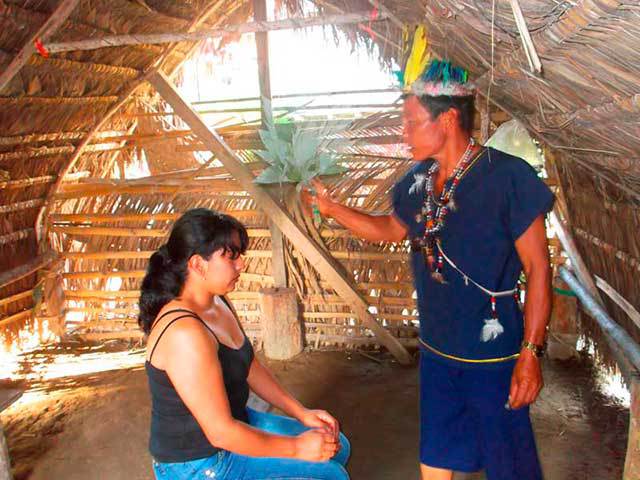
Dans tout le bassin amazonien, l'ayahuasca occupe une place centrale dans les pratiques de guérison et les cérémonies de nombreux groupes autochtones. On peut citer les Shipibo-Conibo du Pérou, les Shuar d'Équateur et les Huni Kuin (Kaxinawá) du Brésil, parmi beaucoup d'autres. Même si les pratiques varient d'un groupe à l'autre, plusieurs points communs reviennent systématiquement.
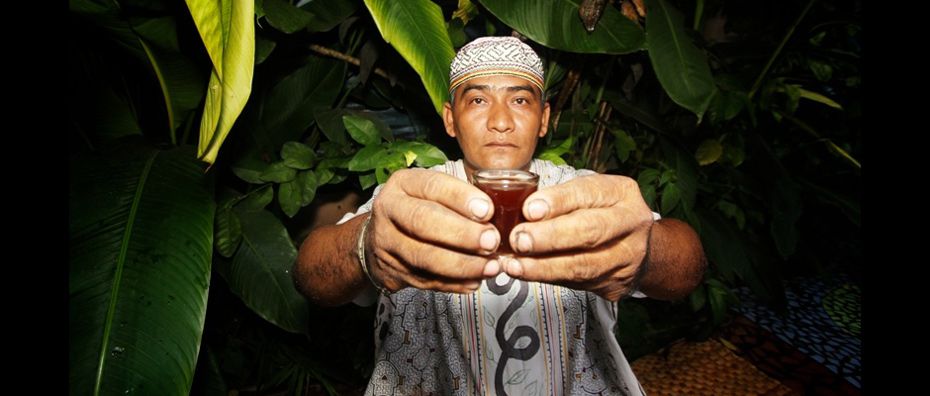
D'abord, un praticien formé — appelé curandero, ayahuascero ou vegetalista — prépare et administre le breuvage. Ensuite, la cérémonie a lieu la nuit. Enfin, la musique joue un rôle central pour guider l'expérience. Les chants de guérison appelés icaros, en particulier, façonnent, protègent et orientent le voyage. Pour en savoir plus sur les racines chamaniques des plantes médicinales, lis notre guide sur le chamanisme et les champignons magiques.
Dans ces traditions, les praticiens ne voient pas l'ayahuasca comme une simple substance chimique, mais comme une plante enseignante dotée de conscience. Ils pensent qu'elle communique directement avec celles et ceux qui la boivent. Cette vision influence la manière de tenir la cérémonie, de préparer les participants et d'interpréter l'expérience ensuite. Elle mérite le respect, quelles que soient tes convictions personnelles sur le mécanisme.
La diffusion en Occident
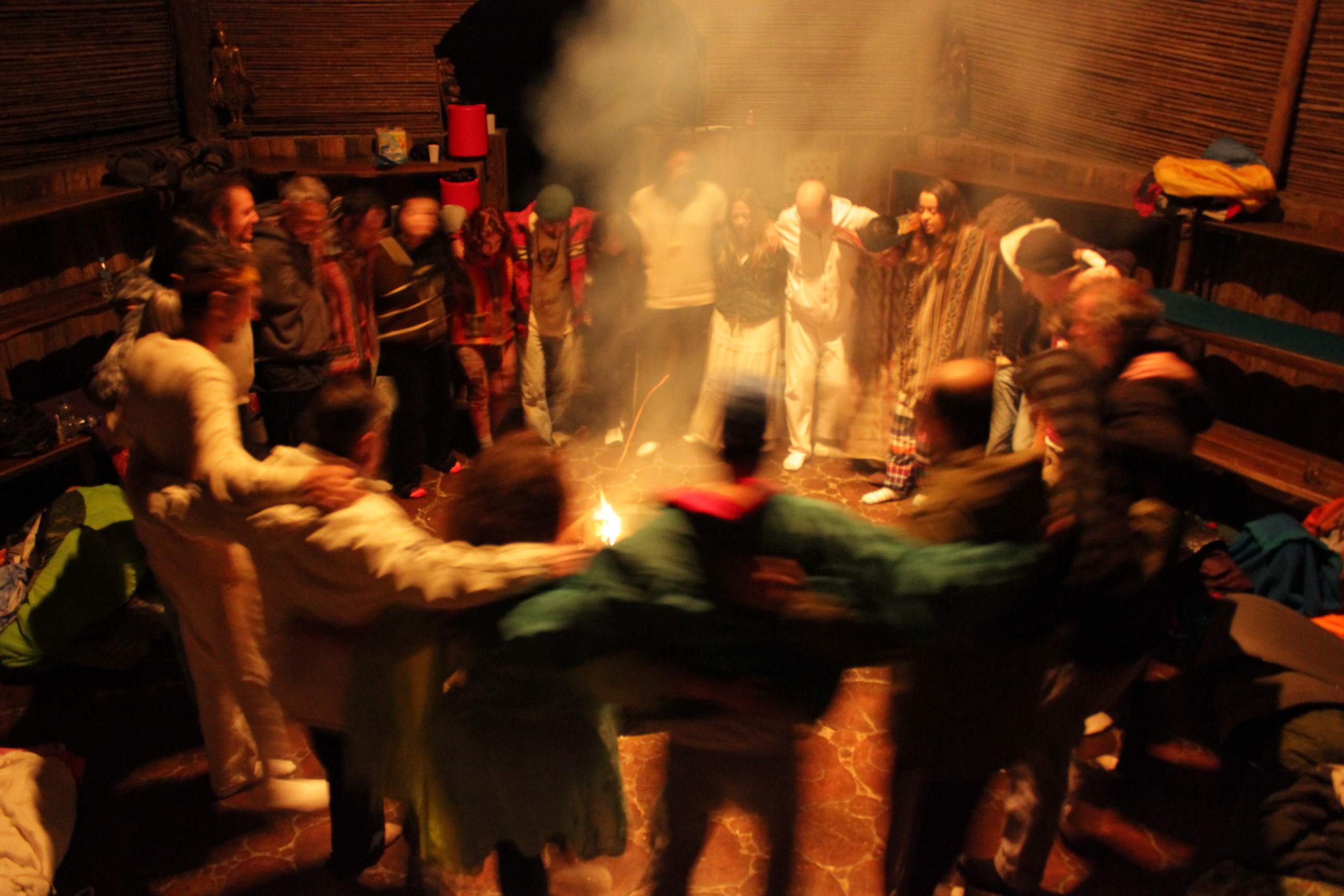
L'ayahuasca a largement dépassé l'Amazonie durant la seconde moitié du XXe siècle. Les mouvements religieux syncrétiques brésiliens — notamment le Santo Daime (fondé dans les années 1930) et l'União do Vegetal (UDV, fondée en 1961) — ont intégré l'ayahuasca dans des rituels d'inspiration chrétienne. Par la suite, ces deux mouvements se sont implantés en Europe et en Amérique du Nord.
En 2006, la Cour suprême des États-Unis a confirmé le droit d'une branche de l'UDV au Nouveau-Mexique d'utiliser l'ayahuasca comme sacrement religieux. Cette décision historique continue d'avoir des conséquences juridiques. En dehors des cadres religieux formels, l'intérêt pour l'ayahuasca comme outil thérapeutique a nettement augmenté depuis les années 2010. Témoignages personnels, documentaires, recherches scientifiques et réseaux sociaux ont tous alimenté cette demande.
Résultat : toute une industrie de retraites et de facilitateurs a vu le jour. On y trouve aussi bien des cadres amazoniens très traditionnels que des modèles thérapeutiques occidentaux. Cependant, cette croissance a aussi apporté son lot de problèmes. La section sur la sécurité ci-dessous les aborde directement.
Les ingrédients de l'ayahuasca : comment fonctionne le breuvage
L'ayahuasca traditionnelle associe deux plantes principales. Pour comprendre pourquoi les deux sont indispensables, il faut jeter un rapide coup d'œil à la chimie du breuvage.
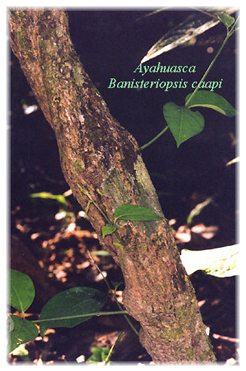
Banisteriopsis caapi — la liane
Banisteriopsis caapi, couramment appelée liane d'ayahuasca ou yagé, est une grande liane ligneuse qui pousse dans toute la forêt amazonienne. Dans de nombreuses langues autochtones, son nom se traduit à peu près par « liane de l'âme » ou « liane des morts ». La liane contient des alcaloïdes harmala — principalement l'harmine, l'harmaline et la tétrahydroharmine (THH). Ces composés agissent comme des inhibiteurs réversibles de la monoamine oxydase (MAO).
Pourquoi est-ce important ? La MAO est une enzyme présente dans le système digestif et le foie. Normalement, elle dégrade le DMT avant qu'il n'atteigne le cerveau. En clair, B. caapi est la clé pharmacologique qui fait fonctionner toute la préparation d'ayahuasca. Sans elle, le DMT serait simplement détruit dans l'intestin.
La plante contenant du DMT — généralement Psychotria viridis
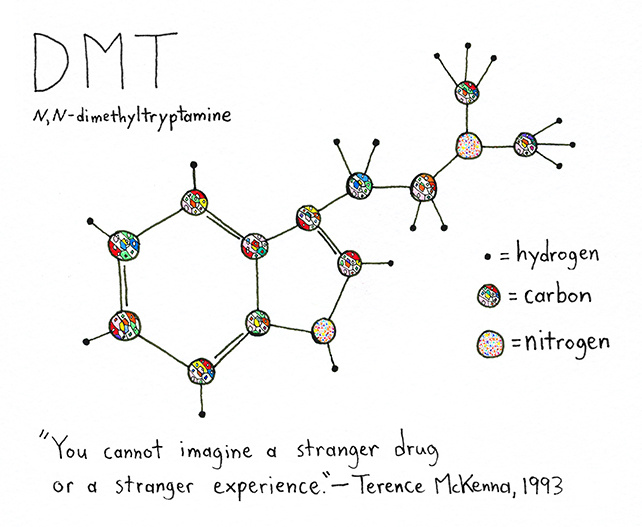
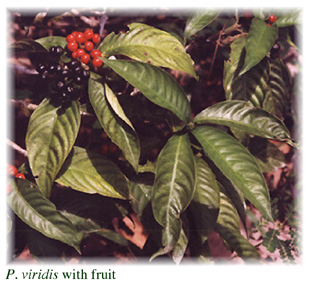
Le deuxième ingrédient apporte le DMT (diméthyltryptamine). Il provient le plus souvent de Psychotria viridis, appelée chacruna — un arbuste feuillu originaire des forêts de plaine amazoniennes. Le DMT est un puissant agoniste du récepteur sérotoninergique 5-HT2A. C'est lui qui produit les effets visionnaires et psychologiques propres à l'expérience de l'ayahuasca. Associé aux alcaloïdes inhibiteurs de MAO de la liane, le DMT pris par voie orale devient actif.
Certaines préparations d'ayahuasca utilisent d'autres sources de DMT. Par exemple, Diplopterys cabrerana (chagropanga) est un autre choix courant. De plus, certains praticiens ajoutent d'autres plantes à des fins thérapeutiques ou protectrices spécifiques. Néanmoins, la logique pharmacologique reste la même : une plante apporte le DMT, l'autre empêche sa dégradation.
La cérémonie d'ayahuasca
Dans la pratique traditionnelle, une cérémonie d'ayahuasca suit un format structuré et intentionnel. Elle va bien au-delà de la simple consommation d'une substance. Le cadre compte. La préparation compte. Le praticien compte. Et ce qui se passe après — l'intégration de l'expérience — compte tout autant.
La préparation
La pratique traditionnelle impose des restrictions alimentaires avant une cérémonie. Les praticiens appellent cela la « dieta ». En général, les participants évitent l'alcool, les aliments fermentés, les fromages affinés, la viande et parfois l'activité sexuelle. Cette période dure de quelques jours à plusieurs semaines.
Certaines de ces restrictions ont une raison pharmacologique. Par exemple, les aliments riches en tyramine peuvent interagir de façon dangereuse avec les inhibiteurs de MAO. D'autres relèvent de la préparation spirituelle au sein de la tradition — purifier le corps et l'esprit pour accueillir la médecine. En outre, les facilitateurs demandent généralement aux participants de venir avec une intention claire : une question, un domaine de vie à explorer ou un problème qu'ils souhaitent voir autrement.
Pendant la cérémonie
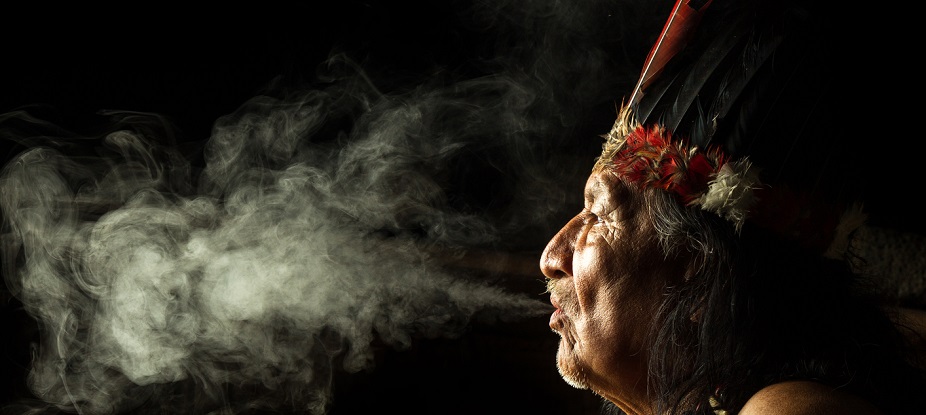
Les cérémonies se déroulent généralement la nuit, dans un espace dédié — une maloca dans la tradition amazonienne, ou un lieu adapté dans les retraites occidentales. Le curandero prépare et bénit d'abord le breuvage, puis le distribue aux participants. Le chant est au cœur de chaque cérémonie. Les praticiens considèrent les icaros non pas comme une simple musique de fond, mais comme une force de guérison active. Ils utilisent ces chants pour guider, protéger et façonner l'expérience. Pendant ce temps, les participants restent silencieux et immobiles.
Les effets commencent 30 à 60 minutes après la prise. Chaque expérience est différente — même d'une cérémonie à l'autre pour une même personne. Parmi les thèmes fréquents : des visuels intenses (motifs géométriques ou scènes complexes), une libération émotionnelle et la confrontation avec des souvenirs ou des peurs personnelles. À plus forte intensité, beaucoup de personnes rapportent une sensation de dissolution de l'ego. Sur le plan physique, nausées et purges sont fréquentes. Les praticiens traditionnels voient la purge comme une partie du processus de nettoyage, pas simplement comme un effet secondaire.
Tout au long de la cérémonie, un facilitateur expérimenté veille sur les participants et leur apporte du soutien. Dans les contextes traditionnels, le praticien continue de chanter pour maintenir l'espace cérémoniel. Cet accompagnement actif et présent est l'une des différences les plus importantes entre une cérémonie encadrée et une prise d'ayahuasca en solo.
L'intégration
Ce qui se passe après la cérémonie compte autant que la cérémonie elle-même. Les expériences d'ayahuasca peuvent être profondes, déstabilisantes et émotionnellement complexes. Sans temps ni soutien dédiés à la réflexion, les prises de conscience peuvent s'estomper. Dans certains cas, elles créent même une instabilité psychologique au lieu d'apporter une résolution.
Pour des conseils pratiques sur ce processus, notre article 9 conseils pour intégrer ton expérience psychédélique présente des techniques utiles. Par ailleurs, la notion de set et setting joue un rôle essentiel, aussi bien dans la préparation que dans l'intégration. Pour en savoir plus, lis notre guide sur l'importance du set et du setting dans une expérience psychédélique.
Les effets de l'ayahuasca
Les effets de l'ayahuasca comptent parmi les plus complexes de toutes les substances psychédéliques. Comme le DMT active puissamment les récepteurs de la sérotonine, et comme les alcaloïdes harmala prolongent son action pendant plusieurs heures, l'expérience tend à être plus longue et plus profonde que celle de nombreuses autres plantes médicinales.
Effets sur la perception
Les effets visuels sont la caractéristique la plus marquante. Les personnes décrivent des motifs géométriques complexes, des images très vives et — à des niveaux plus profonds — des rencontres avec des présences, des êtres ou des récits symboliques. La perception des sons change aussi ; les bruits peuvent devenir plus vifs ou prendre des qualités inhabituelles. De plus, la perception du temps devient peu fiable. Quelques minutes peuvent sembler durer des heures, ou l'inverse.
Effets émotionnels et psychologiques
Sur le plan émotionnel, l'ayahuasca fait remonter des contenus auxquels les participants n'avaient peut-être jamais accédé consciemment. Des souvenirs refoulés, un deuil non résolu, de la peur ou de la honte peuvent émerger avec une grande intensité. Cela explique en partie pourquoi les chercheurs l'étudient pour le traumatisme et la dépression : l'expérience rend le contenu émotionnel accessible d'une façon que des années de thérapie classique n'y parviennent parfois pas.
Cependant, cette même qualité rend aussi l'ayahuasca psychologiquement exigeante. Pour certaines personnes, elle peut être déstabilisante. De nombreux participants décrivent un changement de perspective — ils voient leur vie, leurs relations ou leurs schémas de comportement sous un angle totalement inédit. Que cela soit décrit en termes spirituels ou psychologiques dépend du cadre de référence de chacun. Pourtant, le phénomène apparaît de manière constante dans des contextes culturels très différents.
Effets physiques
Nausées et vomissements sont fréquents, surtout au début de l'expérience. Tremblements, sueurs et variations du rythme cardiaque sont également possibles. Les praticiens traditionnels considèrent ces effets comme faisant partie du processus de purge et de nettoyage. Toutefois, ils peuvent être angoissants pour des participants mal préparés. C'est encore une raison pour laquelle le soutien d'un facilitateur compétent est si important.
Sécurité et ayahuasca : ce que tu dois savoir
L'ayahuasca comporte de vrais risques. Même pour les personnes qui peuvent la prendre sans danger, la sécurité dépend fortement de la préparation, du cadre et de la qualité du facilitateur. Voici les points les plus importants.
Contre-indications médicales
Les alcaloïdes harmala de l'ayahuasca agissent comme des inhibiteurs réversibles de la MAO (IRMA). Cela crée un risque sérieux d'interactions avec plusieurs classes de médicaments. Plus précisément, associer l'ayahuasca à des antidépresseurs sérotoninergiques (ISRS, IRSN, IMAO) peut provoquer un syndrome sérotoninergique — un état potentiellement mortel. Le lithium, les stimulants et certains antihistaminiques présentent aussi des risques d'interaction.
Par conséquent, toute personne qui prend un traitement psychiatrique doit consulter un médecin qualifié avant de consommer de l'ayahuasca. De même, les personnes ayant des antécédents personnels ou familiaux de psychose, de schizophrénie ou de trouble bipolaire de type I doivent faire preuve d'une extrême prudence. L'intensité sérotoninergique de l'ayahuasca peut déclencher ou aggraver des épisodes psychotiques chez les personnes vulnérables.
Par ailleurs, les maladies cardiaques et l'hypertension représentent des risques notables. L'harmaline et les alcaloïdes apparentés peuvent affecter la fonction cardiovasculaire. Un bilan de santé approfondi réalisé par un facilitateur compétent est un élément essentiel d'une pratique responsable.
Danger : ne combine jamais l'ayahuasca avec des ISRS, des IRSN, des IMAO, du lithium ou des stimulants. Les interactions médicamenteuses avec les alcaloïdes harmala peuvent avoir des conséquences médicalement dangereuses. Consulte toujours un médecin si tu prends un médicament sur ordonnance.
Choisir un facilitateur et une retraite
La croissance rapide du secteur des retraites d'ayahuasca s'est malheureusement accompagnée de cas d'exploitation, d'abus sexuels et d'un manque de suivi de la part de facilitateurs non qualifiés. C'est un problème réel et documenté. Avant de participer à une cérémonie, renseigne-toi avec soin sur la formation, les références et la réputation du facilitateur. Les praticiens sérieux réalisent un bilan de santé approfondi, expliquent à quoi s'attendre et proposent un accompagnement d'intégration après coup.
Il faut aussi savoir que la tenue de cérémonies d'ayahuasca en dehors de cadres religieux formellement protégés reste illégale dans la plupart des pays occidentaux. Cette zone grise juridique rend la vigilance des participants encore plus importante. Pour des conseils sur la gestion des moments difficiles pendant une expérience psychédélique, consulte notre guide sur comment gérer un bad trip.
Préparation psychologique
L'ayahuasca est très exigeante sur le plan psychologique. Les personnes en crise aiguë, celles qui n'ont aucune expérience préalable des états modifiés de conscience ou qui n'ont pas réfléchi à leurs intentions courent un risque plus élevé de vivre une expérience difficile. Cela ne veut pas dire que l'issue sera forcément négative. Cela signifie en revanche qu'une préparation psychologique et l'accompagnement d'un facilitateur compétent augmentent nettement les chances de vivre une session porteuse de sens.
La tradition de la dieta existe en partie pour cette raison. La période de préparation vise autant la préparation psychologique que la sécurité pharmacologique.
L'ayahuasca et la recherche scientifique
L'intérêt scientifique pour l'ayahuasca a considérablement augmenté au XXIe siècle. Des chercheurs au Brésil, en Espagne et aux États-Unis étudient ses effets sur la dépression résistante aux traitements, les traumatismes, le deuil et les addictions. En février 2026, un essai de phase IIa mené par l'Imperial College London a montré qu'une dose unique de DMT entraînait une réduction significative et durable des symptômes dépressifs, avec des effets persistant jusqu'à six mois chez certains participants.
Au-delà des essais cliniques, les neurosciences se sont intéressées aux effets de l'ayahuasca sur le réseau du mode par défaut (DMN). Ce réseau cérébral gouverne la pensée autoréférentielle et les schémas cognitifs habituels. Des institutions comme la Beckley Foundation, l'ICEERS (International Center for Ethnobotanical Education, Research, and Service) et plusieurs universités brésiliennes et espagnoles dirigent une grande partie de ces travaux.
Pour comprendre le lien entre la psilocybine et l'ayahuasca, notre article sur les types de psychédéliques les plus courants offre un cadre plus large. De plus, notre article sur les champignons et l'esprit explore l'effet des psychédéliques sur le cerveau au niveau neurologique.
Respect culturel et éthique
Aucune discussion sur l'ayahuasca n'est complète sans aborder l'appropriation culturelle et les droits des peuples autochtones. L'ayahuasca n'est pas simplement une substance psychédélique qui se trouve venir d'Amérique du Sud. C'est une tradition vivante, ancrée dans les systèmes de savoirs, les langues et les structures sociales des peuples amazoniens. Ces traditions subissent des pressions depuis des siècles : colonisation, répression religieuse et exploitation économique.
L'engouement mondial récent pour l'ayahuasca a généré à la fois des opportunités économiques et des tensions culturelles. Certaines communautés autochtones accueillent favorablement un engagement approprié de la part d'étrangers. D'autres s'inquiètent de la commercialisation, des fausses représentations et de la dévalorisation des savoirs traditionnels. Des organisations comme l'ICEERS et MAPS travaillent à l'élaboration de cadres éthiques pour les chercheurs et les organisateurs de retraites.
Pour toute personne qui envisage de s'approcher de l'ayahuasca — que ce soit lors d'une retraite, par la recherche ou simplement par curiosité — prendre le temps de comprendre ce contexte est une forme élémentaire de respect. Le savoir qui fait fonctionner l'ayahuasca appartient, dans un sens important, aux peuples qui l'ont développé au fil des générations.
Tu es curieux de la psilocybine comme plante médicinale légale ?
— elles contiennent la même psilocybine et la même psilocine que les champignons magiques, et sont légalement disponibles aux Pays-Bas.
Remarque : si tu souffres d'une maladie mentale et que la psilocybine, l'ayahuasca ou toute autre thérapie psychédélique t'intrigue, consulte d'abord les autorités médicales compétentes. Ne t'auto-prescris rien. Bénéficier d'un accompagnement et de conseils adaptés reste essentiel quand on utilise des psychédéliques comme médecine.


Mars 23, 2026