
Votre panier est vide.

Champignon Reishi : le champignon de l'immortalité (guide complet)
Publié sous: Champignons médicinaux & fonctionnels
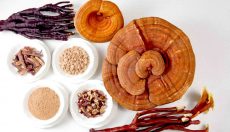
Champignon reishi (Ganoderma lucidum) — histoire, composés, usage traditionnel et comment choisir un complément alimentaire au reishi (mise à jour 2026)
Le champignon reishi occupe une place à part parmi les champignons médicinaux. Les textes chinois classiques le surnomment le « champignon de l'immortalité » — un nom poétique qui reflète son statut élevé dans la phytothérapie traditionnelle plutôt qu'une promesse au sens littéral. Aujourd'hui, des chercheurs du monde entier étudient le reishi pour ses triterpènes et ses polysaccharides uniques. Ce guide revient sur son histoire, ses composés et la façon dont tu peux l'intégrer à ta routine quotidienne.
Le reishi (Ganoderma lucidum) pousse sous forme de champignon lignicole en console sur les feuillus. Son chapeau brillant, brun-rouge, le rend facile à reconnaître.
Depuis plus de 2 000 ans, les guérisseurs traditionnels de Chine et du Japon apprécient ce champignon pour la vitalité et l'équilibre.
La science moderne cherche aujourd'hui à comprendre quels composés expliquent cette réputation traditionnelle — et les résultats obtenus jusqu'ici s'annoncent intéressants.
Tu trouveras ci-dessous les principaux composés, les pistes explorées par les chercheurs, des conseils pratiques pour choisir un produit et des informations de sécurité.
| Qu'est-ce que le reishi ? | Un champignon en console non psychoactif, utilisé depuis plus de 2 000 ans dans la phytothérapie traditionnelle orientale. |
| Principaux groupes de composés | Triterpènes (acides ganodériques), polysaccharides de type bêta-D-glucane, peptidoglycanes et stérols. |
| Principaux axes de recherche | Modulation immunitaire, stress oxydatif, relaxation et sommeil, vitalité générale — surtout dans des modèles précliniques. |
| Comment le consommer | Gélules, teintures, poudres et tisanes. Découvre notre . |
| À noter | La plupart des données proviennent d'études en laboratoire et sur l'animal. Le reishi est un complément alimentaire, pas un médicament ni un remède. |
L'histoire du reishi
Le reishi apparaît dans certains des plus anciens textes médicaux chinois. Le Shennong Ben Cao Jing, rédigé vers 200 de notre ère, le classe déjà parmi les plantes de première catégorie. À l'époque, seuls les souverains et les plus riches avaient accès au reishi sauvage, car ce champignon est rare dans la nature.
Les guérisseurs japonais appellent le reishi mannentake — littéralement « le champignon des 10 000 ans ». Les herboristes coréens le connaissent sous le nom de yeongji. Dans toutes ces traditions, on associe le reishi à la longévité, à l'équilibre et au calme intérieur. Aujourd'hui, des producteurs cultivent le reishi à l'échelle commerciale dans le monde entier. Il est donc accessible à tout le monde, sous des formes allant de la tisane aux gélules. Pour en savoir plus sur l'univers des champignons fonctionnels, lis notre article 10 faits fascinants sur les champignons.
Les composés du reishi qui intéressent la recherche
Les chercheurs s'intéressent à plusieurs groupes de composés présents dans le reishi. Chaque groupe a un profil chimique différent et suscite un intérêt scientifique distinct.
Triterpènes et acides ganodériques
Le reishi contient plus de 100 triterpènes différents. Le groupe le plus connu — les acides ganodériques — donne au champignon son amertume caractéristique. En laboratoire, les scientifiques étudient les acides ganodériques pour leur interaction avec les voies de l'inflammation et du stress oxydatif. L'extraction à l'alcool capte le mieux les triterpènes, ce qui explique pourquoi les teintures et les produits à double extraction restent populaires chez les consommateurs de reishi.
Polysaccharides de type bêta-glucane
Les bêta-glucanes du reishi suscitent l'intérêt des chercheurs pour leur interaction avec les cellules immunitaires dans des modèles de laboratoire. L'extraction à l'eau chaude libère ces polysaccharides de la manière la plus efficace. C'est pourquoi un extrait double — combinant eau et alcool — capte la gamme la plus large de composés du reishi. Pour en savoir plus sur les bêta-glucanes et l'immunité, lis notre article sur les compléments de champignons médicinaux et le système immunitaire.
Peptidoglycanes et stérols
En plus des triterpènes et des polysaccharides, le reishi contient aussi des peptidoglycanes et divers stérols. Les chercheurs étudient ces groupes de composés mineurs principalement sur des modèles cellulaires. Leur rôle exact dans le profil global du reishi reste un domaine de recherche actif.
Ce que les chercheurs étudient sur le reishi
Le profil riche en composés du reishi explique pourquoi les scientifiques l'étudient dans plusieurs domaines de recherche. Cependant, la plupart des résultats proviennent de cultures cellulaires et de modèles animaux. Il n'existe que peu d'essais chez l'humain, et ils portent généralement sur un nombre limité de participants.
Équilibre immunitaire en laboratoire
Dans des conditions expérimentales, les polysaccharides du reishi agissent comme des modulateurs de la réponse biologique. En clair, les chercheurs examinent si ces composés aident les cellules immunitaires à réagir de façon équilibrée face aux agressions. Une revue de 2024 parue dans Antioxidants (MDPI) a confirmé que les polysaccharides du reishi restent un axe majeur de la recherche immunologique. Pour autant, les résultats de laboratoire ne se transposent pas automatiquement à un usage quotidien chez l'humain.
Relaxation et sommeil
Beaucoup de consommateurs de reishi décrivent un effet apaisant. Les herboristes traditionnels le remarquaient déjà il y a des siècles. Certaines études animales cherchent à savoir si les triterpènes influencent les voies impliquées dans la relaxation et le sommeil. Cette association traditionnelle avec le calme du soir explique en partie pourquoi le reishi reste populaire comme complément du soir. Toutefois, les études humaines à grande échelle sur ce sujet restent rares.
Stress oxydatif et activité antioxydante
Les triterpènes comme les polysaccharides du reishi montrent une activité antioxydante en laboratoire. Une étude de 2025 a confirmé que des extraits de reishi atténuaient efficacement le stress oxydatif dans des modèles expérimentaux. Les chercheurs continuent d'explorer ce que cela signifie pour le bien-être humain, mais ils n'ont pas encore tiré de conclusions fermes.
Autres pistes de recherche à un stade précoce
Important : il n'existe aucune allégation de santé autorisée par l'UE pour le champignon reishi. Les axes de recherche ci-dessus décrivent des investigations scientifiques en cours, pas des bienfaits avérés du complément.
Comment utiliser le reishi
La chair du reishi est amère et coriace : on le mange donc rarement tel quel. Les compléments alimentaires offrent une solution pratique pour l'intégrer à ta journée. La méthode d'extraction compte — un extrait double (eau + alcool) capte la gamme de composés la plus large.
| Format | Pourquoi le choisir |
|---|---|
| Gélules | Dosage facile, pas de goût amer. Idéal si tu veux une quantité quotidienne fixe. Vérifie que l'étiquette indique la teneur en bêta-glucanes et la méthode d'extraction. |
| Teinture (alcool ou extrait double) | Capte efficacement les triterpènes. À déposer sous la langue ou à diluer dans de l'eau. Pratique si tu veux tout le spectre des composés du reishi. |
| Poudre | Polyvalente — à mélanger dans une tisane, un café ou un smoothie. Assure-toi que la poudre provient d'un véritable extrait et non de champignon brut simplement broyé. |
| Tisane traditionnelle / décoction | La plus ancienne méthode de préparation. L'eau chaude extrait bien les polysaccharides. Attends-toi à une saveur amère et terreuse. |
Pour bien commencer : beaucoup de consommateurs prennent leur complément de reishi le soir, en raison de son association traditionnelle avec le calme et la relaxation. Commence par une petite quantité quotidienne et reste régulier pendant quatre à six semaines.
Chez Magic Mushrooms Shop, nous proposons des gélules et des teintures de reishi de marques de confiance comme Mushrooms4Life et Kaapa Health. Le fondateur de Mushrooms4Life, Martin Powell — chercheur et auteur de renommée mondiale — formule chaque produit avec des ingrédients bio, sans liants, additifs ni produits chimiques. Découvre toute la gamme dans notre
.
Le reishi et les autres champignons médicinaux
Beaucoup d'amateurs de bien-être associent le reishi à d'autres champignons fonctionnels. Par exemple, le reishi se marie bien avec la crinière de lion — l'un vise le calme du soir, l'autre suscite de l'intérêt pour la concentration en journée. D'autres ajoutent du chaga pour son profil antioxydant unique. Tu en apprendras davantage sur ces associations dans notre guide complet des champignons médicinaux.
Tu veux comprendre comment fonctionne le mycélium et ce qui rend les champignons si fascinants ? Nos fiches espèces te donnent une vue d'ensemble.
Reishi : sécurité, effets secondaires et interactions
La plupart des gens tolèrent bien le reishi aux doses habituelles des compléments. Les effets secondaires se limitent surtout à de légers troubles digestifs : bouche sèche, nausées ou maux d'estomac. Ils disparaissent généralement après quelques jours de prise.
Cependant, le reishi contient des composés bioactifs qui interagissent avec différents systèmes de l'organisme. Une revue de 2021 parue dans Frontiers in Pharmacology a montré que le reishi inhibe certaines enzymes hépatiques (CYP3A4 et CYP2C9) dans des modèles cellulaires. Le reishi peut donc modifier la façon dont ton corps métabolise certains médicaments. Parles-en à ton médecin ou à ton pharmacien avant de commencer le reishi si tu prends :
Si tu es allergique aux champignons ou aux moisissures, consulte un professionnel de santé avant d'essayer un produit au reishi. Évite aussi le reishi pendant la grossesse et l'allaitement, car les données de sécurité dans ces situations restent insuffisantes.
Avertissement : le reishi est un complément alimentaire. Il ne permet pas de diagnostiquer, traiter, guérir ou prévenir une maladie. Ne dépasse pas la dose quotidienne recommandée. Les compléments alimentaires ne remplacent pas une alimentation variée et équilibrée ni un mode de vie sain. Consulte toujours ton médecin ou ton pharmacien avant d'associer des compléments à un traitement sur ordonnance ou de les utiliser en cas de problème de santé.
Prêt à découvrir le reishi et les autres champignons fonctionnels ? Va voir notre
et trouve le produit qui s'adapte à ta routine du soir.


Mars 23, 2026