
You have no items in your shopping cart.

Magic Mushrooms: A Historical Chronology from Prehistory to 2026
Posted under: Psychedelic Culture
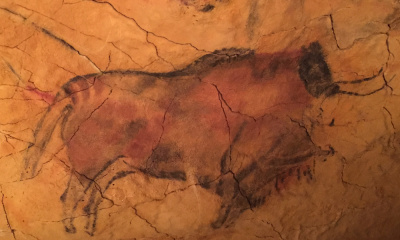
A complete magic mushrooms historical chronology — from prehistoric rock art to 21st-century clinical trials (2026 Update)
The magic mushrooms historical chronology spans at least 9,000 years. Long before modern science could explain psilocybin, cultures across the world used these fungi in rituals and spiritual practice. In fact, this timeline is arguably much longer than the physical evidence confirms.
This guide traces the key moments in the magic mushrooms historical chronology. It covers the earliest cave art, the suppression of indigenous traditions, Western scientific rediscovery, the counterculture era, decades of prohibition, and the therapeutic renaissance now underway. For a broader look at what these fungi actually are, see our post on what magic mushrooms are.
In this article: A chronological history of magic mushrooms — covering prehistoric use, Mesoamerican rituals, Western discovery, the 1960s counterculture, prohibition, and the current wave of clinical research.
Each era sits in its historical and cultural context. As a result, this is a useful reference for anyone curious about the full human relationship with psilocybin fungi.
Prehistoric Era: The Earliest Evidence of Magic Mushrooms
9,000 BCE — Rock Art in the Sahara
The earliest evidence in the magic mushrooms historical chronology comes from the Tassili n'Ajjer mountains of Algeria. These prehistoric cave paintings date back over 9,000 years. They depict human figures alongside mushroom-like shapes. Ethnobotanist Giorgio Samorini and others argue these images show ritual psychoactive mushroom use by early Homo sapiens.
However, the interpretation remains debated among scholars. Still, the paintings form part of a broader body of prehistoric evidence. They suggest that altered states of consciousness played a central role in early human spiritual life. Therefore, they mark the first chapter in this historical chronology.
~3,000–1,000 BCE — Mesoamerican Use Begins
In Mesoamerica, "mushroom stones" — small sculptures depicting figures merging with mushrooms — date from as early as 3,000 BCE. Archaeologists found these artefacts in Guatemala and southern Mexico. They span multiple pre-Columbian cultures. As a result, researchers believe mushroom rituals ran deep in Mesoamerican religious life.
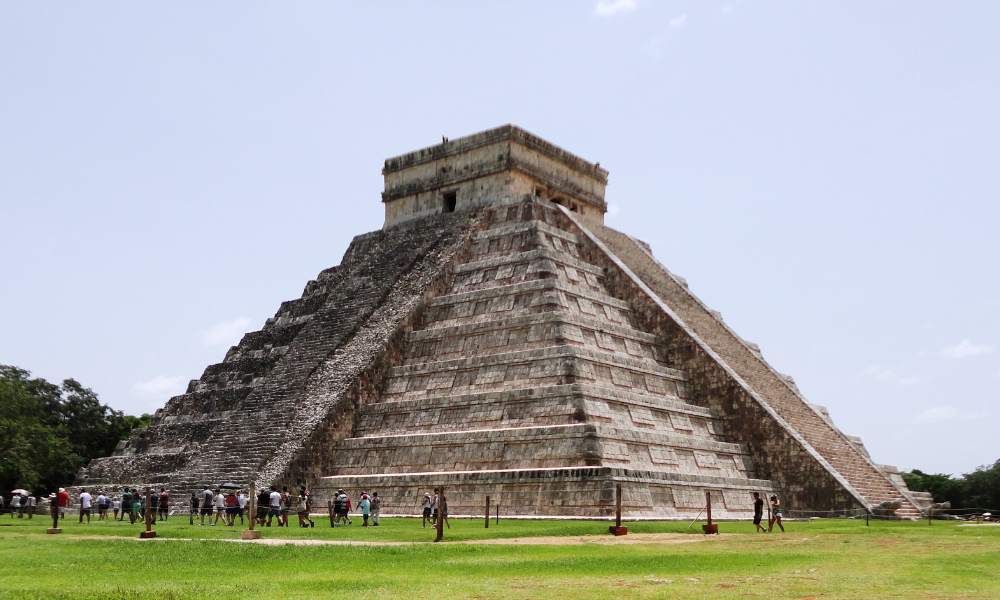
The mushrooms involved were almost certainly native Psilocybe species. These include Psilocybe mexicana and Psilocybe cubensis. For the cultures that used them, these fungi served as sacred tools. Specifically, people consumed them to access divine knowledge, heal illness, and communicate with ancestors.
Pre-Columbian Mesoamerica: Teonanácatl
~1300–1521 CE — Aztec Ritual Use
The Aztecs called psilocybin mushrooms teonanácatl — "flesh of the gods." Specialist healers and priests administered them within formal religious ceremonies. In addition, the Aztecs used them at festivals, healings, and coronation rites. Spanish missionaries described these ceremonies with both fascination and horror.
Importantly, the mushroom ceremonies followed careful preparation and specific ritual protocols. The role of the guide in these ceremonies is something modern therapy has, in many ways, rediscovered. For more on this tradition, see our post on shamanism and magic mushrooms.
Colonial Suppression: 16th–19th Centuries
1521 Onwards — Spanish Prohibition
After the Spanish conquest of Mexico, colonial authorities moved to suppress indigenous religious practices. The Inquisition classified mushroom rituals as devil worship. Consequently, possession or use could result in severe punishment. As a result, mushroom ceremonies went underground for centuries.
Indigenous practitioners continued their traditions in secret. They passed knowledge through oral tradition while publicly conforming to Catholic practice. By the late 19th century, Western scientists had almost no idea that living mushroom traditions still survived in rural Oaxaca.
The 20th Century: Rediscovery and Revolution
1938 — First Scientific Identification
American ethnobotanist Richard Evans Schultes travelled to Oaxaca in 1938. He became one of the first Western scientists to document psychoactive mushroom use in a living indigenous community. However, his published accounts received little mainstream attention at the time. Nevertheless, his work laid the groundwork for what followed.
1955 — R. Gordon Wasson's Ceremony
The moment that brought magic mushrooms to Western awareness arrived in 1955. American banker and amateur mycologist R. Gordon Wasson visited Huautla de Jiménez in Oaxaca. There, he joined a mushroom ceremony led by Mazatec healer María Sabina. Wasson's account appeared in Life magazine in 1957. It introduced psilocybin mushrooms to millions of Western readers.
Wasson described the experience with genuine reverence. Unfortunately, the publication drew waves of Western curiosity-seekers to the village. This disrupted the community and damaged the sacred context of the ceremonies. María Sabina herself later expressed deep regret about this exposure.
1958 — Psilocybin Isolated by Albert Hofmann
Swiss chemist Albert Hofmann — who had already discovered LSD in 1943 — isolated psilocybin and psilocin in 1958. He worked with specimens of Psilocybe mexicana at Sandoz Laboratories in Basel. This marked a milestone in the magic mushrooms historical chronology. For the first time, researchers could study and measure the active compound in pure form. Hofmann then tested it on himself and confirmed its potency.
Subsequently, Sandoz produced pharmaceutical-grade psilocybin and shared it with researchers. As a result, this period became one of the most productive eras in early psychedelic science. For more on Hofmann's legacy, read about how psilocybin and psilocin work.
1960–1965 — The Harvard Experiments
In 1960, psychologist Timothy Leary began experimenting with psilocybin at Harvard. His Harvard Psilocybin Project included the famous Good Friday Experiment of 1962. Initial results showed promise for therapeutic and consciousness-expanding applications. However, Leary's methods grew increasingly controversial. Harvard dismissed both Leary and his colleague Richard Alpert in 1963.
The research during this period held genuine scientific value. Yet the institutional fallout from Leary's public promotion of psychedelics shaped the political climate. Ultimately, this contributed to the prohibition that followed.
1968–1971 — Prohibition
As psychedelics became linked with the counterculture and anti-war movement, political pressure to restrict them intensified. In 1970, the United States listed psilocybin as a Schedule I controlled substance. This classification defined it as having no accepted medical use and high abuse potential. Similarly, most other Western countries introduced restrictions soon after.

This effectively halted clinical research for nearly two decades. Moreover, it drove mushroom use underground. The academic and medical promise that had built through the 1950s and 1960s was abruptly curtailed. For context on the legal landscape, read our overview of the legal status of hallucinogenic mushrooms.
The Underground Years: 1970s–1990s
1976 — Psilocybin Mushroom Handbook
Despite prohibition, interest in magic mushrooms did not disappear. In 1976, Terence McKenna and Dennis McKenna published Psilocybin: Magic Mushroom Grower's Guide under pseudonyms. The book described how to cultivate Psilocybe cubensis at home using simple materials. It laid the foundation for the home cultivation movement that continues today.
1990s — The Shroomery and Digital Communities
The internet enabled cultivation knowledge and experience reports to circulate freely for the first time. Online communities like The Shroomery became key resources for growers. Meanwhile, small-scale studies at the University of New Mexico began probing psilocybin's therapeutic potential again. This period also set the stage for the full research revival ahead.
The Renaissance: 2000s to Present
2006 — Johns Hopkins Landmark Study
A pivotal moment came in 2006. Roland Griffiths and colleagues at Johns Hopkins University published a landmark study on psilocybin. They found that psilocybin produced mystical-type experiences with lasting positive effects. The study used rigorous methodology and opened the door to today's wave of therapeutic research.
2012–2020 — Clinical Trial Expansion
Throughout the 2010s, clinical trials for psilocybin-assisted therapy multiplied rapidly. Imperial College London, NYU, and other institutions published significant results. Specifically, trials showed benefits for treatment-resistant depression, end-of-life anxiety, and addiction. In 2018, the FDA granted psilocybin "Breakthrough Therapy" designation. It extended this to major depressive disorder in 2019.
For a detailed look at the therapeutic science, see our post on the healing power of magic mushrooms.
2020–2026 — Decriminalisation and Regulation
In 2020, Oregon became the first US state to regulate psilocybin therapy services. Licensed service centres opened in 2023. Colorado followed with a similar measure in 2022. Additionally, Australia authorised psychiatrist-supervised psilocybin therapy in 2023. This was the first national-level regulatory change of its kind. For the latest US developments, see our post on psilocybin legalisation in 2026.
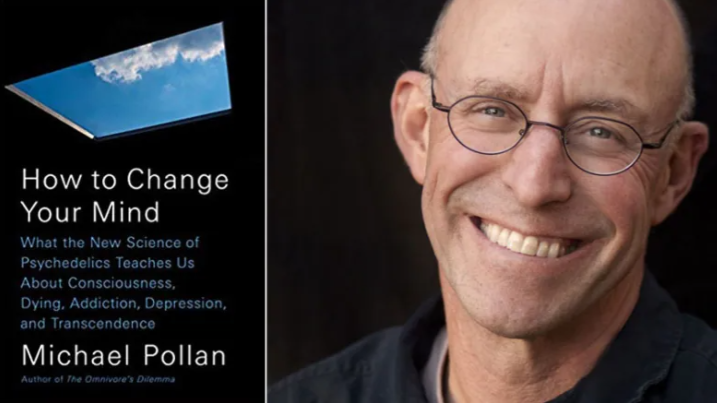
As of 2026, Phase 3 clinical trials continue across multiple conditions. The regulatory landscape keeps shifting. Clearly, this magic mushrooms historical chronology has arrived at one of its most important chapters — and it is still being written.
For more on the current state of research, explore our overview of mushrooms and the mind.
Want to explore magic mushrooms further? Browse our grow kits and magic truffles — quality products from Amsterdam, since 2007.
Note: If you have a mental health condition and are curious about psilocybin, please consult a medical authority first. Do not self-prescribe. It is vital to have proper support and guidance when exploring psychedelics.


August 22, 2021