
You have no items in your shopping cart.

John W. Allen: The Ethnomycologist Who Brought the World’s Most Famous Cubensis Strains to the West
Posted under: History & Pioneers
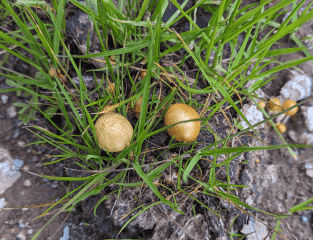
Working with a Cambodian, Koh Samui, or Pink Buffalo spore print? You're holding living history. One man collected, preserved and shared most of these genetics with the world. His name is John W. Allen – better known as "Mushroom John".
For over four decades, John W. Allen brought wild Southeast Asian Psilocybe cubensis strains into global circulation. His work expanded the genetic diversity of the entire cubensis hobby.
Fieldwork, writing and collaboration with top mycologists shaped how growers and researchers think about magic mushrooms today.
Who is John W. Allen?
John W. Allen was born in 1946 in Ohio. As a boy, he foraged mushrooms with his father in Midwestern forests. Those early walks sparked a lifelong passion for fungi.
By the 1980s, Allen had become a self-taught ethnomycologist. That means he studied how cultures use mushrooms in ritual, medicine and daily life. Rather than staying in the lab, he travelled to fields, markets and villages across Asia.
Over the decades, John W. Allen authored dozens of scientific papers. His work appeared in journals like the Journal of Ethnopharmacology. Close collaboration with mycologist Dr. Gastón Guzmán led to new species descriptions. In 2012, researchers named a coastal species Psilocybe allenii in his honour.
| Full name | John W. Allen, a.k.a. "Mushroom John" |
| Main focus | Ethnomycology of psychoactive Psilocybe species |
| Key roles | Author, field collector, photographer, educator |
| Honour | Psilocybe allenii (2012) |
But his biggest legacy isn't in journals. It lives in the strains that growers still work with every day.
John W. Allen's Field Expeditions Through Southeast Asia
From the late 1980s to the early 2000s, Allen travelled across Asia. Thailand, Cambodia, Vietnam, Malaysia, India, Indonesia, Bali and the Philippines all featured on his route. The goal: find psychoactive mushrooms, learn how locals used them, and preserve the genetics.
On Koh Samui and Koh Pha-Ngan, Allen teamed up with botanist Mark D. Merlin. Together they studied mushroom use among local communities. Their collaboration led to a key 1994 paper on Psilocybe samuiensis in the Journal of Ethnopharmacology.
Allen did more than observe. From wild specimens, he took spore prints and dried mushrooms for herbarium collections. Photographs, dates, locations and local names filled his field notes. These collections became the basis for the classic Southeast Asian cubensis strains we know today.
Strains Linked to John W. Allen
John W. Allen helped introduce several legendary Psilocybe cubensis strains. Without his fieldwork, many would never have left their local environments. Freely shared prints reached early vendors and researchers around the world.
Cambodian (Angkor Wat)
Allen collected robust cubensis near Angkor Wat in Siem Reap, Cambodia. The pastures held plenty of buffalo dung. These collections became the "Cambodian" line found in spore catalogues worldwide.
The strain is famous for fast colonisation and aggressive mycelium. It thrives in warm conditions. That makes it a favourite for tropical growers.
Koh Samui
On Koh Samui, Allen collected cubensis that became one of the most iconic Thai strains. The line produces short, stocky, dense fruits with heavy stems. Growers later selected the popular "Fatass" phenotype from these genetics.
Over time, breeders refined the line into the Koh Samui Super Strain (KSSS). But the original material traces back to Allen's prints from the island. You can explore this lineage with the Thai 'Koh Samui' spore print.
Ban Hua / Ban Hua Thanon
Allen also collected cubensis near Ban Hua Thanon village on Koh Samui. This rural area had rice paddies and grazing water buffalo. Growers turned these genetics into named lines like Thai Ban Hua.
These strains tend to produce tall, slender fruits with round caps. Some modern versions may be hybrids. But the origin traces back to Allen's Koh Samui collections.
Pink Buffalo
Pink Buffalo is another Thai classic from Allen's trips. It came from rice fields on Koh Samui. Online myths speak of a "sacred pink buffalo". Allen himself set the record straight. The name came from a field where a pinkish water buffalo grazed. That's a rare but real colour morph in Thailand.
Myth aside, Pink Buffalo became a staple strain. Growers value it for reliable performance.
Burma (Myanmar)
Near the Thailand–Myanmar border, Allen obtained a vigorous cubensis line. It circulated as "Burma" in early grower communities. Growers prize it for quick colonisation and thick flushes.
Modern Burma prints have passed through many hands. But the original line belongs to Allen's Southeast Asian wave of genetics.
Other Regions and Strains
Allen also collected in Nepal, Vietnam, Malaysia and Brazil. The Chitwan strain comes from his Nepal collections. In the 1990s, he found those mushrooms growing on animal dung.
Names like Hanoi and Malaysian also connect to his work. This broader fieldwork vastly expanded the map of cubensis genetics.
John W. Allen's Scientific Contributions
Allen did more than collect cubensis strains. In 1991, he co-described Psilocybe samuiensis with Dr. Gastón Guzmán and Florencia Bandala. They found it in rice paddies on Koh Samui. Later, others spotted it in different parts of Thailand and Cambodia too.
In 2012, researchers named a wood-loving Pacific Northwest species Psilocybe allenii after him. It grows on woodchips and mulch from British Columbia to California. The name honours Allen's role in supplying the type collection.
| Species co-described | Psilocybe samuiensis (1991), from Koh Samui |
| Species named after him | Psilocybe allenii (2012), Pacific Northwest |
| Publication areas | Ethnomycology, chemistry, cultivation of Psilocybe |
How John W. Allen Turned Wild Mushrooms into Stable Strains
Allen built a bridge between wild ecology and the home grower's tub. His process was clear and repeatable.
1Field collection
Allen harvested mature fruits from specific locations. Dates, habitats and local names went into detailed field notes. Photographs captured every mushroom in place. This anchored each strain to a real location.
2Spore printing
Back at base, Allen made dense spore prints from selected mushrooms. These prints became a physical genetic archive. Many later spread through early online communities.
3Agar work and cloning
On agar plates, Allen germinated spores and transferred the healthiest growth. Standout fruits got cloned to lock in traits like fast colonisation and consistent shape.
4Testing and sharing
Allen tested lines on grain and manure-based substrates. Once stable, prints went to researchers and spore vendors. That allowed the genetics to spread worldwide.
Thanks to this process, many wild collections became known for consistency – not just for an exotic name.
Why John W. Allen Matters for the Mushroom World
Before Allen, most cubensis genetics came from Mexico and the southern US. The range was narrow. Allen's expeditions changed that.
>An expanded genetic palette. Southeast Asian strains added new cap shapes, colours and growth patterns.
>Heat-friendly genetics. Thai and Cambodian lines perform well in warm conditions.
>Preserved wild lineages. Some habitats Allen collected from have since disappeared. His prints act as living archives.
>Documented local traditions. Allen recorded how people used mushrooms before they became a global trend.
Today, names like Cambodian, Koh Samui and Pink Buffalo are standard catalogue entries. Behind each label sits decades of work by "Mushroom John".
Advocacy, Education and Responsibility
John W. Allen has always pushed for responsible use. His message supports the role of mushrooms in mental health and spiritual practice. But it also warns against careless selling and uninformed use.
In the early 2000s, Allen criticised European headshops for selling fresh mushrooms without guidance. That approach, he argued, disrespected both the fungi and their cultural roots. Ironically, authorities later cited one of his own scientific reviews to justify banning many species.
⚠️ This article is for educational purposes only. Always follow local laws. If you work with psychoactive fungi, do so with preparation and respect.
Allen's message has stayed the same through the years. Education, respect and informed use are essential.
Legacy: The Strains That Live On
When you see Cambodian, Koh Samui, Ban Hua, Pink Buffalo or Burma in a product list, you see John W. Allen's legacy. Growers have cloned, crossed and refined these lines. But their roots trace back to buffalo pastures and rice fields in Southeast Asia.
Allen is more than an ethnomycologist. He's a pioneer, a historian, a scientist and a bridge between indigenous knowledge and modern mycology.
Work with a Southeast Asian cubensis strain? There's a good chance those genetics passed through his hands.
Want to explore these legendary genetics? Browse our Cambodian, Koh Samui and other Allen-linked spore prints at the Magic Mushrooms Shop.


March 23, 2026