
You have no items in your shopping cart.

How Psychedelics Enhance Creativity — What the Research Shows
Posted under: Trip Guides & Preparation

How Psychedelics Enhance Creativity — What the Research Actually Shows (2026 Update)
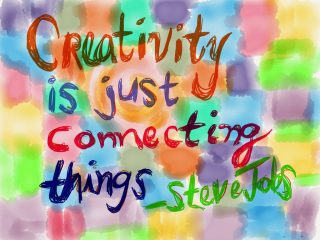
Artists, musicians, writers, and scientists have long described psychedelics as tools for unlocking new ways of thinking. Steve Jobs famously called his LSD experiences one of the most important things he ever did. Countless musicians, from the Beatles to Coltrane, have pointed to psychedelic experience as a turning point in their creative lives. But what does the science actually say? Can psychedelics genuinely enhance creativity, and if so, how?
In this guide: What creativity actually is, how psychedelics affect the brain in ways relevant to creative thinking, and what recent research has found — including the limits of current evidence.
We also look at how factors like mindset, context, and integration affect creative outcomes after a psychedelic experience.
What Is Creativity? Two Kinds of Thinking
Before exploring how psychedelics enhance creativity, it helps to understand what creativity actually involves. Researchers typically describe it as the generation of ideas or outputs that are both original and useful. Furthermore, creativity is not a single mental process — it involves at least two distinct modes of thinking that work in tension with each other:
Truly creative work requires both. A musician needs to generate many possible melodic ideas (divergent) and then select and develop the most effective ones (convergent). A researcher needs to form novel hypotheses (divergent) and then test them rigorously (convergent). As Beckley Retreats summarises, creativity "combusts out of the intersection of these two contradictory mental modes."
How Psychedelics Affect the Brain
To understand why psychedelics might enhance creativity, we need to look at what they do to the brain. Several key mechanisms have been identified by researchers.
Disrupting the Default Mode Network
The Default Mode Network (DMN) is a set of brain regions that is most active when we are not focused on external tasks — when we are mind-wandering, daydreaming, or engaged in self-referential thinking. The DMN is associated with our sense of self, our habitual thought patterns, and our cognitive "default settings." In one sense, it is the voice in your head that tells you what is and is not possible.
Psychedelics such as psilocybin and LSD reliably disrupt DMN activity. According to a 2025 review published in Frontiers in Artificial Intelligence, psychedelics "disrupt entrenched neural patterns, particularly through reduced activity in the DMN, a system associated with self-referential thinking and habitual cognition." This disruption increases connectivity between brain regions that do not normally communicate directly, promoting what researchers call a "more entropic" — meaning more flexible and less predictable — state of consciousness.
The result is a loosening of cognitive constraints. Old associations weaken. New ones form more easily. The mental ruts that define habitual thinking become less grooved, at least temporarily.
Reducing Latent Inhibition
Latent inhibition is a cognitive process that filters out stimuli we have previously deemed irrelevant. It is useful for functioning in everyday life — we do not want to be distracted by every familiar sight and sound. However, it also filters out potentially meaningful connections and unusual ideas. High latent inhibition makes you efficient; low latent inhibition can make you more creatively open.
Research suggests that psychedelics reduce latent inhibition, temporarily allowing more stimuli and associations to reach conscious awareness. This is one reason psychedelic experiences often feel so dense with meaning and connection — the usual filtering mechanisms are dialled back.
Increasing Divergent Thinking and Novel Associations
Multiple studies now support the idea that psychedelics increase divergent thinking, at least in the short term. A 2025 cross-sectional study published in PLOS ONE found that self-reported psychedelic users showed "higher creative potential (originality, fluency)" and a "higher sense of connectedness" compared to non-users. The researchers found that feelings of connectedness — to the self and to the world — partially explained the link between psychedelic use and creativity.
Similarly, a 2021 study found that seven days after taking psilocybin, participants' "number of novel ideas" continued to increase — suggesting effects that persist beyond the immediate experience.
What the Research Actually Shows
The science on psychedelics and creativity is genuinely promising, but it comes with important nuances. Not all studies show the same results, and the effects of psychedelics on different components of creativity can pull in opposite directions.
Psilocybin Truffles and Microdosing
A study conducted in late 2025 and published in the journal Neuropharmacology in early 2026 investigated whether anecdotal reports of psychedelics improving creativity — specifically with psilocybin truffles — held up under controlled conditions. The results were positive but nuanced: microdosing increased the "originality and fluency" of divergent thinking, but effects were limited to divergent thinking specifically. Convergent thinking was not consistently improved. The researchers also noted a strong placebo effect among experienced users — suggesting that mindset and expectation play a significant role.
LSD and the Limits of Creative Enhancement
Research involving LSD has offered a more complicated picture. While LSD reliably increases divergent thinking, a 2022 study found that it may actually dampen convergent thinking — the analytical, solution-oriented side of creativity. This means that under the acute effects of a strong psychedelic, creative output may become more expansive but less refined. The practical implication: psychedelics may be best for generating raw creative material, with critical refinement happening later.
Ayahuasca and Convergent Thinking
Interestingly, research on ayahuasca — a plant brew containing DMT and MAOIs — has found stronger effects on convergent thinking, with improvements reported for up to four weeks after a ceremony. This is unusual among psychedelics and may relate to the specific pharmacological profile of ayahuasca's compounds. Our guide to ayahuasca's history and effects covers this fascinating plant in more detail.
Psychedelics, Creativity, and the Role of Integration
The most creative outcomes from psychedelic experiences rarely happen during the experience itself. Instead, they emerge in the days and weeks afterwards, during what practitioners call integration — the process of making meaning from what was experienced. This is why artists and musicians often describe a psychedelic experience as providing the raw material — the vision, the feeling, the new perspective — that is then worked into something tangible over months or years.
Set and setting also matter enormously. The same chemical substance can produce very different psychological effects depending on the context, the user's mental state, and their intentions going in. Our guide on set and setting explains why this is so important.
Tip: If you are curious about the relationship between psychedelics and creative thinking, our dedicated post on magic mushrooms and creativity explores the topic further with practical context.
Microdosing for Creativity: A Different Approach
Many people interested in psychedelics and creativity explore microdosing — taking sub-perceptual amounts of a psychedelic substance on a regular schedule. Rather than the intense, immersive experience of a full dose, microdosing aims to make subtle shifts in cognition, mood, and openness to new ideas while allowing normal daily functioning.
The research on microdosing specifically for creativity is still developing, but early studies suggest modest benefits for divergent thinking and a heightened sense of connectedness. The placebo effect is significant in this area, which underscores the importance of intention and mindset even at sub-perceptual levels. For more on the practice, our guide to what is microdosing is a thorough introduction.
Creativity as a Reason for Use: Historical Context
The connection between psychedelics and creativity is not new. Mesoamerican cultures used psilocybin mushrooms in ceremonies that combined healing, divination, and artistic expression. Indigenous Amazonian cultures used ayahuasca in part to receive visual visions that were then expressed in textile art and body painting. In the 20th century, the first wave of Western psychedelic research included early explorations of the substances' effects on creative professionals.
Mycologist and ethnobotanist Terence McKenna wrote and spoke extensively about the role of psilocybin in human creativity and cultural development. Our post on Terence McKenna's life and ideas covers his thinking in detail.
The Honest Picture
Psychedelics can enhance creativity — but not automatically, not for everyone, and not across all aspects of the creative process. The clearest evidence supports benefits for divergent thinking, novel association-making, and a heightened sense of connectedness. Convergent, analytical thinking may actually be temporarily reduced during acute effects. Long-term benefits, when they appear, seem to come through integration, not simply from the experience itself.
Context matters as much as the substance. A well-prepared, intentional experience in a supportive environment is far more likely to support creative growth than an unplanned one. The research consistently confirms what indigenous traditions have known for centuries: psychedelics are not magic bullets, but in the right conditions they can open doors.
Interested in exploring psilocybin thoughtfully? Browse our magic truffles and microdosing products — with all the information you need to make an informed choice.
Note: If you are suffering from a mental illness and are curious about using psilocybin or any other psychedelic therapy, please consult one of the relevant medical authorities first. Do not self-prescribe — it is vital to have the right support and guidance when using psychedelics as medicine.


October 12, 2017