
Votre panier est vide.

Yoga et psychédéliques : comment la respiration et la méditation approfondissent l'expérience
Publié sous: Guides de trip & préparation
À la croisée du yoga, de la méditation, du breathwork et des psychédéliques (mise à jour 2026)
Yoga et psychédéliques, voilà un duo qui peut sembler étonnant au premier abord. D'un côté, une pratique vieille de 5 000 ans qui mêle souffle, corps et esprit. De l'autre, des substances qui modifient la conscience. Pourtant, ces deux univers ont plus de points communs que tu ne l'imagines. Ces dernières années, le dialogue entre yoga et psychédéliques s'est accéléré. Ce guide explore ce qui les rapproche, comment ils se complètent et comment les pratiquants les associent avec soin et intention.
Dans ce guide : la relation entre yoga et psychédéliques — objectifs communs, différences majeures, façon dont les pratiquants combinent breathwork, méditation et expériences psychédéliques, et ce que dit la recherche sur cette synergie.
Nous voyons aussi comment le breathwork et la méditation servent à la fois d'outils de préparation et d'intégration.
Ce que le yoga et les psychédéliques ont en commun
Au fond, le yoga comme les psychédéliques sont des outils pour travailler avec la conscience. Le yoga — qui signifie « union » en sanskrit — vise à unir le corps, le souffle et l'esprit. Les pratiques avancées, en particulier la méditation profonde, provoquent des états que les chercheurs rapprochent aujourd'hui des expériences psychédéliques : dissolution du moi ordinaire, sentiment d'unité, perception non ordinaire.
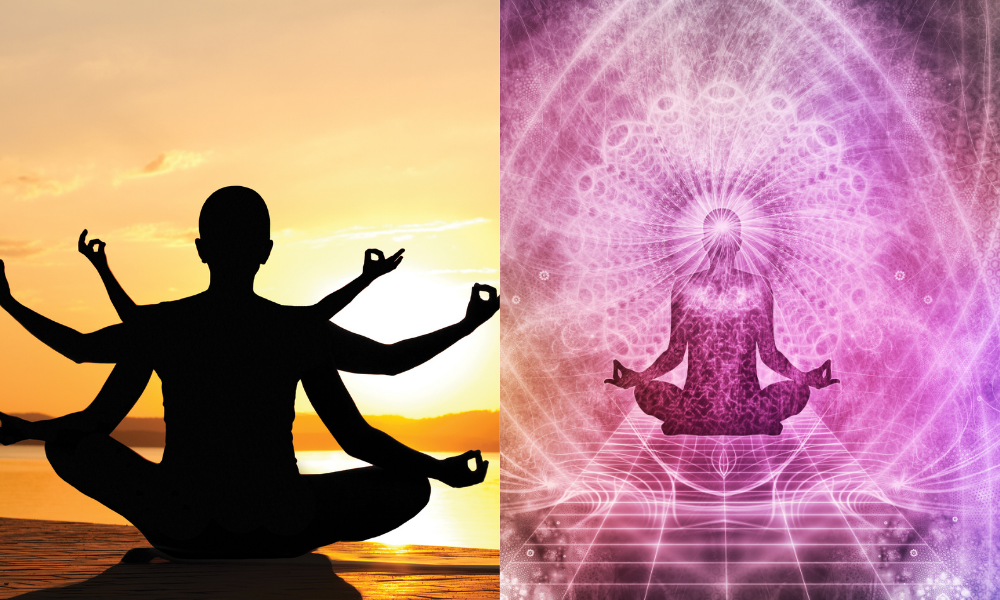
En effet, la littérature scientifique sur les expériences mystiques montre un chevauchement frappant. Les méditants expérimentés et les personnes au sommet d'un voyage psychédélique décrivent les mêmes caractéristiques essentielles : unité, sentiment du sacré, humeur profondément positive, intuition noétique et dépassement du temps et de l'espace.
Les deux voies partagent aussi un objectif plus profond : provoquer un changement durable — non pas un simple basculement temporaire, mais une véritable transformation. Pour comprendre comment les psychédéliques agissent sur le cerveau, notre guide détaille les neurosciences derrière ce processus.
Une brève histoire du lien entre yoga et psychédéliques
Le lien entre les traditions yogiques et les plantes psychoactives remonte à des milliers d'années. Le Rigveda — l'un des plus anciens textes au monde, daté d'environ 1 500 av. J.-C. — contient de nombreux hymnes au Soma. Le Soma était une boisson rituelle sacrée, et les spécialistes débattent depuis longtemps de son identité. La plupart s'accordent toutefois à dire qu'elle avait des propriétés psychoactives.

Par ailleurs, les traditions tantriques et shivaïtes en Inde utilisent depuis longtemps le cannabis comme sacrement. Les pratiquants l'associent tout particulièrement à la divinité Shiva. Ces traditions font partie de la grande famille yogique, même si elles diffèrent du yoga que la plupart des Occidentaux pratiquent aujourd'hui. Notre article sur le chamanisme et les champignons magiques explore des racines cérémonielles similaires à travers les cultures.
En Occident, la renaissance psychédélique des années 1960 a rapproché ces deux mondes. Des figures comme Ram Dass — né Richard Alpert — ont commencé comme psychologues à Harvard en étudiant la psilocybine. Il est ensuite devenu l'un des enseignants de méditation les plus influents du XXe siècle. Aujourd'hui, de nombreux centres de retraite psychédélique intègrent le yoga et la méditation au cœur de leurs programmes.
Pour en savoir plus sur le côté cérémoniel de l'usage des psychédéliques, notre guide comment transformer ton trip en cérémonie te donne des étapes concrètes.
Le breathwork : le pont entre yoga et psychédéliques
Le breathwork (travail du souffle) est le point de croisement le plus important entre yoga et psychédéliques. Dans le yoga, le pranayama (contrôle du souffle) régule le système nerveux et modifie les états de conscience. Dans le monde psychédélique, on utilise désormais le breathwork à la fois comme préparation et comme expérience puissante en soi.
La respiration holotropique
Le psychiatre Stanislav Grof et sa femme Christina ont développé la respiration holotropique (Holotropic Breathwork) dans les années 1970. Cette technique structurée associe respiration accélérée, musique et travail corporel pour atteindre des états de conscience modifiés. Point essentiel : elle ne nécessite aucune substance.
Grof a créé cette méthode après l'interdiction de la recherche sur le LSD par les gouvernements. Il voulait préserver les enseignements thérapeutiques qu'il avait observés lors de la thérapie assistée par psychédéliques. Résultat : les parallèles entre la respiration holotropique et les expériences psychédéliques restent frappants aujourd'hui encore.
Le pranayama pour la préparation et l'intégration
Plus largement, une pratique régulière du pranayama apporte un vrai bénéfice avant comme après une expérience psychédélique. Avant une session, le breathwork apaise le système nerveux et développe la conscience du corps. Il renforce aussi ta capacité à rester présent face à des sensations intenses. Ces compétences améliorent directement la qualité de l'expérience psychédélique.
Après une session, le pranayama favorise l'intégration. Une respiration lente et régulière active le système nerveux parasympathique, ce qui aide à digérer les émotions et à réfléchir au calme. Une revue de 2021 dans le Journal of Psychopharmacology a confirmé que les pratiques de pleine conscience et les expériences psychédéliques partagent des mécanismes cliniques et des bénéfices, ce qui renforce l'intérêt de les combiner.
Astuce pratique : consacre 10 à 20 minutes chaque matin à un pranayama simple — respiration alternée par les narines ou respiration diaphragmatique — dans les semaines qui précèdent une expérience psychédélique. Cette habitude affinera ta capacité à rester présent pendant la session.
La méditation : avant, pendant et après
La méditation et les psychédéliques sont liés de manière complexe et précieuse. D'un côté, une pratique régulière te prépare très bien à une session psychédélique. De l'autre, les expériences psychédéliques déclenchent souvent une pratique de méditation durable chez des personnes qui ne l'avaient jamais trouvée accessible.
La méditation comme préparation
Une pratique régulière de la méditation développe des compétences qui t'aident directement pendant une session psychédélique. Les méditants cultivent l'équanimité — la capacité d'observer pensées et sensations sans réagir. Cette qualité se révèle extrêmement précieuse lors d'expériences intenses. De même, savoir rester présent face à l'inconfort peut transformer un moment difficile en moment riche de sens.
C'est pourquoi de nombreux programmes de retraite psychédélique encouragent les participants à commencer à méditer plusieurs semaines avant leur arrivée. Même 10 à 15 minutes par jour font une vraie différence. Une étude de 2024 parue dans Nature Scientific Reports a montré que la psilocybine renforçait la capacité d'insight chez les méditants expérimentés, révélant une synergie claire entre les deux pratiques.
La méditation comme intégration
Après une expérience psychédélique, la méditation devient l'un des outils d'intégration les plus puissants. Les prises de conscience qui surgissent pendant une session ont besoin de temps et de réflexion au calme. Une pratique quotidienne de méditation offre précisément cet espace. Pour approfondir ce processus, notre guide sur les champignons magiques et la méditation présente des techniques précises.

La recherche confirme systématiquement que les pratiques d'intégration mènent à de meilleurs résultats. Méditation, journal, yoga et suivi avec un thérapeute y contribuent tous. Autrement dit, l'expérience elle-même n'est que le début — pas la fin.
Notre guide sur les 9 étapes d'un trip aux champignons traite la préparation et l'intégration comme des éléments centraux.
Le yoga comme cadre pour les expériences psychédéliques
Certains pratiquants utilisent les postures de yoga (asanas) spécifiquement autour des sessions psychédéliques. Il existe deux contextes principaux.
Le yoga avant une expérience
Une séance de yoga douce dans les heures qui précèdent une expérience psychédélique aide à amener le corps dans un état calme et ouvert. Les styles lents et doux fonctionnent le mieux. L'objectif est de relâcher les tensions physiques et d'approfondir la conscience du corps. Tu démarres ainsi ton expérience détendu et bien ancré.
Le yoga comme pratique d'intégration
Dans les jours et les semaines qui suivent une session, le yoga devient une pratique d'intégration précieuse. Les expériences psychédéliques font souvent remonter des émotions, des souvenirs et des sensations corporelles. Ces éléments continuent de travailler dans ton organisme pendant les jours suivants. Le yoga leur offre une façon structurée et incarnée de circuler — de l'espace pour respirer, au sens propre.
Beaucoup de gens remarquent que le yoga a une autre saveur après une expérience psychédélique marquante. Le corps se sent plus vivant. Le souffle circule plus facilement. De plus, la capacité de présence s'approfondit. En ce sens, yoga et psychédéliques se renforcent réellement l'un l'autre. Certains décrivent ce processus comme proche de la mort de l'ego — une dissolution de l'identité figée qui ouvre de nouvelles façons de se relier au corps.
Set and setting : le cadre yogique
Le concept de set and setting — popularisé par Timothy Leary — correspond étroitement aux principes yogiques. Le « set » (état d'esprit) rejoint la pratique yogique consistant à poser une intention. Le « setting » (environnement) rejoint la création d'un espace sacré, essentielle tant dans le yoga que dans les cérémonies traditionnelles.
Notre guide sur le set and setting explore ces principes en profondeur. Si tu abordes une expérience psychédélique avec le même soin que celui que tu apportes à une pratique de yoga profonde, tu appliques déjà l'idée essentielle. Pour un aperçu plus large des substances et de leurs effets, consulte notre guide sur les types de psychédéliques les plus courants.
Microdosing et yoga
L'association du microdosing et du yoga gagne en popularité chaque année. Beaucoup de pratiquants rapportent que des doses subperceptives de psilocybine aiguisent la conscience du moment présent. D'autres constatent moins de bavardage mental et une sensibilité corporelle plus fine — le tout sans vivre une expérience psychédélique complète.

Ce domaine suscite un intérêt croissant dans la recherche. Pour les bases, notre guide qu'est-ce que le microdosing explique tout clairement. Si tu cherches des repères précis de dosage, notre guide de dosage des truffes magiques détaille la plage allant de la microdose à l'expérience complète.
À noter : associer le yoga à une dose psychédélique complète (par opposition au microdosing) demande de la prudence. Fais-toi accompagner par des praticiens expérimentés si possible. Certains psychédéliques perturbent la coordination, un yoga dynamique est donc déconseillé. Le breathwork doux et la méditation assise restent les choix les plus sûrs.
Par où commencer avec le yoga et les psychédéliques
Si tu veux explorer la croisée du yoga et des psychédéliques, ces étapes t'offrent une base solide.
Par ailleurs, explorer le lien entre la glande pinéale et le troisième œil apporte un éclairage utile. De nombreuses traditions yogiques associent le troisième œil aux mêmes états que les psychédéliques peuvent induire.
Prêt à explorer la conscience avec intention ?
— un psychédélique légal, bien étudié, avec des siècles d'usage traditionnel et un soutien scientifique grandissant.
À noter : si tu souffres d'un trouble mental et que tu souhaites explorer la psilocybine ou une autre thérapie psychédélique, consulte d'abord un professionnel de santé. Ne t'automédique pas — un accompagnement adapté est essentiel lorsque les psychédéliques sont utilisés comme médicament.


Septembre 24, 2021