
Votre panier est vide.

Thérapie d'intégration psychédélique
Publié sous: Guides de trip & préparation
Une expérience psychédélique peut bouleverser ton monde : émotions intenses, prises de conscience profondes et une tout autre façon de voir la réalité. Pourtant, sans un accompagnement adapté par la suite, ces moments puissants finissent souvent par s'estomper. La thérapie d'intégration psychédélique t'aide à donner du sens à tout ça et à transformer ces expériences en véritable évolution personnelle durable.
Dans ce guide, tu vas découvrir ce qu'est la thérapie d'intégration psychédélique, pourquoi elle est essentielle pour des bénéfices durables, et quels outils et techniques peuvent t'aider à intégrer ton voyage psychédélique dans ta vie de tous les jours.
Qu'est-ce que la thérapie d'intégration psychédélique ?
La thérapie d'intégration psychédélique est une forme d'accompagnement thérapeutique centrée sur ce qui se passe après une expérience psychédélique. Il ne s'agit pas d'administrer des substances comme la psilocybine, le LSD ou l'ayahuasca. Elle t'aide plutôt à analyser et à comprendre les prises de conscience, les émotions et les changements apparus pendant ton voyage, y compris des moments intenses comme la mort de l'ego ou une libération émotionnelle bouleversante.
Autrement dit, l'intégration est une façon de créer du sens. Un thérapeute ou un guide formé t'aide à traduire ces expériences souvent intenses, parfois déroutantes, en changements concrets dans tes pensées, tes habitudes et ton quotidien. Résultat : l'expérience ne reste pas un simple souvenir, elle devient la base d'une véritable transformation.
Pourquoi l'intégration est importante
Sans intégration, une expérience psychédélique reste un potentiel inexploité. Tu as peut-être ressenti une profonde libération émotionnelle ou vécu une prise de conscience qui change la vie. Mais si tu ne travailles pas activement ces enseignements pour les incarner, ils s'effacent souvent en quelques jours ou quelques semaines.
La fenêtre de neuroplasticité
Des recherches récentes sur le fonctionnement des psychédéliques dans le cerveau montrent que ces substances ouvrent une période de neuroplasticité accrue, une « fenêtre thérapeutique » pendant laquelle ton cerveau est plus réceptif à la création de nouvelles connexions. Durant cette période, les changements émotionnels, cognitifs et comportementaux s'ancrent plus facilement. Les jours et les semaines qui suivent une expérience psychédélique sont donc un moment crucial pour se consacrer au travail d'intégration.
L'intégration met à profit cette fenêtre grâce à la réflexion, au travail sur les émotions et à des changements de comportement volontaires. Par exemple, des pratiques comme l'écriture d'un journal, la pleine conscience et les échanges thérapeutiques aident à renforcer de nouveaux schémas avant que la fenêtre ne se referme.
D'ailleurs, une étude de Johns Hopkins de 2024 a montré qu'une seule séance de psilocybine a produit une rémission durable chez plus de 50 % des participants souffrant de dépression résistante au traitement après six mois, mais uniquement lorsqu'elle était associée à une intégration et à un suivi adaptés.
Les étapes clés de la thérapie d'intégration
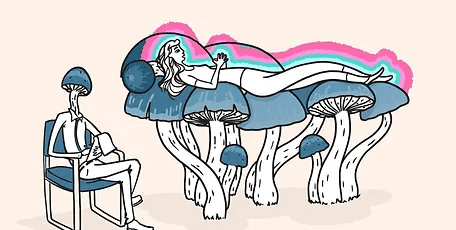
Le format précis de tes séances dépendra de toi et du praticien avec lequel tu travailles. Cela dit, la plupart des thérapies d'intégration psychédélique suivent ces étapes communes :
1
Préparation
Préparation
Avant ton expérience psychédélique, un thérapeute t'aide à clarifier tes intentions, tes peurs et tes attentes. Il est d'abord essentiel de créer un environnement sûr et bienveillant : c'est là que le set et setting jouent un rôle vital. Certaines personnes choisissent aussi de transformer leur trip en cérémonie pour se préparer de manière structurée. Cette phase instaure la confiance et fixe des objectifs clairs pour le voyage à venir.
2
Accompagnement pendant l'expérience
Accompagnement pendant l'expérience
Certaines personnes choisissent de vivre leur expérience psychédélique dans un cadre thérapeutique, en présence d'un guide formé. C'est par exemple courant lors d'une retraite psychédélique, où des professionnels t'apportent soutien et réconfort tout au long de la séance. De plus, la présence d'un guide permet de maintenir un cadre sécurisant, surtout lors de moments difficiles ou de bad trips.
3
Séances d'intégration
Séances d'intégration
Après l'expérience psychédélique, tu participes à des séances structurées pour parler des pensées, des émotions et des prises de conscience qui sont apparues, et les explorer. Le thérapeute t'aide à comprendre ce qui s'est passé et à appliquer ces enseignements à ta vie de tous les jours. Il t'accompagne aussi pour repérer les nouveaux schémas que tu souhaites renforcer.
4
Outils de travail et d'intégration
Outils de travail et d'intégration
Les thérapeutes utilisent différentes techniques pour soutenir ton processus d'intégration. Il peut par exemple s'agir de pleine conscience, de méditation, de somatic experiencing, de respiration (breathwork) et d'expression créative. La bonne combinaison dépend de tes besoins personnels et de la nature de ton expérience.
5
Suivi à long terme
Suivi à long terme
L'intégration n'est pas un événement ponctuel : c'est un processus continu. Beaucoup de personnes poursuivent donc leurs séances pendant plusieurs semaines, voire plusieurs mois, pour soutenir leur évolution personnelle. Certaines explorent aussi des pratiques comme le microdosing dans le cadre de leur routine d'intégration à long terme. Des points réguliers t'aident à rester connecté(e) à tes prises de conscience et à suivre ta progression dans le temps.
Les six domaines de l'intégration
Le modèle d'intégration synthétisé de la MAPS identifie six grands domaines dans lesquels appliquer des pratiques d'intégration. Ce modèle encourage une approche globale, afin que tu travailles plusieurs dimensions de ta vie après une expérience psychédélique.
| Esprit | Traiter les émotions, cultiver la pleine conscience, la gratitude et des activités mentales créatives |
| Corps | Explorer l'influence de l'expérience sur ta santé physique, tes habitudes et ton mode de vie grâce à des pratiques comme le travail corporel psychédélique |
| Spiritualité | Intégrer les prises de conscience spirituelles ou existentielles dans ta compréhension de ta raison d'être et du sens de la vie |
| Relations | Réfléchir à l'impact de l'expérience sur tes liens avec tes amis, ta famille et tes partenaires, par exemple grâce à la thérapie de couple psychédélique |
| Mode de vie | Identifier les routines, les rituels et les habitudes qui soutiendront ton bien-être à l'avenir |
| Nature | Approfondir ta conscience environnementale et adopter des pratiques durables inspirées par ton expérience |
Pour de meilleurs résultats, prévois des pratiques d'intégration qui couvrent plusieurs de ces domaines. Une approche équilibrée entre l'esprit, le corps, la spiritualité et les relations mène à une transformation plus complète et plus durable.
Techniques d'intégration pratiques

Il existe de nombreux outils et techniques pour soutenir ton processus d'intégration, que ce soit seul(e) ou avec un accompagnement professionnel. Voici quelques-unes des approches les plus efficaces :
Ressources utiles
Ce domaine évolue rapidement, avec de nouveaux outils et cadres de travail qui apparaissent en permanence. Si tu souhaites te lancer dans une thérapie d'intégration psychédélique, il est important de faire tes propres recherches et de trouver un praticien qualifié. Les ressources suivantes constituent par ailleurs un excellent point de départ :
⚠️ Important : Si tu souffres d'une maladie mentale et que tu es curieux(se) d'utiliser la psilocybine ou toute autre substance psychédélique, consulte d'abord un professionnel de santé qualifié. Ne t'automédique pas. Il est essentiel d'être bien entouré(e) et accompagné(e) quand on utilise les psychédéliques comme médicament.
Prêt(e) à explorer le monde de la psilocybine ? Découvre nos
et nos
chez Magic Mushrooms Shop.


Mars 23, 2026