
Votre panier est vide.

Champignon chaga : histoire, composés, durabilité et compléments alimentaires
Publié sous: Champignons médicinaux & fonctionnels
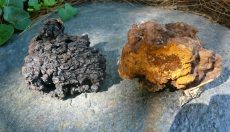
Champignon chaga (Inonotus obliquus) — histoire, composés, durabilité et comment choisir un complément alimentaire au chaga (mise à jour 2026)
Le champignon chaga (Inonotus obliquus) pousse sur les bouleaux dans les forêts froides du Nord et possède une longue histoire dans l'herboristerie russe et d'Europe de l'Est. On le surnomme souvent le « roi des champignons médicinaux » en raison de son riche profil de composés et de ses profondes racines traditionnelles. Dans ce guide, tu découvriras ce qui rend le chaga unique, ce que les chercheurs étudient actuellement, comment t'approvisionner de façon responsable et comment choisir le bon complément alimentaire au chaga.
Le chaga (Inonotus obliquus) ne ressemble pas à un champignon classique. Il forme une masse sombre, à l'aspect carbonisé — appelée conk — sur des bouleaux vivants.
Pendant des siècles, les habitants de la Sibérie, de la Russie et d'Europe du Nord ont préparé le chaga en infusion quotidienne.
Aujourd'hui, le chaga attire l'attention du monde entier pour son profil de composés riche en antioxydants et sa relation singulière avec le bouleau.
Ci-dessous, tu trouveras les principaux composés, les pistes de recherche actuelles, des conseils de durabilité et des recommandations pratiques sur les produits.
| Qu'est-ce que le chaga ? | Un conk fongique non psychoactif qui pousse sur les bouleaux en climat froid. Ce n'est pas un champignon au sens traditionnel, mais une masse stérile de tissu fongique. |
| Principaux groupes de composés | Polysaccharides (bêta-glucanes), triterpénoïdes (acide bétulinique, inotodiol, lanostérol), mélanine et polyphénols. |
| Principaux axes de recherche | Activité antioxydante, interactions avec les cellules immunitaires, écologie intestinale et marqueurs métaboliques — surtout dans des modèles précliniques. |
| Comment le consommer | Infusion traditionnelle, gélules, teintures et poudres. Découvre notre . |
| À noter | La plupart des données proviennent d'études en laboratoire et sur l'animal. Le chaga est un complément alimentaire, pas un médicament ni un remède. |
L'histoire du chaga
L'usage du chaga remonte à plusieurs siècles en Russie, en Sibérie et dans la région baltique. Les herboristes traditionnels faisaient infuser des morceaux du conk sombre pour obtenir une infusion forte. Ils appréciaient ce rituel quotidien pour la vitalité générale et la résistance qu'il apportait pendant les longs hivers rigoureux.
Dans l'herboristerie traditionnelle chinoise, les praticiens ont eux aussi mentionné le chaga — même s'il n'a jamais atteint la même renommée que le reishi dans cette tradition. Le nom finnois pakurikääpä montre à quel point le chaga est ancré dans la culture populaire nordique. Aujourd'hui, le chaga fait partie des routines bien-être partout dans le monde. Tu peux en apprendre davantage sur l'univers des champignons fonctionnels dans notre article 10 faits fascinants sur les champignons.
Les composés du chaga qui intéressent les chercheurs
Le chaga doit sa réputation à un profil de composés riche et inhabituel. Comme il pousse sur les bouleaux, il absorbe certains composés propres au bouleau en plus de ses propres métabolites fongiques. Une étude de 2025 parue dans Molecules (MDPI) a confirmé que les triterpénoïdes et les stérols restent les marqueurs chimiques distinctifs du conk de chaga sauvage.
Polysaccharides et bêta-glucanes
Comme d'autres champignons médicinaux, le chaga contient des polysaccharides de type bêta-glucanes. En laboratoire, les chercheurs étudient l'interaction de ces composés avec les cellules immunitaires, notamment les macrophages. L'extraction à l'eau chaude libère les polysaccharides de la façon la plus efficace. Cela explique pourquoi l'infusion de chaga — la méthode de préparation la plus ancienne — reste populaire aujourd'hui.
Triterpénoïdes : acide bétulinique et compagnie
Le chaga absorbe la bétuline du bouleau et en convertit une partie en acide bétulinique. Les chercheurs retrouvent aussi de l'inotodiol et du lanostérol dans les extraits de chaga. Ces triterpénoïdes retiennent l'attention de la recherche préclinique pour leur interaction avec des voies cellulaires. Une étude de 2025 parue dans Scientific Reports (Nature) a examiné comment Inonotus obliquus a développé de façon indépendante la capacité de produire de la bétuline.
Cependant, des analyses récentes montrent que les teneurs en bétuline et en acide bétulinique varient fortement entre le chaga sauvage et les compléments du commerce. Vérifie toujours si ton produit au chaga indique la méthode d'extraction et le profil de composés sur l'étiquette.
Mélanine
La couche extérieure sombre, presque noire, du chaga contient de fortes concentrations de mélanine. Ce pigment donne au chaga son aspect si particulier. Les chercheurs étudient la mélanine fongique pour ses propriétés antioxydantes dans des modèles expérimentaux. Ce composé rend aussi le chaga facile à repérer visuellement sur les bouleaux.
Polyphénols et autres antioxydants
Le chaga obtient des scores élevés dans les tests antioxydants en laboratoire. Son profil de polyphénols comprend des composés comme la quercétine, l'acide ellagique et l'aldéhyde protocatéchique. Les chercheurs utilisent ces scores de laboratoire comme point de départ. Toutefois, une forte activité antioxydante in vitro ne se traduit pas automatiquement par le même effet dans le corps humain.
Ce que les chercheurs étudient sur le chaga
Le chaga suscite un large intérêt dans la recherche. En même temps, la plupart des études utilisent des cultures cellulaires et des modèles animaux. Il n'existe que quelques petits essais chez l'humain. Considère donc ces résultats comme des pistes de recherche actives — et non comme des bienfaits prouvés.
Activité antioxydante
Plusieurs études de laboratoire confirment que les extraits de chaga présentent une forte activité antioxydante in vitro. Les chercheurs cherchent à savoir si cela se traduit par des effets significatifs chez les organismes vivants. La combinaison de mélanine, de polyphénols et de triterpénoïdes contribue probablement à ces résultats. Les scientifiques insistent néanmoins sur l'écart entre les mesures de laboratoire et les résultats dans la vie réelle.
Interactions avec les cellules immunitaires
Dans des études de laboratoire, les bêta-glucanes du chaga interagissent avec les récepteurs des cellules immunitaires. Les chercheurs examinent si les polysaccharides du chaga aident le système immunitaire à réagir de manière équilibrée face aux agressions. Les modèles animaux montrent des tendances intéressantes. Ces résultats doivent toutefois être validés par des essais chez l'humain avant de pouvoir tirer des conclusions fermes.
Écologie intestinale et marqueurs métaboliques
Certaines études animales explorent l'influence des polysaccharides du chaga sur la diversité des bactéries intestinales et sur des marqueurs métaboliques comme la glycémie et les lipides sanguins. Ce domaine suscite un intérêt croissant, mais il en est encore à un stade précoce. Les données chez l'humain restent très limitées.
Autres pistes de recherche à un stade précoce
Important : Aucune allégation de santé autorisée par l'UE n'existe pour le champignon chaga. Les pistes de recherche ci-dessus décrivent des investigations scientifiques en cours, et non des bienfaits avérés d'un complément alimentaire.
Chaga et durabilité
La durabilité compte quand tu achètes du chaga. Le chaga sauvage pousse lentement — il peut falloir dix ans ou plus pour qu'un conk atteigne une taille récoltable. Le champignon ne pousse que sur des bouleaux vivants et meurt avec son arbre hôte. La surexploitation menace les populations de chaga sauvage dans plusieurs régions.
Le mycologue Paul Stamets a publiquement appelé à renoncer à la récolte commerciale de chaga sauvage et à soutenir plutôt des alternatives cultivées. Si tu choisis du chaga sauvage, privilégie les fournisseurs qui laissent au moins 50 % du conk intact. Cette approche permet la repousse et protège le bouleau. Vérifie aussi si ton fournisseur s'approvisionne dans des forêts gérées ou certifiées.
Conseil durabilité : Interroge ton fournisseur sur ses pratiques de récolte. Les marques responsables donnent des détails sur l'approvisionnement, la gestion forestière et la manière dont elles garantissent la disponibilité du chaga à long terme.
Comment consommer le chaga
Traditionnellement, on prépare le chaga en infusion ou en décoction. Aujourd'hui, les gélules et les teintures offrent une option plus pratique. La méthode d'extraction détermine les composés que tu absorbes réellement.
| Format | Pourquoi le choisir |
|---|---|
| Infusion / décoction traditionnelle | La plus ancienne préparation du chaga. L'eau chaude extrait efficacement les polysaccharides et les bêta-glucanes. Attends-toi à un goût doux et terreux, avec une pointe de vanille. |
| Gélules | Faciles à doser et à emporter. Vérifie si l'étiquette indique la teneur en bêta-glucanes et la méthode d'extraction. Notre comprend des gélules de chaga de Mushrooms4Life. |
| Teinture (alcool ou double extraction) | L'extraction à l'alcool capte les triterpénoïdes. Un double extrait associe eau et alcool pour le spectre de composés le plus large. |
| Poudre | Polyvalente — ajoute-la à ton thé, ton café ou tes smoothies. Assure-toi que la poudre provient d'un véritable extrait et non de conk brut simplement moulu. |
Chez Magic Mushrooms Shop, nous proposons des gélules et des teintures de chaga de marques de confiance comme Mushrooms4Life et Kaapa Health. Mushrooms4Life n'utilise que des ingrédients bio, sans liants, additifs ni produits chimiques. Les teintures Kaapa Health associent le savoir-faire traditionnel finlandais à des méthodes d'extraction modernes.
Pour bien démarrer : Commence par une petite quantité quotidienne. Reste régulier pendant quatre à six semaines et observe comment ton corps réagit. Le chaga s'intègre très bien dans un rituel d'infusion le matin ou l'après-midi.
Le chaga associé à d'autres champignons
Beaucoup de passionnés de bien-être associent le chaga à d'autres champignons fonctionnels. Par exemple, le chaga et le reishi partagent une approche traditionnelle axée sur le calme et la résilience. D'autres l'associent à la crinière de lion pour couvrir différents axes de recherche dans une seule routine quotidienne. Tu peux explorer ces combinaisons dans notre guide complet des champignons médicinaux.
Tu te demandes comment fonctionne le mycélium et ce qui rend les champignons si fascinants ? Nos fiches espèces te donnent une vue d'ensemble.
Sécurité du chaga, effets secondaires et interactions
Les données de sécurité chez l'humain sont limitées pour le chaga. La plupart des informations proviennent de l'usage traditionnel, d'études animales et de rapports de cas. WebMD et le Memorial Sloan Kettering soulignent tous deux que les informations fiables sur la sécurité restent insuffisantes pour tirer des conclusions fermes.
Points de vigilance connus
Avertissement : Le chaga est un complément alimentaire. Il ne permet pas de diagnostiquer, traiter, guérir ou prévenir une maladie. Ne dépasse pas la dose journalière recommandée. Les compléments alimentaires ne remplacent pas une alimentation variée et équilibrée ni un mode de vie sain. Consulte toujours ton médecin ou ton pharmacien avant d'associer des compléments à un traitement médicamenteux ou de les utiliser en cas de problème de santé.
Prêt à découvrir le chaga et d'autres champignons fonctionnels ? Visite notre
et trouve le produit qui s'intègre à ta routine quotidienne.


Août 6, 2017