
Sie haben keine Artikel in Ihrem Warenkorb.

Magic Truffles Vergleich: Mexicana vs Atlantis vs Hollandia
Posted under: Sortenratgeber
Sorten-Guides · 22. Mai 2026 · 9 Min. Lesezeit
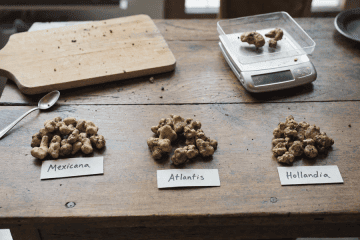
Sich im Smartshop zwischen drei Sorten zu entscheiden, ist gar nicht so leicht. Deshalb zeigt dir dieser Magic-Truffles-Vergleich genau, worin sich Mexicana, Atlantis und Hollandia bei Herkunft, Charakter und Dosierung unterscheiden. Du willst eine Sorte, die zu deinem Abend passt, und du willst wissen, worauf du dich einlässt, bevor du die Packung überhaupt öffnest.
Mexicana ist der sanfte Klassiker, Atlantis der Tiefgänger und Hollandia der niederländische Allrounder, der dazwischen liegt. Jede dieser Sorten ist ein Sklerotium. Das ist einfach eine verhärtete, unterirdische Myzelmasse und weder ein echter Pilz noch ein Trüffel aus der Küche.
Dieser Guide führt dich durch Geschichte und Charakter der drei Sorten, eine Dosierungstabelle zum direkten Vergleich und einen kurzen Hinweis zu Set und Setting. Am Ende weißt du, welche der drei zu dem Abend passt, den du dir vorstellst, und welche zwei du dir für ein anderes Mal aufhebst.
Magic-Truffles-Vergleich: Woher diese drei Sorten kommen
Bevor wir Stärke und Wirkung vergleichen, lohnt sich ein Blick darauf, was Magic Truffles eigentlich sind. Trüffel, Sklerotien, Philosopher's Stones – die Begriffe meinen alle dasselbe. Es sind dichte, unterirdische Nährstoffspeicher bestimmter Psilocybe-Arten. Sie enthalten dieselben Wirkstoffe, Psilocybin und Psilocin, die auch in den bekannteren Fruchtkörpern der Zauberpilze stecken. Eine ausführlichere Einführung findest du in unserem Beitrag Was sind Magic Truffles eigentlich?, der die Biologie im Detail erklärt.
Mexicana hat die längste Geschichte. Psilocybe mexicana ist die Art, die die mazatekische Heilerin María Sabina Ende der 1950er-Jahre westlichen Forschern zeigte. Albert Hofmann nutzte sie später in seinem Sandoz-Labor, um Psilocybin zu isolieren. Le Monde hat diese Spur in einem langen Artikel über die Besuche der Wassons in Huautla de Jiménez nachgezeichnet. Er zählt bis heute zu den nachdenklicheren europäischen Beiträgen über die Wurzeln dieser Sorte (Le Monde).
Atlantis ist der Neuling. Psilocybe atlantis wurde zuerst im Fulton County in Georgia im Süden der USA gesammelt und um 2002 von den Mykologen Guzmán, Hanlin und White formal beschrieben. Sie gehört zu den jüngsten Ergänzungen der Magic-Truffle-Familie und gilt meist als enge Verwandte von Psilocybe mexicana. Manche Züchter und Forscher diskutieren, ob es sich um eine eigene Art oder nur um eine Unterform handelt (Wikipedia).
Hollandia schließlich ist die „heimischste“ der drei. Es ist eine niederländische Trüffelsorte, die von Smartshop-Züchtern in den Niederlanden entwickelt wurde und keine in der Wildnis entdeckte Art. Der Name selbst ist übrigens das alte lateinische Wort für Holland. Die saisonale Beliebtheit dieser Sorte haben wir bereits in einem früheren Deep-Dive zum Hollandia-Trüffel beleuchtet. Dort ging es darum, warum so viele Psychonauten sie als ihre Wintersorte wählen.
Magic-Truffles-Vergleich: Charakter und Wirkung jeder Sorte
Die Stärke ist nur eine Achse, der Charakter zählt mindestens genauso. Zwei Sorten mit ähnlichem Psilocybingehalt können trotzdem ganz unterschiedliche Abende ergeben. Die folgenden Eindrücke stammen aus Jahren an Kundenfeedback, aus den Verkostungsrunden unseres Produktteams und aus dem allgemeinen Profil, das europäische Smartshops berichten.
Mexicana – der sanfte Klassiker
Mexicana ist in der Regel der sanfteste Einstieg. Berichte beschreiben meist ein warmes, leichtes Erlebnis mit Stimmungsaufhellung, visuellen Texturen bei geschlossenen Augen und einem eher geselligen als introspektiven Ton. Sie ist oft die erste Sorte, die wir Leuten empfehlen, die zum ersten Mal Trüffel probieren, oder einer kleinen Gruppe, die einen ruhigen gemeinsamen Nachmittag verbringen möchte. Außerdem steckt hinter Mexicana ein Großteil der historischen und wissenschaftlichen Geschichte des Psilocybins, was für viele Psychonauten einen nostalgischen Reiz hat.
Atlantis – der Tiefgänger
Atlantis steht am anderen Ende der Skala. Sie gilt nach Gewicht weithin als die stärkste der drei, mit lebhaften Visuals bei geschlossenen Augen, intensiveren Körperempfindungen und einem deutlicheren Gefühl, dass die Zeit langsamer vergeht. Mehrere Psychonauten beschreiben sie als nach innen gerichteter als Mexicana. Die introspektiven Gedankengänge passen eher zu einem ruhigen Abend zu Hause als zu einem Spaziergang im Park. Weil dasselbe Gramm Atlantis kräftiger wirkt als ein Gramm Mexicana, solltest du die Menge eher nach unten als nach oben anpassen.
Hollandia – der niederländische Allrounder
Hollandia liegt in der Mitte. Berichte beschreiben ein ausgewogenes Erlebnis: klare Stimmungsaufhellung, etwas Visuals und eine gleichmäßige, gut handhabbare Körperlast. Sie ist tendenziell berechenbar. Genau diese Berechenbarkeit wollten die niederländischen Züchter erreichen. Deshalb ist Hollandia bei erfahrenen Psychonauten beliebt, die schon wissen, wie ihr Körper reagiert, und eine verlässliche Sorte im mittleren Bereich ohne Überraschungen suchen.
Richtwerte für das Frischgewicht pro Sorte
Das in den Niederlanden ansässige Inwardbound Institute veröffentlicht eine der nützlichsten europäischen Dosierungsreferenzen für frische Trüffel. Es ordnet Frischgewichte in Bereiche statt in feste Zahlen ein, was gut zu den schwankenden Eigenschaften der Pflanzen passt. Wir haben diese Bereiche auf die drei Sorten in diesem Guide übertragen.
Mexicana ist sanft. Eine Portion von 5 g ist für die meisten Erwachsenen eine leichte, gesellige Dosis. 10 g liegen im mittleren Bereich. Eine volle 15-g-Packung ist für erfahrene Psychonauten ein intensiver Abend.
Hollandia ist mittelstark. 5 g sind eine niedrige Dosis. 10 g sind moderat, aber schon deutlich spürbar. Eine volle 15-g-Packung ergibt eine intensive Session, für die du einen ruhigen Abend und eine nüchterne Begleitung brauchst.
Atlantis ist nach Gewicht stark. Schon 5 g liegen im Bereich niedrig bis moderat. 10 g ergeben eine intensive Session. Eine volle 15-g-Packung ist eine hohe Dosis, die nur sehr wenige Menschen brauchen, und zwar erst nach Erfahrung mit niedrigeren Mengen.
Diese Bereiche sind Ausgangspunkte, keine Versprechen. Dein Körpergewicht, deine letzte Mahlzeit, dein Schlaf, deine Stimmung und die jeweilige Charge verändern das Erlebnis. Im Zweifel startest du deshalb lieber niedriger und wartest eine Stunde, bevor du über Nachlegen nachdenkst.
Direkter Vergleich: Magic-Truffles-Tabelle
Die Tabelle unten fasst die drei Sorten in den Punkten zusammen, auf die es wirklich ankommt, wenn du vor einem Kühlschrank voller versiegelter Packungen stehst.
| Kriterium | Mexicana | Atlantis | Hollandia |
|---|---|---|---|
| Art | Psilocybe mexicana | Psilocybe atlantis | Niederländische Trüffelsorte |
| Herkunft | Oaxaca, Mexiko | Georgia, USA | Niederlande |
| Erstbeschreibung | 1957 (R. Heim) | Um 2002 (Guzmán et al.) | Moderner niederländischer Anbau |
| Relative Stärke (nach Gewicht) | Sanft | Stark | Mittel |
| Charakter | Leicht, gesellig, stimmungsaufhellend | Tief, visuell, introspektiv | Ausgewogen, berechenbar, gleichmäßig |
| Am besten geeignet für | Psychonauten beim ersten Mal, ruhige Nachmittage | Erfahrene Psychonauten, ruhige Abende | Wiederkehrende Psychonauten, die Verlässlichkeit wollen |
| Packungsgröße bei MMS | 15 g frisch | 15 g frisch | 15 g frisch |
Ein nützlicher Referenzpunkt liegt außerhalb dieser Tabelle. Unabhängige Analysen des europäischen Testdienstes Miraculix haben frische Sklerotien von Psilocybe mexicana, P. tampanensis und P. atlantis mit Psilocybinkonzentrationen gemessen, die über eine große Spanne streuen. Einzelne 15-g-Packungen lagen gelegentlich deutlich über den älteren veröffentlichten Durchschnittswerten (Miraculix Lab). Die praktische Erkenntnis ist einfach: Selbst innerhalb derselben Sorte schwanken die Chargen, daher ist das Gewicht immer ein Richtwert und keine Garantie.
Praxistipp – bei Atlantis lieber niedriger starten. Wenn du ein bestimmtes Gewicht von Mexicana oder Hollandia gewohnt bist, reduziere es beim ersten Wechsel zu Atlantis um etwa ein Drittel. Du kannst immer noch etwas Reserve bereithalten, aber eine Portion, die stärker war als gedacht, lässt sich nicht wieder ungegessen machen. Unser Magic-Truffles-Dosierungsguide erklärt die Frischgewichtsbereiche im Detail.
Die passende Sorte für den Abend, den du dir vorstellst
Der stärkste Trüffel ist nicht der beste Trüffel. Der richtige Trüffel ist der, der zum Abend, zur Gesellschaft, zur Musik und zu deiner aktuellen Verfassung passt. Anders gesagt: Bei der Wahl geht es weniger darum, Intensität zu jagen, als die Sorte zu dem Erlebnis zu passen, das du wirklich willst.
Für einen ruhigen Samstagnachmittag mit Partner oder einer kleinen Gruppe Freunde ist Mexicana schwer zu schlagen. Die Stimmung ist leicht, Gespräche fließen, und die Visuals bleiben sanft genug, um einen sonnigen Park oder ein Sofa mit vertrauter Musik zu genießen. Deshalb behalten viele Psychonauten Mexicana als ihre Standardsorte für den Sommer.
Für einen konzentrierten Abend zu Hause mit Kopfhörern, Notizbuch und ohne Pläne ist Atlantis die interessantere Wahl. Sie belohnt Ruhe, Aufmerksamkeit und die Bereitschaft, einem Gedanken zu folgen, wohin er auch führt. Entsprechend ist sie selten die richtige Sorte für ein belebtes soziales Umfeld.
Hollandia ist die Antwort für die Mitte. Wenn du zum Beispiel eine Sorte willst, die sich meistens gleich verhält, dich nicht überrascht und dir erlaubt, einen Abend mit einem Freund zu planen, ohne alles zu zerdenken, dann ist Hollandia die stetige Option. Viele wiederkehrende Kunden wechseln zwischen Mexicana und Atlantis, halten aber immer eine Packung Hollandia als verlässliche Basis im Kühlschrank bereit.
Auch dein Körper spielt eine Rolle. Eine schwerere Mahlzeit verzögert den Wirkungseintritt und mildert den Höhepunkt. Eine leichtere Mahlzeit verschärft beides. Koffein kann die Visuals schärfer machen. Cannabis kann die Körperlast vertiefen und das Erlebnis nach innen ziehen, was manche Psychonauten begrüßen und andere zu viel finden. Plane entsprechend.
Set und Setting leisten weiterhin die Hauptarbeit
Egal, für welche Sorte du dich entscheidest: Die Umgebung prägt den Abend stärker als das Etikett auf der Packung. Ein bequemer Raum, vertraute Gesellschaft, ein klarer Zeitplan, Wasser in Reichweite und Musik, die du schon liebst – das sind die Grundlagen. Unser Beitrag zu Set und Setting erklärt die Basics, und das Prinzip gilt für einen Nachmittag mit 5 g genauso wie für einen Abend mit 15 g.
Lagerung, Frische und Timing
Frische Trüffel sind verderblich. Lagere sie bis zum Tag der Einnahme verschlossen im Kühlschrank und friere sie nicht ein – Einfrieren beschädigt die Sklerotien und kann die Wirkstärke unvorhersehbar verändern. Verbrauche sie innerhalb des auf der Packung aufgedruckten Datums und iss eine geöffnete Packung lieber auf, statt sie auf mehrere Sessions zu verteilen.
Auch das Timing ist wichtig. Die meisten Psychonauten berichten, dass die Wirkung nach frischen Trüffeln auf leichtem Magen innerhalb von 30 bis 60 Minuten einsetzt, zwischen 90 Minuten und zwei Stunden ihren Höhepunkt erreicht und in den folgenden zwei bis drei Stunden abklingt. Plane ein freies Zeitfenster von mindestens sechs Stunden ab dem ersten Bissen ein, damit du den Höhepunkt sicher hinter dir hast, bevor Verpflichtungen anstehen. Für einen breiteren Überblick über Pilze und Trüffel vergleicht unser umfassender Sorten-Guide für Pilze und Trüffel diese Zeitfenster sortenübergreifend.
Warum dieser Magic-Truffles-Vergleich wichtig ist
Eine Sorte ist kein Schwierigkeitsgrad. Atlantis zu wählen, um etwas zu beweisen, oder Mexicana, weil sie „sicherer“ klingt, geht beides am Kern vorbei. Es geht um Passung – zwischen Sorte, Abend, den Menschen um dich herum und dem, worüber du in den nächsten sechs Stunden wirklich nachdenken möchtest. Konkret: Mexicana steht für Leichtigkeit, Atlantis für Tiefe und Hollandia für Beständigkeit.
Sobald du die Wahl so betrachtest, wird die Entscheidung leichter statt schwerer. Du vergleichst nicht mehr Milligramm, sondern Absichten. Außerdem jagst du nicht mehr der „stärksten“ Packung hinterher, sondern wählst die richtige.
Ein kurzer Sicherheitshinweis. Kombiniere Magic Truffles nicht mit Alkohol, MDMA, Stimulanzien oder verschreibungspflichtigen Medikamenten gegen psychische Erkrankungen oder Stimmungsstörungen, insbesondere nicht mit SSRIs, MAO-Hemmern oder Lithium. Wenn du oder ein naher Familienangehöriger schon einmal eine Psychose, Schizophrenie oder bipolare Störung hatte, nimm keine psilocybinhaltigen Produkte. Wenn es dir schlecht geht, setz dich hin, trink Wasser, konzentriere dich auf deine Atmung und wende dich an einen nüchternen Trip-Sitter oder eine Vertrauensperson.
Bereit, deine Sorte zu wählen? Ob du deinen allerersten Trüffel auswählst oder deine gewohnte Wahl verfeinerst: Die drei Sorten in diesem Guide sind alle frisch und vakuumversiegelt in unserem Shop erhältlich.
Entdecke die drei Sorten
Mexicana-A Trüffel | 15 Gramm
 Mexicana-A – die ikonische „Mellow Magic” der Trüffelwelt – sorgt...
Atlantis Trüffel | 15 Gramm
 Atlantis, die legendäre „verbotene Frucht” der psychedelischen Welt, bietet e...
Hollandia Trüffel | 15 Gramm
 Hollandia – der elektrisierende „Happy Hardcore” der Trüffelwelt &ndash...
Dieser Artikel dient nur der Information und stellt keine medizinische, rechtliche oder therapeutische Beratung dar. Magic Truffles werden für den persönlichen, verantwortungsvollen Gebrauch durch Erwachsene verkauft. Die Wirkung unterscheidet sich zwischen Einzelpersonen und zwischen Chargen. Lies immer die Produktinformationen auf der Packung, sorge für eine sichere Umgebung, organisiere bei Bedarf eine nüchterne Begleitung und verbrauche das Produkt innerhalb des auf der Verpackung aufgedruckten Frischezeitraums. Du bist selbst verantwortlich für deine Entscheidungen, deine Dosierung und dein Setting.


May 22, 2026