
Sie haben keine Artikel in Ihrem Warenkorb.

Vitalpilze Forschung 2026: Turkey Tail, Lion's Mane und was die neue Wissenschaft zeigt
Posted under: Heil- & Vitalpilze
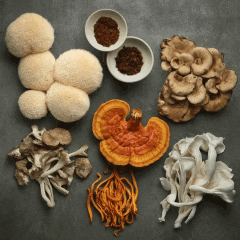
Heil- & Vitalpilze · 8. Mai 2026 · 8 Min. Lesezeit
Die Vitalpilz-Forschung 2026 hat einige bemerkenswerte neue Ergebnisse hervorgebracht. Anfang Mai hat der Functional Mushroom Council zwei neue Studien zu Schmetterlingstramete (Turkey Tail) und Lion's Mane veröffentlicht. Außerdem berichtet eine separate Arbeit in PLOS ONE erstmals im Labor, dass Lion's-Mane-Extrakt die Nervenregeneration in Netzhautzellen fördert. Hier erfährst du, was die Wissenschaft tatsächlich sagt und warum das für alle interessant ist, die sich mit diesem Thema beschäftigen.
Der Markt für Vitalpilz-Nahrungsergänzungsmittel wächst rasant, aber nicht alle Produkte sind gleich gut. Zwei neue Studien von Host Defense Mushrooms aus dem Jahr 2026 liefern jetzt frischen Forschungskontext zu Turkey Tail (Aktivität des Immunsystems unter Stress) und Lion's Mane (Stimulation des Nervenwachstumsfaktors und möglicherweise Schutz der Nervenzellen im Auge). Gleichzeitig lassen sich die Qualitätsprobleme auf dem Supplement-Markt immer schwerer übersehen.
Dieser Beitrag fasst die neuen Forschungsergebnisse zusammen, erklärt die untersuchten Wirkstoffe und hilft dir zu erkennen, worauf du bei einem hochwertigen Pilzpräparat achten solltest.
Was ist der Functional Mushroom Council?
Der Functional Mushroom Council (FMC) ist eine gemeinnützige nordamerikanische Organisation, die Anfang 2026 gegründet wurde. Zu den Mitgliedern gehören Pilzzüchter, Supplement-Marken und unabhängige Forschende. Gemeinsam arbeiten sie daran, Qualitätsstandards zu etablieren, Forschung zu finanzieren und evidenzbasierte Informationen über Heilpilze für Verbraucher und Fachleute zu veröffentlichen.
Anfang Mai 2026 kündigte der FMC eine deutliche Erweiterung an. Neue Mitgliedsmarken sind dazugekommen, neue Innovationszentren wurden eröffnet und ein mehrjähriges Forschungsprogramm hat begonnen. Das Programm setzt drei Schwerpunkte. Erstens: standardisierte Qualitätsmaßstäbe für Pilzextrakte. Zweitens: detaillierte Profile bioaktiver Verbindungen, vor allem der Beta-Glucane. Drittens: ein direkter Vergleich zwischen in Nordamerika angebauten und importierten Pilzprodukten.
Dieser dritte Punkt ist wichtig, denn der Markt hat ein Qualitätsproblem. Viele Produkte, die als Lion's Mane oder Reishi verkauft werden, enthalten nur sehr wenig vom eigentlichen Fruchtkörper. Entsprechend niedrig sind ihre Gehalte an Wirkstoffen. Verbraucher geben deshalb oft Geld für Produkte aus, die kaum etwas leisten. Der FMC will das mit veröffentlichten Standards und unabhängigen Tests angehen.
Neu bei Vitalpilzen? Einen vollständigen Überblick über Arten, Wirkstoffe und Kauftipps findest du in unserem Produktratgeber zu Heilpilzen und in unserem Beitrag über Vitalpilz-Präparate und Immunsystem.
Vitalpilz-Forschung 2026: Die Turkey-Tail-Studien
Die Schmetterlingstramete, auf Englisch Turkey Tail (Trametes versicolor), gehört zu den am besten erforschten Pilzarten in der wissenschaftlichen Literatur. Bekannt ist sie vor allem für zwei Polysaccharide: PSK (Polysaccharid-K) und PSP (Polysaccharid-Peptid). Beide wurden in zahlreichen Labor- und klinischen Untersuchungen betrachtet. In Japan und China ist PSK ergänzend zu bestimmten Krebstherapien zugelassen. Diese Zulassung gilt jedoch nur für einen speziellen Extrakt in Arzneimittelqualität, nicht für Nahrungsergänzungsmittel, die in der EU verkauft werden.
Die neue Studie von Host Defense aus dem Jahr 2026 trägt den Titel „Calm Under Challenge: Immune-Balancing and Stress-Quenching“. Sie untersuchte, wie Turkey-Tail-Extrakt unter körperlichem und psychischem Stress mit der Aktivität des Immunsystems interagiert. Die Forschenden konzentrierten sich dabei auf die Immunmodulation und nicht auf eine bloße Stimulation. In Labor- und präklinischen Modellen beobachteten sie, dass Turkey-Tail-Extrakte offenbar das Gleichgewicht der Immunsignale beeinflussten, statt einfach die gesamte Immunaktivität zu erhöhen.
Über die Immunsignale hinaus untersuchte die Studie auch die Wechselwirkung mit dem Darmmikrobiom. Die Daten deuteten darauf hin, dass Turkey-Tail-Extrakte bestimmte nützliche Darmbakterien gezielt unterstützten. Diese Bakterien werden in der wissenschaftlichen Literatur wiederum mit der Regulation des Immunsystems in Verbindung gebracht. Den begutachteten Hintergrund zur PSK-Forschung kannst du bei PubMed Central nachlesen.
Warum du Turkey Tail in Europa nicht kaufen kannst – und was du dagegen tun kannst
Warum wir keine Schmetterlingstramete (Turkey Tail) führen – und warum sich das aus unserer Sicht ändern muss.
Turkey Tail wird seit Jahrhunderten in der traditionellen ostasiatischen Medizin verwendet. Chinesische Ärzte setzten ihn schon in der Ming-Dynastie ein. Japanische Onkologen erforschen seinen PSK-Wirkstoff seit den 1970er-Jahren begleitend zur Krebsbehandlung. Außerdem wächst er wild in europäischen Wäldern. Trotzdem ist Trametes versicolor nach der EU-Verordnung (EU) 2015/2283 über neuartige Lebensmittel als „Novel Food“ eingestuft. Das bedeutet, dass er eine Zulassung der EFSA vor dem Inverkehrbringen braucht, bevor er in der EU legal als Nahrungsergänzungsmittel verkauft werden darf.
Diese Zulassung gibt es bisher nicht. Der Verkauf von Turkey-Tail-Präparaten in der EU ist daher derzeit illegal, egal wie lange Menschen ihn schon verwenden oder wie viel Forschung vorliegt. Die niederländische Behörde NVWA setzt diese Regel aktiv durch. Mehrere niederländische Supplement-Marken erhielten 2024 und 2025 förmliche Anordnungen, Turkey-Tail-Produkte vom Markt zu nehmen. Anfang 2026 gaben die Niederlande außerdem selbst eine RASFF-Warnung für nicht zugelassene Turkey-Tail-Präparate heraus.
Wir teilen diese Einstufung nicht. Ein Pilz, der seit Generationen in Europa dokumentiert genutzt wird und zu dem jahrzehntelange Forschung vorliegt, sollte nicht dasselbe Novel-Food-Verfahren durchlaufen müssen wie ein synthetischer Stoff. Wir halten uns aber an das Gesetz, und deshalb können wir Turkey Tail derzeit nicht in unserem Shop anbieten.
Du willst etwas ändern? Der richtige Ort für Reformen ist das Konsultationsverfahren der Europäischen Kommission zum Lebensmittelrecht. Du kannst dein Feedback direkt über die EU-Plattform „Have Your Say“ einreichen oder dich an deine Europaabgeordneten wenden und sie bitten, die Novel-Food-Einstufung traditioneller Heilpilze zur Sprache zu bringen. Je mehr Stimmen sich beteiligen, desto schneller wird das Thema überprüft.
| Untersuchte Verbindung | Forschungskontext |
|---|---|
| PSK (Polysaccharid-K) | Untersucht auf Immunmodulation; in Japan als Arzneimittel-Extrakt begleitend zu bestimmten Krebstherapien zugelassen, nicht als gesundheitsbezogene Angabe für EU-Nahrungsergänzungsmittel |
| PSP (Polysaccharid-Peptid) | In präklinischen Modellen im Zusammenhang mit der Zusammensetzung des Darmmikrobioms und Immunsignalen untersucht |
| Beta-Glucane | In Labormodellen auf die Interaktion mit Immunrezeptoren (Dectin-1, CR3) untersucht; keine von der EFSA zugelassene Angabe für Beta-Glucane aus Pilzen |
Vitalpilz-Forschung 2026: Lion's Mane und Nervenzellen der Netzhaut
Lion's Mane (Igelstachelbart, Hericium erinaceus) hat in den letzten Jahren erhebliches wissenschaftliches Interesse geweckt. Der Hauptgrund: Laborstudien haben gezeigt, dass seine Inhaltsstoffe die Bildung des Nervenwachstumsfaktors (NGF) anregen, eines Proteins, das am Wachstum und Erhalt bestimmter Nervenzellen beteiligt ist. Deshalb untersucht die Forschung Lion's Mane im Zusammenhang mit neurodegenerativen Erkrankungen, kognitivem Altern und Stimmung. Für Nahrungsergänzungsmittel in der EU hat die EFSA allerdings keine gesundheitsbezogenen Angaben zugelassen, die auf diesen Erkenntnissen beruhen. Dieser Unterschied ist wichtig für alle, die in Europa Präparate kaufen.
Die im Februar 2026 in PLOS ONE veröffentlichte Studie widmete sich einem ganz neuen Bereich. Die Forschenden fanden heraus, dass Extrakte aus Hericium erinaceus in einem Labormodell das Auswachsen von Neuriten in retinalen Ganglienzellen förderten. Zudem zeigte eine bestimmte gereinigte Verbindung namens Erinacin S in diesem präklinischen Kontext einen messbaren Effekt auf die Aktivität retinaler Nervenzellen. Beim Glaukom (Grüner Star) gehen die retinalen Ganglienzellen nach und nach zugrunde. Dieser Befund eröffnet deshalb eine neue Richtung für künftige Forschung.
Dennoch handelt es sich um Laborforschung im Frühstadium. Sie belegt nicht, dass Lion's-Mane-Präparate beim Menschen ein Glaukom oder eine andere Augenerkrankung verhindern oder behandeln. Die Autoren der Studie selbst beschreiben sie als präklinischen Befund, der weitere Untersuchungen rechtfertigt. Die vollständige Open-Access-Arbeit ist bei PLOS ONE verfügbar, falls du die Methodik direkt nachlesen möchtest.
Interessiert dich die Neurowissenschaft? Die Rolle von Lion's Mane bei der NGF-Stimulation in Laborstudien hängt mit größeren Fragen zusammen: Wie wirken natürliche Verbindungen auf die Plastizität des Gehirns? Unser Beitrag über Psilocybin und neue Gehirnzellen beleuchtet ein verwandtes Gebiet der neurowissenschaftlichen Forschung.
Der Vitalpilz-Markt 2026: Rasantes Wachstum, ungleiche Qualität
Der weltweite Markt für Vitalpilz-Nahrungsergänzungsmittel hatte 2025 einen Wert von rund 10,48 Mrd. US-Dollar. Analysten prognostizieren ein jährliches Wachstum von etwa 12,35 %. In diesem Tempo könnte der Markt bis 2034 fast 30 Mrd. US-Dollar erreichen. Allein das Lion's-Mane-Segment war 2025 bereits 680 Mio. US-Dollar wert.
Dieses schnelle Wachstum bringt allerdings eine erhebliche Qualitätsherausforderung mit sich. Ein großer Teil der Präparate, die als Lion's Mane oder Reishi verkauft werden, verwendet auf Getreide gezogenes Myzel. Der Fruchtkörper des Pilzes kommt nicht zum Einsatz. Weil das Getreidesubstrat im Endprodukt verbleibt, ist der Beta-Glucan-Gehalt in der Regel sehr niedrig. In der Praxis zahlen Käufer daher oft Premiumpreise für Produkte mit kaum messbaren Mengen der Verbindungen, die in der Forschung tatsächlich untersucht werden.
Deshalb gewinnen die Qualitätsrichtlinien des FMC an Bedeutung. Wenn du ein Vitalpilz-Präparat bewertest, lohnt sich ein Blick auf zwei Dinge auf dem Etikett: Ist ausdrücklich ein Fruchtkörperextrakt angegeben, und wird ein Beta-Glucan-Anteil in Prozent genannt? Die Analyse des Vitalpilz-Markts 2026 von Food Navigator geht auf diese Qualitätsunterschiede ausführlicher ein.
Qualitätscheck: Steht bei einem Lion's-Mane-, Reishi- oder Chaga-Produkt weder „Fruchtkörperextrakt“ noch ein Beta-Glucan-Anteil auf dem Etikett, sind die Gehalte der untersuchten Verbindungen wahrscheinlich sehr niedrig. In unserem Produktratgeber zu Heilpilzen erfährst du, worauf du beim Produktvergleich achten solltest.
Die am besten erforschten Arten: Forschungsüberblick 2026
Lion's Mane und Turkey Tail stehen im Mittelpunkt der aktuellen Forschung, aber auch einige andere Arten sind wissenschaftlich ähnlich gut untersucht. Unten findest du eine Übersicht der vier am besten erforschten Vitalpilz-Arten auf Grundlage der veröffentlichten präklinischen und klinischen Literatur, dargestellt als Forschungskontext und nicht als gesundheitsbezogene Aussagen.
| Pilz | Untersuchte Verbindungen | Aktueller Forschungsschwerpunkt |
|---|---|---|
| Lion's Mane (Hericium erinaceus) | Hericenone, Erinacine, Beta-Glucane | NGF-Stimulation in Labormodellen; kognitives Altern; Stimmung; retinale Nervenzellen (2026) |
| Turkey Tail (Trametes versicolor) ⚠️ | PSK, PSP, Beta-Glucane | Immunmodulation unter Stress; Darmmikrobiom; ergänzende Krebsforschung (nur PSK in Arzneimittelqualität). In der EU derzeit als Novel Food eingestuft und nicht in unserem Shop erhältlich. |
| Reishi (Ganoderma lucidum) | Triterpene, Beta-Glucane, Ganodersäuren | Adaptogene Aktivität in präklinischen Modellen; Schlaf; Entzündungsmarker |
| Chaga (Inonotus obliquus) | Betulinsäure, Melanin, Beta-Glucane | Antioxidative Aktivität in Labormodellen; Entzündungsmarker in der präklinischen Forschung |
Einen genaueren Blick auf Reishi findest du in unserem Beitrag über Reishi, den Pilz der Unsterblichkeit. Außerdem vergleicht unser Beitrag über Vitalpilz-Präparate und Immunsystem alle vier Arten im Kontext der veröffentlichten Forschung.
So bewertest du Vitalpilz-Präparate 2026
Die neue Vitalpilz-Forschung 2026 bestätigt, dass diese Arten ernsthaftes wissenschaftliches Interesse wecken. Die veröffentlichten Ergebnisse sind außerdem spannend genug, um weitere Untersuchungen zu rechtfertigen. Gleichzeitig ist die Forschung überwiegend präklinisch oder befindet sich in einem frühen klinischen Stadium. Die meisten Studien sind klein. Darüber hinaus haben die Behörden in der EU bisher für kein Vitalpilz-Präparat gesundheitsbezogene Angaben zugelassen.
Wenn du dich für Vitalpilze interessierst, lies am besten zuerst die eigentliche Forschung und verstehe, was sie zeigt und was nicht. Wähle dann Produkte mit transparenter Kennzeichnung: Pilzart, verwendeter Pilzteil, Extraktionsmethode und Beta-Glucan-Gehalt. Das mehrjährige Forschungsprogramm des FMC wird bis 2027 und 2028 detailliertere Hinweise zu Qualität und Dosierung veröffentlichen. Bis dahin berichten wir weiter über die Vitalpilz-Forschung 2026, sobald neue Studien erscheinen.
Du willst Lion's Mane selbst ausprobieren? In unserem
findest du drei Darreichungsformen, die jeweils zu einer anderen Routine passen:
– schnell aufnehmbarer Flüssigextrakt, lässt sich leicht in Kaffee oder Wasser geben
– praktische Tageskapseln, Bio-Fruchtkörperextrakt
– vielseitiges Pulver für Smoothies, Suppen oder Rezepte
Alle Produkte enthalten Fruchtkörperextrakt und weisen den Beta-Glucan-Gehalt klar aus, damit du genau weißt, was du bekommst.
Haftungsausschluss: Dieser Artikel berichtet ausschließlich zu Informationszwecken über wissenschaftliche Forschungsergebnisse. Die in diesem Artikel besprochenen Pilzarten werden als Nahrungsergänzungsmittel verkauft. Für diese Arten wurden von der Europäischen Behörde für Lebensmittelsicherheit (EFSA) keine gesundheitsbezogenen Angaben gemäß Verordnung (EG) Nr. 1924/2006 zugelassen. Nichts in diesem Artikel stellt eine medizinische Beratung, eine gesundheitsbezogene Angabe oder eine Empfehlung dar, ein Produkt zur Vorbeugung, Behandlung oder Heilung einer Krankheit oder eines Gesundheitszustands anzuwenden. Wenn du gesundheitliche Beschwerden hast, wende dich bitte an eine qualifizierte medizinische Fachperson.


May 11, 2026