O seu carrinho de compras está vazio
Psilocybin and Religious Leaders: The Johns Hopkins Clergy Study
Posted under: Psilocybin Science & News
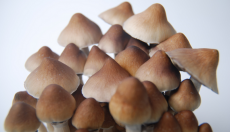
Psilocybin and religious leaders — from a 2017 news story to landmark published results in 2025. Here is everything we know about this groundbreaking study.
In this guide: In 2015, researchers at Johns Hopkins University and NYU launched a landmark clinical trial. They gave psilocybin — the active compound in magic mushrooms — to two dozen religious leaders from four major world religions. The results, finally published in 2025, reveal that 96% of participants rated the experience among the top five most spiritually significant moments of their lives.
This post covers the full story: the study design, the key findings, the controversy that delayed publication, and what it all means for the future of psilocybin research.
Few psilocybin studies have attracted as much attention — or taken as long to publish — as the Johns Hopkins clergy study. The research began in 2015 under the direction of the late Roland Griffiths, one of the most influential psychedelic researchers of the modern era. Its goal was straightforward but ambitious: what happens when professionally religious people encounter psilocybin-induced mystical experiences?
We first reported on this study back in 2017, when The Guardian published an early article about the ongoing trial. At that point, only preliminary observations from Dr William Richards existed. Now, with the full results published in Psychedelic Medicine in May 2025, we can finally tell the complete story.
The Study: Psilocybin and Religious Leaders
The study recruited 29 psychedelic-naïve religious professionals from four major world religions: Christianity, Judaism, Islam, and Buddhism. Participants included rabbis, a Catholic priest, several Protestant ministers, and a Muslim leader. None of them had ever tried a psychedelic substance before.
| Institutions | Johns Hopkins University School of Medicine & NYU Langone Health |
| Lead researcher | Roland Griffiths (1946–2023) |
| Participants | 29 psychedelic-naïve clergy from Christianity, Judaism, Islam, and Buddhism |
| Substance | Psilocybin (moderately high dose, two separate sessions) |
| Control | Waitlist control group |
| Published | May 2025 in Psychedelic Medicine |
Researchers gave each participant two moderately high doses of psilocybin during two separate sessions. Throughout every session, trained guides provided psychological support. In addition, participants received preparation and integration support before and after each dose.
The central question behind the study builds on decades of earlier research. In 1962, the famous "Good Friday Experiment" gave psilocybin to seminary students. Most reported profound mystical experiences. Griffiths wanted to replicate and extend this work with a more rigorous design and a more diverse group of clergy.
Key Findings: Psilocybin Deepens Spirituality
The results exceeded expectations. Here are the main findings from the published paper:
Worth noting: These findings align with broader psilocybin research. A 2025 meta-analysis found a significant positive correlation (r = 0.33) between the intensity of mystical experiences and clinical improvement across multiple psilocybin studies. In other words, deeper experiences consistently produce better outcomes.
Roland Griffiths and His Legacy
Roland Griffiths (1946–2023) devoted the final two decades of his career to studying psilocybin at Johns Hopkins. His 2006 publication — the first rigorously controlled psilocybin study in decades — helped spark what many now call the "psychedelic renaissance." Subsequently, his team published landmark studies on psilocybin for end-of-life anxiety, depression, and smoking cessation.
Sadly, Griffiths passed away from cancer in October 2023, before the clergy study results appeared in print. His colleagues at Johns Hopkins and NYU completed the publication process in his honour. As one commentary in Psychedelic Medicine noted, the study represents "a historically significant milestone" in an influential line of research.
To understand more about how psilocybin affects the brain on a neurological level, our post on mushrooms and the mind explains the latest neuroscience. Additionally, our article on psilocybin and psilocin covers the chemistry behind these effects.
Controversy and Delays
The study took nearly a decade to publish, and the reasons go beyond normal academic timelines. An institutional review board (IRB) audit at Johns Hopkins found evidence of "serious non-compliance" with clinical trial practices. Specifically, two of the study's funders had direct involvement in the trial itself. The published paper acknowledges that these conflicts of interest "were not appropriately disclosed nor managed."
In addition, the recruitment materials and post-trial questionnaires used the phrase "sacred experiences." Critics argue this language could have biased participant responses. The study authors acknowledge this limitation openly in the publication.
Despite these issues, the core scientific findings hold. Independent commentators note that the rigorous clinical design, the validated measurement tools, and the consistency with earlier psilocybin research all support the results. Nevertheless, these compliance issues serve as an important reminder: even well-intentioned psychedelic research must maintain strict ethical and procedural standards.
Why This Study Matters
The clergy study answers a question that researchers have asked since the 1960s: do psilocybin-induced mystical experiences differ from naturally occurring spiritual experiences? The evidence suggests they do not. Participants — all professionally trained in spiritual matters — consistently described the psilocybin experience as authentic and deeply meaningful.
This finding carries broad implications:
For context on how psilocybin relates to other psychedelic substances, see our comparison in the most common types of psychedelics. And to learn about the shamanic traditions that have used plant medicines for millennia, read our guide on shamanism and magic mushrooms.
The Good Friday Experiment: Historical Context
The clergy study builds directly on a famous earlier experiment. In 1962, Walter Pahnke conducted the "Good Friday Experiment" at Boston University. He gave psilocybin to 10 seminary students and a placebo to 10 others while they listened to a sermon by the Christian mystic Howard Thurman.
Most of the psilocybin group reported profound mystical experiences. A 25-year follow-up confirmed that participants still considered the experience among the most meaningful of their lives. However, the original study lacked the rigour of modern clinical trials. For instance, one participant left the chapel in a state of agitation and needed a tranquiliser to calm down.
Griffiths designed the 2015 clergy study to address these shortcomings. He used validated measurement scales, a waitlist control group, proper screening procedures, and trained psychological support throughout every session. In essence, the clergy study represents a modern, multi-faith expansion of what Pahnke began over 60 years ago.
Psilocybin Research: What Comes Next
The clergy study fits into a rapidly growing body of psilocybin research. Since 2020, studies at institutions worldwide have explored psilocybin for depression, anxiety, OCD, addiction, and end-of-life distress. Here are some of the most significant recent developments:
For a deeper look at how psychedelics may transform mental health care, explore our articles on psychedelics and mental health and psychedelics and addiction.
What Does This Mean for You?
If you find this research fascinating, you are not alone. The intersection of psilocybin and spirituality attracts growing interest from researchers, therapists, and curious individuals worldwide. However, psilocybin remains a controlled substance in most countries. Always check your local laws before considering any use.
In the Netherlands, psilocybin-containing magic truffles offer a legal way to explore these effects. Truffles contain the same active compounds — psilocybin and psilocin — as magic mushrooms. For those interested in subtle, everyday benefits rather than deep mystical experiences, microdosing presents another option worth exploring.
Curious about psilocybin? Explore our range of magic truffles — legally available in the Netherlands and containing the same active compounds studied at Johns Hopkins. Or discover our microdosing products for a gentler introduction.
Note: This article covers scientific research for educational purposes. Psilocybin remains a controlled substance in most jurisdictions. If you experience mental health difficulties, please consult a qualified medical professional before exploring any psychedelic therapy.


July 10, 2017