
Votre panier est vide.

Rue de Syrie (Peganum harmala) : IMAO ancestral, histoire et usages
Publié sous: Plantes ethnobotaniques & highs naturels
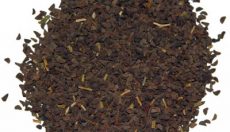
La rue de Syrie Peganum harmala — un ancien inhibiteur de la MAO, 7 000 ans d'usage rituel, et pourquoi la science moderne confirme ce que les guérisseurs traditionnels savaient depuis toujours. (Mise à jour 2026)
Dans ce guide : ce qu'est la rue de Syrie Peganum harmala, ses 7 000 ans d'histoire entre usages rituels et médicinaux, comment ses alcaloïdes agissent comme inhibiteurs de la MAO, son rôle dans les analogues d'ayahuasca, ainsi que les informations de sécurité essentielles à connaître avant d'envisager toute consommation.
La rue de Syrie Peganum harmala est l'une des plantes psychoactives les plus importantes de l'histoire de l'Ancien Monde — et l'une des moins connues en dehors des cercles de spécialistes.
| Nom de la plante | Peganum harmala |
| Noms courants | Rue de Syrie, rue sauvage, rue d'Afrique, harmel, esfand, espand |
| Famille | Nitrariacées |
| Alcaloïdes actifs | Harmine, harmaline, tétrahydroharmine (alcaloïdes bêta-carbolines) |
| Mécanisme | IMAO réversible — inhibe la monoamine oxydase A (MAO-A) |
| Origine géographique | Moyen-Orient, Méditerranée, Asie centrale ; présente aujourd'hui sur cinq continents |
| Historique d'utilisation | Au moins 7 000 ans — confirmé par des preuves archéologiques de 2025 |
| Acheter des graines | · |
Qu'est-ce que la rue de Syrie Peganum harmala ?
La rue de Syrie Peganum harmala est une plante herbacée vivace dotée d'un rhizome ligneux souterrain. Elle pousse dans les sols salins et arides sur une vaste bande de territoire, qui s'étend de la Méditerranée orientale au sous-continent indien en passant par le Moyen-Orient et l'Asie centrale. La plante produit de petites fleurs blanches et des capsules de graines caractéristiques. Ce sont les graines qui contiennent la plupart des composés actifs.
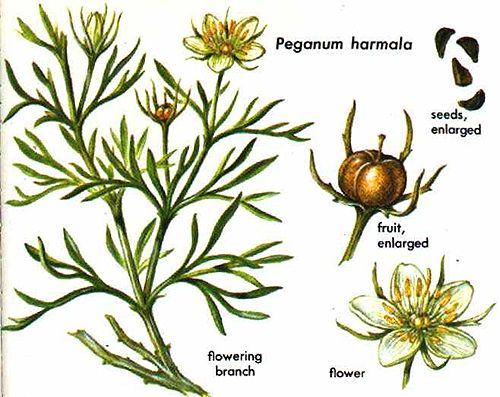
La plante porte de nombreux noms — harmel en arabe, esfand en persan, yüzerlik en turc. Chacun reflète une relation longue et intime entre cette plante et les communautés qui vivent à ses côtés depuis des milliers d'années. Selon Wikipédia, son usage rituel remonte au moins au IIe siècle avant notre ère. Des associations plus anciennes encore ressortent toutefois de sources littéraires et archéologiques.
Une histoire de 7 000 ans
La relation entre l'être humain et la rue de Syrie Peganum harmala remonte à la nuit des temps. En mai 2025, des chercheurs ont publié la première preuve matérielle de fumigation de Peganum harmala sur un site archéologique du Caucase. Grâce à une analyse HPLC–MS/MS, ils ont confirmé la présence d'harmine et d'harmane dans des résidus anciens. Cela fait remonter l'usage confirmé de la rue de Syrie plus loin que les estimations précédentes.
La plante apparaît aussi dans les textes cunéiformes de l'ancienne Mésopotamie. On la rattache au terme assyrien šibburatu. Elle figure dans des tablettes cappadociennes datant d'environ 2000 av. J.-C. Certains spécialistes l'ont associée au soma ou haoma — la boisson sacrée à base de plante des anciens textes religieux indo-iraniens.
Le lien avec le soma/haoma
La théorie selon laquelle la rue de Syrie Peganum harmala serait le mystérieux soma du Rigveda reste l'une des questions les plus débattues en ethnobotanique. Une revue de 2025 parue dans Ethnobotany Research and Applications note que « les graines de Peganum harmala contiennent des alcaloïdes comme l'harmine et l'harmaline, qui ont des propriétés psychoactives et sont connus pour induire des états modifiés de conscience ». Ces propriétés correspondent aux descriptions anciennes des effets visionnaires du haoma.
Les propriétés IMAO de l'harmine pourraient aussi renforcer les effets d'autres plantes dans un mélange rituel — un principe identique à celui de l'ayahuasca en Amazonie. Pour en savoir plus sur l'usage ancien des plantes psychoactives, consulte notre article sur le chamanisme et les champignons magiques.
Dans la Perse antique, les graines et d'autres parties de la plante étaient brûlées lors des rituels zoroastriens pour produire une fumée dense et enivrante. Cette tradition de fumigation perdure aujourd'hui. En Iran, en Turquie et en Azerbaïdjan, on suspend encore des capsules séchées dans les maisons et les véhicules pour éloigner le mauvais œil. Au Cachemire, on en brûle lors des mariages. Au Maroc, on l'appelle mejnenna — « ce qui rend fou, possédé ».
Les alcaloïdes actifs — comment agit la rue de Syrie
Les principaux composés actifs de la rue de Syrie Peganum harmala sont des alcaloïdes bêta-carbolines — l'harmine, l'harmaline et la tétrahydroharmine. Ils se concentrent dans les graines. Selon une revue complète parue dans Pharmacognosy Reviews, les graines peuvent contenir de 1,2 à 10 % d'alcaloïdes harmala, ce qui en fait une source très concentrée.
Ces alcaloïdes agissent comme inhibiteurs réversibles de la monoamine oxydase A (MAO-A). La MAO-A est l'enzyme qui dégrade la sérotonine, la dopamine et la noradrénaline. En inhibant la MAO-A, la rue de Syrie empêche la dégradation de ces neurotransmetteurs, ce qui a des conséquences pharmacologiques importantes.
Point essentiel pour l'usage psychédélique : par voie orale, la MAO-A détruit normalement la DMT avant qu'elle n'atteigne le cerveau. En inhibant la MAO-A, la rue de Syrie rend la DMT active par voie orale. C'est le même mécanisme que celui de Banisteriopsis caapi dans les préparations traditionnelles d'ayahuasca en Amazonie.
Neuroplasticité et BDNF
Des recherches récentes ajoutent une nouvelle dimension. L'harmine — l'alcaloïde le plus abondant de la rue de Syrie — favorise la neurogenèse et la neuroplasticité. Une revue de 2025 dans PMC a confirmé que « l'harmine a un effet positif sur la neurogenèse postnatale, présente des effets antidépresseurs et anxiolytiques, et rétablit des niveaux normaux » de facteur neurotrophique dérivé du cerveau (BDNF). D'autres travaux ont montré que l'harmine rétablit les niveaux de BDNF et stimule la neurogenèse de l'hippocampe dans des modèles animaux de dépression.
Cela rattache la rue de Syrie au débat plus large sur les psychédéliques et la neuroplasticité. L'harmine et la psilocybine pourraient partager des mécanismes communs dans la promotion de la flexibilité cérébrale.
La rue de Syrie comme analogue d'ayahuasca
Depuis les années 1990, la rue de Syrie Peganum harmala sert de substitut à Banisteriopsis caapi dans les analogues d'ayahuasca occidentaux. Les combinaisons courantes associent des
à des plantes contenant de la DMT, comme l'écorce de Mimosa hostilis. Les préparations obtenues sont parfois appelées « anahuasca » ou « pharmahuasca ».
Les graines ont aussi été utilisées pour renforcer les effets des champignons à psilocybine et d'autres substances contenant des tryptamines. Comme l'harmine inhibe l'enzyme qui dégrade la psilocine, associer la rue de Syrie à des truffes magiques peut intensifier et prolonger l'expérience. Cette combinaison augmente toutefois nettement le niveau de risque et exige une extrême prudence.
Important : associer la rue de Syrie à toute substance sérotoninergique — y compris les champignons à psilocybine, les plantes contenant de la DMT ou des médicaments — modifie fondamentalement la pharmacologie. Ce n'est pas simplement « plus de la même chose ». On obtient une expérience qualitativement différente et plus imprévisible. Ne tente jamais de combinaisons sans t'être sérieusement renseigné(e).
Usages médicinaux traditionnels
Au-delà de son rôle psychoactif, la rue de Syrie Peganum harmala a une longue histoire d'usage thérapeutique. Parmi les applications traditionnelles documentées :
Recherche anticancéreuse
La recherche moderne a confirmé de nombreux usages traditionnels et en a identifié de nouveaux. Une étude de novembre 2025 a montré que l'harmine présente une activité antiproliférative et antimétastatique significative contre les cellules cancéreuses de la tête, du cou et du col de l'utérus. L'harmine a induit l'apoptose (mort cellulaire programmée), perturbé la progression du cycle cellulaire et réduit la migration des cellules. Les chercheurs ont conclu que l'harmine pourrait devenir « un agent thérapeutique naturel » à développer dans le cadre d'études cliniques.
Une autre revue de 2025 dans Discover Oncology a confirmé que l'harmine présente « un solide potentiel antitumoral sur différents types de cellules cancéreuses humaines ». Il s'agit toutefois de résultats de laboratoire — pas encore de traitements cliniques prouvés. Aucun essai chez l'humain n'a encore été mené.
Points de sécurité essentiels
L'activité IMAO de la rue de Syrie est pharmacologiquement puissante. Elle comporte de vrais risques, qui méritent toute l'attention de quiconque envisage de l'utiliser.
Interactions potentiellement mortelles : la rue de Syrie Peganum harmala est un IMAO puissant. L'associer à certains aliments (fromages affinés, charcuteries, aliments fermentés) ou médicaments (ISRS, IRSN, antidépresseurs, stimulants, triptans, certains antalgiques, MDMA) peut provoquer une crise hypertensive potentiellement fatale ou un syndrome sérotoninergique. Renseigne-toi à fond sur toutes les interactions avant toute utilisation.
Les principaux points de sécurité à connaître :
Pour des conseils de sécurité plus larges, nos articles sur le set and setting et l'intégration d'une expérience psychédélique couvrent les principes essentiels de préparation. Si tu veux comprendre les mécanismes cérébraux de la sérotonine et des psychédéliques, lis les champignons et l'esprit.
Réduction des risques : si tu choisis de travailler avec la rue de Syrie, commence par la dose la plus faible possible (1 à 2 grammes de graines). Utilise toujours une balance précise à 0,1 gramme. Ne la combine jamais avec d'autres substances tant que tu ne comprends pas parfaitement leur profil d'interactions. Fais-toi accompagner par un sitter sobre.
Produits à base de rue de Syrie chez Magic Mushrooms Shop
Nous proposons deux produits à base de rue de Syrie Peganum harmala :
| Produit | Contenu | Usage |
|---|---|---|
| 10 grammes de graines entières de Peganum harmala sous emballage scellé | Spécimen botanique, collection, encens, étude | |
| Extrait concentré 10:1 de Peganum harmala | Spécimen botanique, collection, encens, étude |
Les deux produits sont expédiés depuis Amsterdam. Renseigne-toi toujours sur la réglementation en vigueur dans ton pays avant tout achat. Pour découvrir toute notre gamme de produits ethnobotaniques, parcours notre collection
.
La rue de Syrie dans une perspective plus large
La rue de Syrie Peganum harmala est l'une des plantes psychoactives les plus importantes de l'Ancien Monde. Elle est l'équivalent de la liane d'ayahuasca d'Amazonie. Toutes deux partagent des propriétés chimiques et une longue histoire d'usage rituel et thérapeutique. Pour quiconque s'intéresse à l'ensemble des plantes et substances psychédéliques, comprendre la rue de Syrie est indispensable.
Ses alcaloïdes — l'harmine et l'harmaline — se retrouvent dans plusieurs plantes sur différents continents, dont Banisteriopsis caapi et des espèces de Passiflora. Cela suggère une relation évolutive profonde entre ces plantes et les systèmes sérotoninergiques des mammifères. Les chercheurs ne font que commencer à comprendre pleinement cette relation.
Si la rencontre entre sagesse ancienne des plantes et neurosciences modernes t'intéresse, explore nos articles sur la façon dont les psychédéliques transforment la santé mentale, les psychédéliques et le traitement des addictions et le microdosing pour faire le point sur l'état actuel de la science.
Découvre notre gamme de plantes enthéogènes. Parcours nos
, nos
et nos
— tous expédiés depuis Amsterdam.
Remarque : si tu rencontres des difficultés de santé mentale et que la psilocybine ou une autre thérapie psychédélique te intrigue, consulte d'abord un professionnel de santé. Ne t'automédique pas. Un accompagnement et des conseils adaptés comptent beaucoup lorsqu'on explore les psychédéliques comme médecine.


Octobre 17, 2014