
Votre panier est vide.

Terence McKenna : le parrain de la culture psychédélique
Publié sous: Histoire & Pionniers
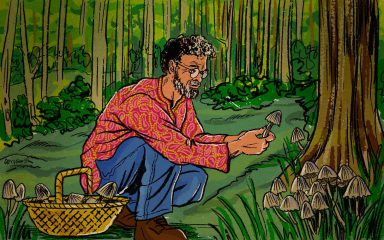
Écrivain, conférencier, ethnobotaniste, psychonaute, mystique : Terence McKenna reste l'une des figures les plus influentes de l'histoire de la culture psychédélique. Il a passé sa vie à défendre l'exploration des états modifiés de conscience, à poser les bases du chamanisme moderne et à donner à la contre-culture une voix éloquente et poétique. Plus de 25 ans après sa mort, les idées de Terence McKenna continuent de façonner la façon dont des millions de personnes pensent la conscience, la psilocybine et l'esprit humain.
Qui était Terence McKenna ?
« Une vie vécue sans l'expérience psychédélique sur laquelle repose le chamanisme primordial est une vie banalisée, une vie niée, une vie asservie à l'ego. » — Terence McKenna
Terence McKenna a mené une carrière d'ethnobotaniste et d'écologue, voyageant à travers le monde pour étudier les plantes et les champignons enthéogènes. Mais il est surtout connu comme le porte-parole intrépide qui plaidait ouvertement pour un usage responsable des psychédéliques et des autres substances psychoactives. Surnommé le « barde irlandais » de la psychédélie, Terence McKenna mêlait science et poésie dans un style discursif qui n'appartenait qu'à lui.
Avec son frère Dennis McKenna, Terence est largement reconnu pour ses spéculations, ses théories et ses réflexions à la première personne sur l'expérience psychédélique. Qualifié d'« incarnation intellectuelle de la contre-culture psychédélique », rares sont ceux qui ont laissé une empreinte aussi profonde grâce à leurs découvertes et à leurs idées sur les psychédéliques.
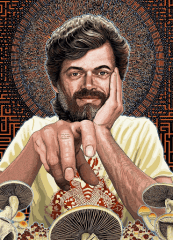
Le parcours de Terence McKenna
Terence McKenna (1946–2000) est né aux États-Unis et a grandi en Californie. Sa mère avait des origines galloises et son père des ancêtres irlandais. Enfant, il se passionne pour la collection de fossiles et la géologie. À l'adolescence, il vit ses premières expériences psychédéliques en fumant des graines de gloire du matin, et découvre aussi le cannabis.
En 1965, McKenna s'inscrit en histoire de l'art à l'Université de Californie à Berkeley. Mais il trouve vraiment sa voie lorsqu'il commence à étudier le chamanisme après avoir suivi un cours sur la religion populaire tibétaine. Il part ensuite au Népal en 1969 pour étudier la langue tibétaine et l'usage des plantes psychédéliques. À cette époque, il travaille aussi comme passeur de haschich entre le Népal, l'Inde et l'Amérique. Après s'être fait prendre, il file en Indonésie où il devient collectionneur de papillons.
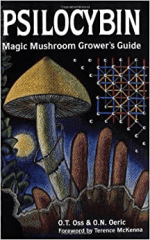
En 1971, Terence McKenna part en Amazonie avec son frère Dennis et un petit groupe d'amis. Ils cherchent une plante enthéogène appelée oo-koo-hé (yopo). À la place, ils tombent sur de vastes étendues de champignons Psilocybe cubensis et se mettent à les étudier de près. Ils apprennent les méthodes de culture auprès de la population locale et finissent par rapporter des spores chez eux. Jusque-là, personne n'avait réussi à cultiver des champignons magiques en dehors de leur habitat naturel. Le livre publié par les deux frères, Psilocybin: Magic Mushroom Grower's Guide, a ainsi complètement changé la donne pour les cultivateurs de champignons du monde entier.
Après des années d'exploration et d'expériences de conscience modifiée en Amérique du Sud et en Asie du Sud-Est, Terence McKenna obtient en 1975 un diplôme en écologie, chamanisme et conservation des ressources naturelles. Dans les années 1980, il commence à donner des conférences sur les drogues psychédéliques, le mouvement de la contre-culture et l'expansion de la conscience. Il devient ainsi l'un des grands pionniers du mouvement psychédélique moderne.
McKenna épouse plus tard Kathleen Harrison, une autre ethnobotaniste qu'il avait rencontrée à Jérusalem bien des années auparavant. Ensemble, ils fondent Botanical Dimensions à Hawaï, une organisation dédiée à la protection et à la propagation d'espèces de plantes importantes sur le plan ethnomédical. Terence McKenna meurt en avril 2000, à 53 ans, d'une forme rare de cancer du cerveau appelée glioblastome multiforme.
La philosophie et les idées de Terence McKenna
« Le chaos, c'est ce avec quoi nous avons perdu le contact. C'est pour ça qu'on lui a donné mauvaise réputation. Il est craint par l'archétype dominant de notre monde, l'Ego, qui se crispe parce que son existence se définit en termes de contrôle. » — Terence McKenna
Souvent considéré comme l'une des plus grandes autorités sur les fondements ontologiques du chamanisme, Terence McKenna est aussi connu pour ses théories sur les origines de la conscience humaine. Les psychédéliques d'origine végétale ont été la principale source d'inspiration de ses écrits, de son travail et de sa vie. Il insistait sur l'importance de l'expérience directement vécue plutôt que sur n'importe quel dogme. Bien qu'il ait prôné l'exploration psychédélique, McKenna parlait aussi ouvertement de sécurité et de respect :
« Les expérimentateurs devraient être très prudents. Il faut se préparer progressivement à l'expérience. Ce sont des dimensions étranges, d'une puissance et d'une beauté extraordinaires. Il n'existe aucune règle pour éviter d'être submergé, mais avance avec précaution, réfléchis beaucoup, et essaie toujours de replacer tes expériences dans l'histoire de la race humaine et dans les accomplissements philosophiques et religieux de l'espèce. »
Cette philosophie rejoint de près ce que les chercheurs en psychédéliques appellent aujourd'hui le set et setting : l'idée que ton état d'esprit et ton environnement déterminent la qualité de ton expérience. McKenna pensait par ailleurs que la DMT et d'autres psychédéliques pouvaient servir de porte d'entrée vers des voyages transdimensionnels. Selon lui, les visions ou hallucinations vécues pendant un trip se déroulaient dans des dimensions parallèles.
Il écrivait souvent sur des rencontres avec des « entités de dimensions supérieures » : des ancêtres, des esprits, ou ce qu'il appelait parfois des elfes-machines autotransformants (« self-transforming machine elves »). Ce sont des créatures humanoïdes que l'on rapporte fréquemment lors de fortes doses de psychédéliques, surtout de DMT. D'après Terence McKenna, les psychédéliques ouvraient un canal de communication entre l'intelligence de la Terre et l'esprit humain individuel. Si beaucoup de scientifiques restent sceptiques, ces idées continuent d'inspirer les chercheurs qui explorent la nature de la mort de l'ego et des expériences mystiques.
Les théories les plus célèbres de Terence McKenna
Les livres de Terence McKenna
Si tu veux vraiment explorer les pensées et les théories de McKenna, ses ouvrages sont une lecture incontournable. Écrivain prolifique, il offre dans ses livres une excellente porte d'entrée vers le chamanisme, l'ethnobotanique, l'alchimie, les psychédéliques d'origine végétale, la philosophie, la culture, la technologie et la métaphysique.
Plusieurs de ces titres figurent dans notre sélection de livres psychédéliques à lire absolument. Par ailleurs, les conférences et interviews de McKenna sont largement disponibles sur YouTube : beaucoup comptent des millions de vues et restent aussi pertinentes aujourd'hui qu'au moment de leur enregistrement.
L'héritage de Terence McKenna en 2026
Plus d'un quart de siècle après sa mort, les idées de Terence McKenna sont plus actuelles que jamais. La renaissance psychédélique moderne, de la légalisation de la psilocybine aux États-Unis au programme d'usage compassionnel en Allemagne, fait écho à bon nombre des thèmes que McKenna défendait il y a des décennies.
Son frère Dennis continue de porter le flambeau. Dans une interview de fin 2025, Dennis McKenna est revenu sur la théorie du singe défoncé à la lumière des nouvelles recherches sur la neurogenèse et la neuroplasticité. Il a soutenu que l'intuition centrale de Terence, à savoir que la psilocybine change profondément le fonctionnement du cerveau, est désormais validée par la science moderne, même si les détails restent débattus.
Pendant ce temps, la révolution de la culture que Terence McKenna a contribué à lancer continue de prospérer. Le Psilocybin: Magic Mushroom Grower's Guide qu'il a coécrit avec Dennis a posé les bases sur lesquelles reposent aujourd'hui les kits de culture et les méthodes de culture modernes. Pour un regard plus approfondi sur l'expérience de la BBC qui a permis de visualiser en direct les effets de la psilocybine sur le cerveau, lis notre article sur le scan cérébral sous psilocybine de Michael Mosley.
Remarque : si tu souffres d'une maladie mentale et que la psilocybine ou une autre thérapie psychédélique t'intéresse, consulte d'abord un professionnel de santé compétent. Ne t'automédique pas. Être bien accompagné et bien encadré est essentiel lorsqu'on utilise les psychédéliques comme médicament.
Prêt à suivre les traces de Terence McKenna ? Découvre nos kits de culture de champignons magiques et commence ton propre voyage.


Avril 6, 2023