
Votre panier est vide.

Champignons magiques sauvages : on les trouve là où on s'y attend le moins
Publié sous: Culture psychédélique

Des jardins royaux aux parcs urbains : les endroits surprenants où poussent vraiment les champignons psychédéliques sauvages (mise à jour 2026)
En 2014, un jardinier britannique célèbre explorait les jardins de Buckingham Palace quand il a remarqué quelque chose de bien particulier dans la pelouse impeccablement entretenue : des chapeaux rouge vif, tachetés de blanc. Amanita muscaria, l'amanite tue-mouches, en pleine fructification, au cœur de l'un des jardins les plus photographiés au monde. L'histoire a fait la une des journaux du monde entier, et le porte-parole du palais a livré l'un des communiqués de presse mycologiques les plus mémorables : « Les champignons du jardin ne sont pas utilisés dans les cuisines du palais. »
Dans cet article : les champignons psychédéliques et psychoactifs sauvages ont un talent remarquable pour apparaître là où personne ne les attend : jardins royaux, campus universitaires, parcs de banlieue, massifs de paillis en pleine ville. On te explique la biologie derrière ce phénomène, les espèces les plus susceptibles de te surprendre, et ce que ces découvertes nous apprennent sur la relation entre les champignons et le monde humain.
Les champignons poussent où bon leur semble
L'histoire des champignons psychédéliques qui apparaissent dans des endroits inattendus n'est pas vraiment une histoire de surprise. C'est l'histoire d'un mycélium qui suit sa propre logique, une logique qui n'a rien à voir avec l'idée que les humains se font de l'endroit où ces choses « devraient » pousser.
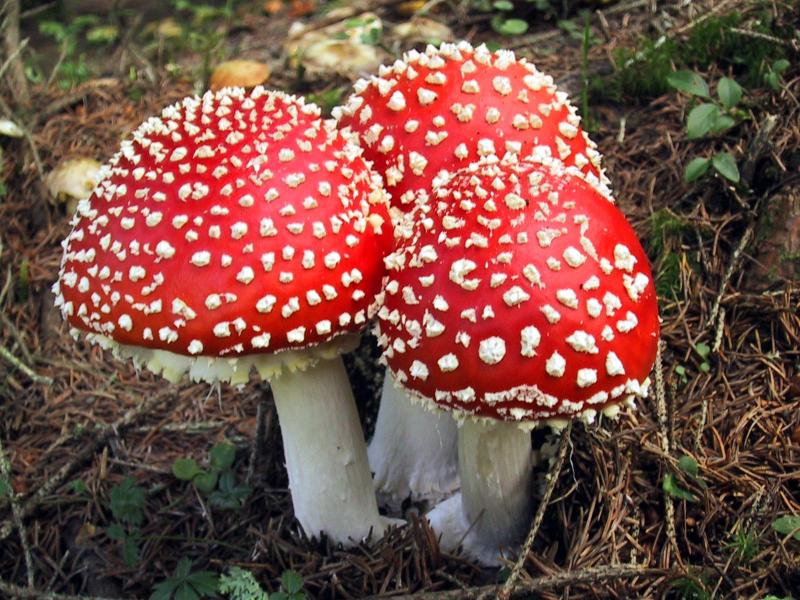
Les champignons sont des décomposeurs. Ils vont là où il y a de la matière organique en décomposition, de l'humidité, de l'ombre et un substrat adapté. Ils ne vérifient pas si l'adresse est respectable. Un jardin royal laissé tranquille pendant des décennies, avec des arbres centenaires et un sol riche et bien arrosé, c'est exactement le genre d'environnement où l'Amanita muscaria se plaît. La même logique vaut pour les pelouses d'université, les cimetières de cathédrale et les massifs de copeaux de bois des centres commerciaux.
Ce qui rend les découvertes comme celle de Buckingham Palace si captivantes, ce n'est pas tant le lieu que ce qu'elles révèlent : les champignons psychoactifs sont bien plus présents dans notre quotidien que la plupart des gens ne le pensent. Selon NBC News, l'amanite tue-mouches trouvée dans le jardin du palais était apparue naturellement : personne ne l'avait plantée ni cultivée. Le mycélium était là, à faire son travail, parfaitement indifférent à son prestigieux environnement.
Les espèces les plus susceptibles de débarquer sans invitation
Amanita muscaria : l'amanite tue-mouches
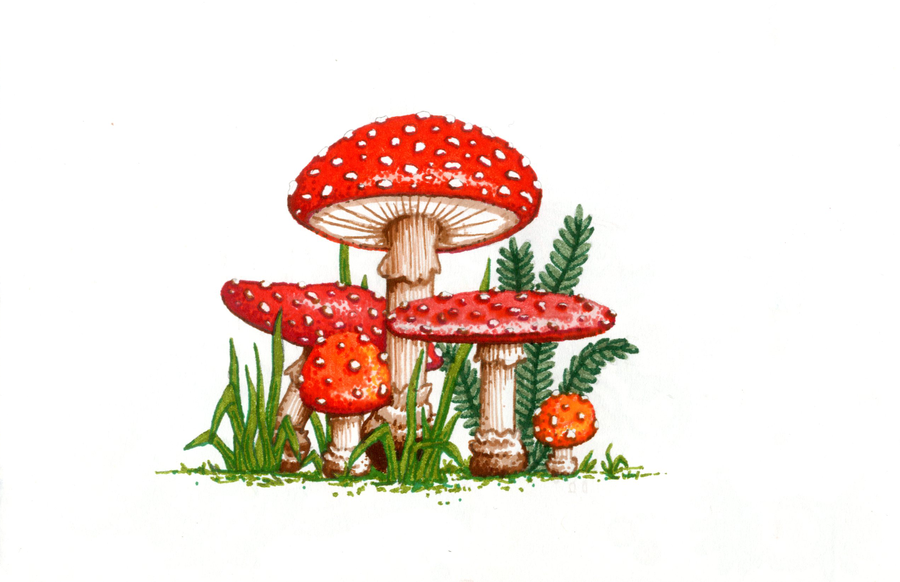
L'Amanita muscaria est le champignon le plus reconnaissable de la planète : le champignon rouge à pois blancs des contes de fées et du folklore. Il est psychoactif et contient de l'acide iboténique et du muscimol, mais ses effets sont très différents de ceux de la psilocybine. Il vit en symbiose mycorhizienne avec les arbres, en particulier le bouleau, le pin et l'épicéa, et fructifie partout où ces arbres poussent. Les parcs et domaines anciens avec de vieux arbres sont exactement les endroits où tu pourrais en croiser.
Psilocybe cyanescens : le chapeau ondulé
Si l'Amanita muscaria est l'espèce qui pousse sous les arbres anciens, le Psilocybe cyanescens est celle qui s'épanouit dans les environnements urbains modernes. Cette espèce puissante, riche en psilocybine, s'est si bien adaptée à l'aménagement paysager qu'on la retrouve régulièrement dans les massifs de copeaux de bois des parcs, des résidences, des zones de bureaux et des jardins publics, en particulier dans le nord-ouest du Pacifique aux États-Unis et de plus en plus partout en Europe.
Selon le guide de The Buena Vida Retreats sur les habitats des champignons à psilocybine, le Psilocybe cyanescens « prospère en milieu urbain, notamment dans les espaces aménagés avec des copeaux de bois ou du paillis d'écorce ». L'espèce s'est répandue dans le monde entier en grande partie grâce au commerce horticole : le paillis de copeaux transporte le mycélium, qui fructifie ensuite partout où les conditions sont réunies. En ce sens, l'aménagement paysager urbain a, sans le vouloir, disséminé l'un des champignons à psilocybine les plus puissants qui existent dans les villes du monde entier.
Psilocybe semilanceata : les liberty caps
Les liberty caps sont le champignon à psilocybine sauvage par excellence du nord de l'Europe. Ils fructifient dans les prairies et les pâturages, y compris sur les pelouses, dans les parcs et sur les terrains de golf, de la fin de l'été jusqu'à l'automne. Ils sont petits, discrets et étonnamment courants dans les îles Britanniques, aux Pays-Bas et dans le nord de l'Europe. Bien des promeneurs insouciants ont marché sur des milliers d'entre eux sans jamais les remarquer.
Psilocybe cubensis : le cosmopolite tropical
Le champignon à psilocybine le plus cultivé au monde apparaît aussi à l'état sauvage dans les régions tropicales, où il pousse directement sur la bouse de vache dans les prairies et pâturages humides de Floride, de la côte du Golfe, du Mexique, d'Amérique centrale et d'ailleurs. Le Psilocybe cubensis est, en un sens, une espèce domestiquée qui a prospéré précisément parce qu'elle suit l'activité humaine et animale. Là où il y a du bétail, de l'humidité et de la chaleur, il y a souvent des cubensis.
Pourquoi apparaissent-ils dans des endroits aussi inattendus ?
La réponse est simple : les champignons se propagent par leurs spores, et les spores vont partout. Le chapeau d'un seul champignon mature libère des millions de spores dans l'air. Le vent, l'eau, les insectes, les animaux et le passage des humains les transportent sur de vastes distances. Quand une spore atterrit dans des conditions favorables (bon substrat, bon taux d'humidité, bonne température, bon pH), le mycélium se développe. Quand les conditions de fructification sont réunies, un champignon apparaît.
Cela veut dire que n'importe quel coin de substrat organique humide, sous le bon climat, peut en théorie accueillir un champignon à psilocybine sauvage. Les espèces qui se sont le mieux adaptées aux environnements humains, en particulier P. cyanescens, ont pratiquement coévolué avec les pratiques d'aménagement paysager urbain, en se propageant grâce aux matériaux mêmes que les jardiniers utilisent pour entretenir des espaces verts soignés et agréables.
Ce que ces découvertes nous apprennent
Ce qui compte vraiment quand on trouve des champignons psychédéliques dans des jardins royaux, des campus universitaires et des parcs urbains, ce n'est pas la nouveauté du lieu. C'est le rappel que les champignons suivent leurs propres règles, obéissent à leurs propres impératifs écologiques, et se moquent éperdument des hiérarchies sociales humaines.
Il y a quelque chose de discrètement profond là-dedans. Les réseaux mycéliens sous nos pieds existaient des centaines de millions d'années avant la civilisation humaine. Les champignons producteurs de psilocybine étaient là bien avant l'apparition des humains, et seront presque certainement encore là quand tel jardin, tel palais ou telle institution sera oublié.
Si tu veux en savoir plus sur le monde des champignons magiques (ce que c'est, ce qu'ils contiennent et ce que dit la science sur leurs effets), notre guide d'introduction couvre l'essentiel. Et si l'idée de cultiver tes propres champignons te tente, notre guide pour cultiver des champignons magiques est un bon point de départ.
Curieux de découvrir les champignons à psilocybine ? Jette un œil à nos
et à nos
, sans avoir besoin d'un jardin royal.
Remarque : si tu souffres d'une maladie mentale et que tu t'intéresses à la psilocybine ou à toute autre thérapie psychédélique, consulte d'abord un professionnel de santé compétent. Ne t'auto-prescris rien : il est essentiel d'être bien accompagné et encadré quand on utilise des psychédéliques à visée thérapeutique.


Mars 23, 2026