
Votre panier est vide.

Champignon Hérisson (Lion's Mane) : bienfaits, composés et mode d'emploi
Publié sous: Champignons médicinaux & fonctionnels
Tout ce que tu dois savoir sur la crinière de lion : composés, usage traditionnel, recherches et comment choisir ton complément alimentaire (mise à jour 2026)
La crinière de lion (Hericium erinaceus, ou « Lion's Mane » en anglais) fait aujourd'hui partie des champignons médicinaux les plus populaires. Ce champignon blanc et chevelu a une longue histoire dans l'herboristerie orientale, et les chercheurs du monde entier étudient désormais ses composés uniques en laboratoire. Dans ce guide, tu découvriras ce qui rend la crinière de lion si spéciale, ce que la science explore actuellement et comment l'intégrer à ta routine quotidienne.
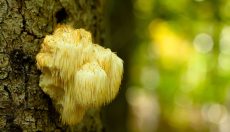
pousse sur les arbres feuillus et ressemble à une crinière blanche qui ondule.
Pendant des siècles, les herboristes traditionnels d'Orient ont apprécié ce champignon pour l'estomac et pour l'esprit.
Aujourd'hui, les passionnés de bien-être du monde entier l'adoptent comme un complément doux à intégrer dans leur quotidien.
Tu trouveras ci-dessous les principaux composés, ce que les chercheurs étudient et des conseils pratiques pour bien débuter.
| Qu'est-ce que la crinière de lion ? | Un champignon fonctionnel non psychoactif, riche d'une longue histoire dans l'herboristerie traditionnelle orientale, aujourd'hui largement étudié par les chercheurs modernes. |
| Principaux groupes de composés | Bêta-D-glucanes (1-3)(1-6), hericénones, érinacines (héricérines), héricènes. |
| Principaux domaines de recherche | Facteurs de croissance nerveuse, fonctions cognitives, humeur, équilibre immunitaire, écologie intestinale et marqueurs métaboliques, le tout principalement sur des modèles précliniques. |
| Comment la consommer | Poudres, gélules et teintures bio. Découvre notre . |
| Remarque importante | La recherche repose encore surtout sur des travaux de laboratoire et de petits essais sur l'humain. La crinière de lion est un complément alimentaire, pas un médicament ni un remède. |
Les composés de la crinière de lion qui intéressent la science
Cette espèce contient plusieurs groupes de molécules bioactives. Les scientifiques s'intéressent surtout aux bêta-D-glucanes (1-3)(1-6), aux hericénones, aux érinacines (aussi appelées héricérines) et aux héricènes. Ensemble, ces composés donnent à la crinière de lion son profil biochimique unique et expliquent pourquoi les chercheurs la trouvent si intéressante.
Les bêta-glucanes
Les bêta-glucanes sont présents dans de nombreux champignons fonctionnels, dont la crinière de lion. En laboratoire, ces fibres naturelles se fixent aux récepteurs des cellules immunitaires comme les macrophages et les cellules NK (natural killer). Les chercheurs étudient cette interaction pour mieux comprendre comment le système immunitaire réagit aux agressions extérieures.
Dans des modèles expérimentaux, ces polysaccharides montrent aussi une activité antioxydante. Les scientifiques continuent d'explorer ce que cela implique en dehors du laboratoire. Tu veux en savoir plus sur les champignons fonctionnels et l'immunité ? Lis notre article sur les compléments de champignons médicinaux et le système immunitaire.
Les hericénones : issues du corps fructifère
Les hericénones se trouvent surtout dans le corps fructifère de la crinière de lion. Les chercheurs explorent leur lien potentiel avec le facteur de croissance nerveuse (NGF), une protéine impliquée dans l'entretien des cellules nerveuses. Des études sur cellules et sur animaux cherchent à savoir si les hericénones stimulent la production de NGF. Mais pour transposer ces résultats de laboratoire à un usage humain au quotidien, il faudra beaucoup plus de recherches.
Comme les hericénones apparaissent aussi dans des études sur les voies inflammatoires, elles reviennent régulièrement dans la littérature scientifique sur la recherche cérébrale à long terme.
Érinacines / héricérines : les composés du mycélium
Les érinacines se trouvent principalement dans le mycélium de la crinière de lion. Ces composés diterpénoïdes suscitent l'intérêt des chercheurs, car des modèles précliniques suggèrent que certains d'entre eux pourraient atteindre le tissu cérébral. Les scientifiques étudient si les érinacines jouent un rôle dans la formation des cellules nerveuses et dans la protection contre le stress oxydatif.
Ce lien avec la neuroplasticité explique pourquoi beaucoup de gens considèrent la crinière de lion comme un « nootrope ». Certains l'associent aussi à des protocoles de microdosing. Il faudra néanmoins de plus grands essais sur l'humain pour confirmer ces premières observations avant de pouvoir tirer des conclusions fermes.
Les héricènes : un profil antioxydant
Les héricènes forment un autre groupe de composés dont les chercheurs étudient l'activité antioxydante et anti-inflammatoire dans des modèles expérimentaux. Des travaux préliminaires explorent la façon dont ces composés interagissent avec des marqueurs métaboliques et cardiovasculaires chez l'animal. Ce domaine en est encore à ses balbutiements.
Ce que les chercheurs étudient sur la crinière de lion
Les différents groupes de composés de la crinière de lion expliquent pourquoi ce champignon attire un si large intérêt scientifique. En même temps, la plupart des données viennent de modèles animaux, d'études sur cellules et de quelques petits essais sur l'humain. Considère donc ces résultats comme des pistes de recherche prometteuses, et non comme des bienfaits prouvés pour la santé.
Fonctions cognitives et croissance nerveuse
Quelques petits essais cliniques ont étudié des extraits de crinière de lion chez des adultes plus âgés. Une étude en double aveugle bien connue, publiée en 2009 dans Phytotherapy Research, a observé des différences de scores aux tests cognitifs après plusieurs semaines de prise quotidienne. De nouveaux essais continuent d'explorer ce domaine, dont une étude de 2026 enregistrée sur ClinicalTrials.gov qui examine un extrait de crinière de lion et les fonctions cognitives.
Dans des modèles animaux et cellulaires, les chercheurs étudient la relation entre les composés de la crinière de lion et le facteur de croissance nerveuse (NGF) ainsi que le facteur neurotrophique dérivé du cerveau (BDNF). Ces protéines jouent un rôle dans l'apprentissage, la mémoire et la plasticité cérébrale. Il existe aussi des recherches préliminaires sur l'humeur, mais des études plus vastes doivent suivre.
Équilibre immunitaire : les recherches en laboratoire
En laboratoire, les bêta-glucanes de la crinière de lion agissent comme des modificateurs de la réponse biologique. En clair, les chercheurs étudient si ces composés aident le système immunitaire à répondre aux agressions. Les modèles animaux montrent des tendances intéressantes, mais les scientifiques insistent sur le fait que des résultats de laboratoire ne s'appliquent pas automatiquement à un usage humain quotidien.
Écologie intestinale et marqueurs inflammatoires
Les chercheurs explorent aussi la crinière de lion dans des modèles animaux d'inflammation intestinale. Certaines études observent des changements au niveau des marqueurs inflammatoires et de la diversité du microbiote intestinal. Résultat : certaines personnes ajoutent ce champignon à leur routine bien-être, en complément d'une alimentation équilibrée et d'une activité physique régulière. Cependant, les données humaines restent très limitées dans ce domaine.
Autres pistes de recherche à un stade précoce
Important : aucun de ces domaines de recherche n'a donné lieu à une allégation de santé autorisée dans l'UE pour la crinière de lion. Les résultats ci-dessus décrivent des recherches scientifiques en cours, et non des bienfaits avérés d'un complément alimentaire.
Comment consommer la crinière de lion
Chez Magic Mushrooms Shop, tu peux choisir la crinière de lion en poudre, en gélules ou en teinture. Chaque option s'intègre facilement à ta journée. La poudre est idéale si tu aimes remuer une cuillerée dans ton café, ton thé ou un smoothie. Les gélules offrent une dose fixe, sans aucun goût de champignon.
| Produit | Comment l'intégrer à ta journée |
|---|---|
| Ajoute une cuillerée à ta boisson du matin ou à ton smoothie pour un rituel quotidien tout simple. | |
| Prends les gélules bio avec de l'eau, une ou plusieurs fois par jour. Idéal en voyage ou si tu ne veux pas du goût. | |
| Associe la crinière de lion au reishi, au chaga ou au cordyceps dans ta routine quotidienne. |
Pour bien débuter : commence par une petite quantité quotidienne. Reste régulier pendant quatre à six semaines et observe comment ton corps réagit. La plupart des recherches qui rapportent des observations portent sur une prise quotidienne pendant plusieurs semaines ou plusieurs mois.
Sécurité, effets secondaires et interactions de la crinière de lion
Les études humaines existantes rapportent une bonne tolérance en général. Les effets secondaires se limitent le plus souvent à de légers troubles digestifs, comme des ballonnements ou des nausées. Cela dit, la crinière de lion contient des composés bioactifs qui interagissent avec différents systèmes de l'organisme.
Si tu prends des médicaments sur ordonnance, notamment pour la glycémie, la tension, la coagulation sanguine ou des maladies auto-immunes, parle-en à ton médecin ou à ton pharmacien avant de commencer. Si tu es allergique aux champignons, demande aussi l'avis d'un professionnel de santé au préalable. Pour élargir tes connaissances sur le règne des champignons, découvre aussi nos faits fascinants sur les champignons.
Avertissement : la crinière de lion est un complément alimentaire. Elle ne permet pas de diagnostiquer, traiter, guérir ou prévenir une maladie. Ne dépasse pas la dose journalière recommandée. Les compléments alimentaires ne remplacent pas une alimentation variée et équilibrée ni un mode de vie sain. Consulte toujours ton médecin ou ton pharmacien avant d'associer des compléments à un traitement médicamenteux ou de les utiliser en cas de problème de santé.
Prêt à découvrir la crinière de lion et d'autres champignons fonctionnels ? Visite notre
et choisis le produit qui correspond à ta routine.


Mars 23, 2026