
Votre panier est vide.

Substrat champignon à la cocotte-minute : guide complet de stérilisation
Publié sous: Culture & Cultivation
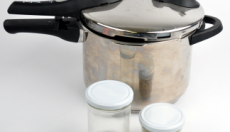
Comment utiliser une cocotte-minute pour stériliser un substrat de champignons : le guide complet
Maîtrise la stérilisation de ton substrat de champignons à l'autocuiseur pour tes bocaux PF-Tek et ton spawn de grain — étape par étape.
La cocotte-minute est l'équipement le plus important pour tout cultivateur de champignons sérieux. Sans stérilisation correcte, les contaminations arrivent presque toujours sur le substrat avant ton mycélium — et tout ton travail part à la poubelle. Utiliser une cocotte-minute pour stériliser un substrat de champignons te donne une méthode fiable et reproductible pour éliminer chaque bactérie, spore de moisissure et endospore résistante à la chaleur qui se dresse entre toi et une belle récolte. Pour comprendre en détail pourquoi la stérilisation est essentielle et quelle méthode choisir selon la situation, lis notre guide complémentaire sur comment stériliser le matériel de culture des champignons. Cet article se concentre sur la pratique : réglages, durées et étapes exactes pour les bocaux PF-Tek et le spawn de grain.
Dans ce guide : tout ce que tu dois savoir pour stériliser ton substrat de champignons à la cocotte-minute — de la science derrière les 15 PSI et les 121 °C, jusqu'aux instructions pas à pas pour les bocaux PF-Tek et le spawn de grain.
Tu y trouveras aussi un tableau complet du matériel, les erreurs courantes à éviter et des conseils de sécurité pour travailler avec de la vapeur sous pression.
Pour le contexte plus large — stérilisation à la flamme, désinfection à l'alcool et Still Air Box — consulte notre guide général sur la stérilisation.
Pourquoi la cocotte-minute est la référence pour stériliser un substrat de champignons
L'eau bouillante atteint 100 °C — assez pour tuer la plupart des bactéries et moisissures végétatives, mais pas les endospores bactériennes. Les endospores sont des structures de survie dormantes qui résistent à l'ébullition pendant des heures. Quand ton substrat refroidit, ces endospores germent et deviennent des contaminants à croissance rapide. La cocotte-minute règle le problème en enfermant la vapeur sous pression, ce qui élève le point d'ébullition bien au-dessus de 100 °C. À 15 PSI (livres par pouce carré), la température interne atteint 121 °C — le même seuil que celui des autoclaves de laboratoire. La chaleur sèche et l'alcool n'offrent pas la même pénétration pour un substrat en vrac ou des grains.
C'est pourquoi la stérilisation du substrat de champignons à la cocotte-minute est la référence en culture à domicile. Elle est abordable, accessible et, bien réalisée, elle donne des résultats comparables à ceux d'un laboratoire professionnel. Tout cultivateur sérieux qui travaille avec du spawn de grain, des bocaux PF-Tek, des boîtes de Petri avec agar ou de la culture liquide utilise une cocotte-minute.
Astuce : pour un tour d'horizon plus large des méthodes de stérilisation — y compris la flamme pour les outils d'inoculation et la désinfection à l'alcool pour les surfaces — consulte notre guide complet pour stériliser le matériel de culture des champignons.
Que peut-on stériliser dans une cocotte-minute ?
La cocotte-minute est polyvalente. Voici ce qu'elle peut traiter :
Pour tout ce qui touche à l'agar, lis aussi notre guide des boîtes de Petri avec agar pour les proportions précises et la technique de coulage.
Ce qu'il te faut : le matériel pour stériliser un substrat de champignons à la cocotte-minute
Avant de commencer, rassemble tout ce qui figure sur cette liste. Avoir le bon matériel sous la main rend le processus fluide et sûr. La plupart de ces articles sont disponibles directement dans notre boutique.
| Article | Utilité | Où le trouver |
|---|---|---|
| Cocotte-minute (15+ PSI) | L'outil de stérilisation principal. Un modèle de 22–23 litres contient confortablement 8 à 10 bocaux d'une demi-pinte (environ 240 ml). | Magasin de cuisine / bricolage ou en ligne |
| Bocaux en verre avec couvercle à vis | Bocaux de type mason à large ouverture pour le substrat ou le grain. Ils doivent résister à la chaleur. | Bocaux en verre — Magic Mushrooms Shop |
| Vermiculite (grade 3) | Mélangée à la farine de riz complet pour le substrat PF-Tek. Retient l'humidité et améliore la texture. | Vermiculite — Magic Mushrooms Shop |
| Farine de riz complet | Source de nutriments du substrat PF-Tek. À mélanger avec la vermiculite et l'eau. | Farine de riz complet — Magic Mushrooms Shop |
| Agar en poudre | Pour préparer des boîtes de Petri ou des tubes inclinés d'agar. Sert à isoler et conserver les cultures. | Agar agar 25 g — Magic Mushrooms Shop |
| Extrait de malt clair en poudre | Additif nutritif pour les milieux d'agar et de culture liquide. | Extrait de malt clair — Magic Mushrooms Shop |
| Grow box vide | Chambre de fructification pour les gâteaux colonisés ou les bocaux de spawn de grain après stérilisation. | Grow box vide — Magic Mushrooms Shop |
| Papier aluminium | Recouvre les couvercles des bocaux pendant la stérilisation pour les garder desserrés mais protégés de la condensation. | N'importe quel supermarché |
| Grille ou trépied | Maintient les bocaux au-dessus du fond de la cocotte-minute pour que le verre ne casse pas sous la chaleur directe. | Généralement fourni avec la cocotte-minute |
Astuce : choisis une cocotte-minute avec un manomètre fiable et une soupape de sécurité fonctionnelle. Pour les modèles anciens ou d'occasion, fais vérifier les joints et les soupapes avant de les utiliser.
Pas à pas : stériliser des bocaux PF-Tek à la cocotte-minute
La PF-Tek (Psilocybe Fanaticus Technique) utilise de petits bocaux en verre remplis d'un mélange de farine de riz complet, de vermiculite et d'eau. C'est l'un des substrats les plus faciles pour débuter, et c'est la stérilisation du substrat de champignons à la cocotte-minute qui la rend fiable. Suis ces étapes avec soin.
1
Prépare le substrat
Prépare le substrat
Mélange 2 volumes de vermiculite, 1 volume de farine de riz complet et 1 volume d'eau dans un saladier propre. Mélange bien jusqu'à ce que la vermiculite soit uniformément enrobée et que le mélange soit juste humide — pas détrempé. Le test de la poignée : serre une poignée de mélange dans ta main. Seules quelques gouttes doivent tomber. Si l'eau coule en filet, c'est trop humide : ajoute de la vermiculite sèche.
2
Remplis les bocaux et ajoute une couche sèche
Remplis les bocaux et ajoute une couche sèche
Remplis chaque bocal aux trois quarts avec le mélange humide. Ajoute ensuite une fine couche de vermiculite sèche nature par-dessus — environ 1 cm d'épaisseur. Cette barrière sèche aide à prévenir la contamination au point d'inoculation quand tu injecteras les spores plus tard. Ne tasse pas le substrat. Laisse-le meuble pour que le mycélium le colonise facilement.
3
Recouvre les couvercles de papier aluminium
Recouvre les couvercles de papier aluminium
Visse les couvercles sans serrer — juste assez pour qu'ils tiennent. Enveloppe ensuite chaque couvercle et le haut du bocal avec un carré de papier aluminium. L'aluminium protège le couvercle de la condensation qui pourrait goutter dans le bocal pendant le refroidissement. Le couvercle desserré laisse la vapeur s'échapper librement, ce qui est important pour l'équilibrage de la pression.
4
Prépare la cocotte-minute
Prépare la cocotte-minute
Place la grille ou le trépied au fond de la cocotte-minute. Ce n'est pas négociable — des bocaux posés directement sur le fond peuvent se fissurer à cause de la chaleur concentrée. Ajoute de l'eau dans la cocotte : environ 2–3 cm de hauteur, ou la quantité indiquée dans la notice de ton modèle. L'eau produit la vapeur qui fait monter la pression.
5
Dépose les bocaux et ferme le couvercle
Dépose les bocaux et ferme le couvercle
Place les bocaux debout sur la grille. Ils ne doivent pas toucher les parois de la cocotte-minute. S'ils sont appuyés contre les parois, le verre peut se fissurer en se dilatant sous la chaleur. Ferme bien le couvercle de la cocotte-minute et vérifie que le joint est correctement en place.
6
Chauffe jusqu'à 15 PSI et maintiens 60 à 90 minutes
Chauffe jusqu'à 15 PSI et maintiens 60 à 90 minutes
Mets le feu à fond. Laisse la vapeur s'échapper librement pendant quelques minutes pour purger l'air de la cocotte avant que la pression ne monte. Une fois que l'indicateur de pression atteint 15 PSI (121 °C), baisse le feu à un niveau qui maintient une pression stable sans qu'elle continue de monter. Maintiens cette pression pendant 60 à 90 minutes pour les bocaux PF-Tek. Les petits bocaux peuvent se contenter de 60 minutes ; les bocaux plus grands ou une cocotte bien remplie demandent plutôt 90 minutes.
Attention : ne t'éloigne pas pendant la stérilisation. Surveille régulièrement le manomètre. Si la pression baisse, la température baisse aussi et la stérilisation est incomplète. Si la pression monte trop, réduis immédiatement le feu.
7
Coupe le feu et laisse refroidir complètement — ne brûle pas cette étape
Coupe le feu et laisse refroidir complètement — ne brûle pas cette étape
Quand le minuteur sonne, coupe le feu et laisse la cocotte-minute complètement tranquille. Ne la passe pas sous l'eau froide. N'ouvre pas la soupape pour accélérer la dépressurisation. La pression doit redescendre naturellement. Cela prend généralement 4 à 5 heures, ou tu peux la laisser toute la nuit. N'ouvre le couvercle que lorsque l'indicateur de pression est complètement revenu à zéro et que la cocotte est froide au toucher.
Danger — brûlures de vapeur : ouvrir une cocotte-minute encore sous pression et chaude libère un jet violent de vapeur surchauffée. Il provoque de graves brûlures. Attends toujours la dépressurisation naturelle complète avant d'ouvrir. Ne force jamais le couvercle.
Une fois refroidis, déplace les bocaux dans un endroit propre et laisse-les reposer encore 12 à 24 heures avant l'inoculation. Ce temps de repos permet à la chaleur résiduelle de se dissiper complètement et te permet de repérer les couvercles bombés — signe d'une contamination déjà présente dans le substrat avant la stérilisation.
Pas à pas : stériliser du spawn de grain à la cocotte-minute
Le spawn de grain — grains de seigle, millet, grains de blé ou riz complet en bocaux — est le substrat le plus riche en nutriments que tu vas stériliser. Comme le grain est dense et retient beaucoup d'humidité à l'intérieur, il demande un cycle plus long à pleine pression. Le processus de stérilisation du substrat de champignons à la cocotte-minute pour le grain ressemble à celui de la PF-Tek, mais avec des différences clés dans la préparation.
1
Fais tremper le grain
Fais tremper le grain
Rince bien ton grain à l'eau froide. Fais-le ensuite tremper dans l'eau pendant 12 à 24 heures. Le trempage hydrate complètement le grain et l'assouplit, ce qui permet à la chaleur de pénétrer uniformément pendant la stérilisation. Le seigle et les grains de blé gagnent à tremper plus longtemps ; les petits grains comme le millet peuvent tremper 12 heures.
2
Fais mijoter jusqu'à ce qu'il soit tendre, puis égoutte
Fais mijoter jusqu'à ce qu'il soit tendre, puis égoutte
Égoutte le grain trempé et mets-le dans une casserole. Couvre d'eau fraîche et porte à frémissement doux pendant environ 15 à 20 minutes. Le grain doit être cuit à cœur mais rester ferme — ni en bouillie ni éclaté. Égoutte-le dans une passoire et étale-le sur une surface propre ou une plaque de cuisson pour le sécher en surface pendant 20 à 30 minutes. Un excès d'humidité en surface donne un spawn de grain détrempé, très sujet à la contamination bactérienne.
Astuce : pour vérifier que ton grain est prêt, presse un grain entre tes doigts. Il doit céder sans s'émietter, et tu ne dois pas voir de cœur blanc et amylacé au milieu. Un cœur blanc signifie qu'il faut prolonger la cuisson.
3
Remplis les bocaux et prépare la cocotte-minute
Remplis les bocaux et prépare la cocotte-minute
Remplis les bocaux sans tasser avec le grain séché en surface — environ aux trois quarts. Visse les couvercles sans serrer et recouvre-les de papier aluminium. Installe la cocotte-minute avec la grille et l'eau, exactement comme pour les bocaux PF-Tek ci-dessus.
4
Stérilise à 15 PSI pendant 90 minutes
Stérilise à 15 PSI pendant 90 minutes
Le spawn de grain demande toujours les 90 minutes complètes à 15 PSI (121 °C). Des cycles plus courts laissent le centre des bocaux denses sous-stérilisé. Surveille le manomètre, maintiens une pression stable, puis laisse la dépressurisation se faire naturellement — 4 à 5 heures minimum.
5
Laisse refroidir et reposer avant l'inoculation
Laisse refroidir et reposer avant l'inoculation
Déplace les bocaux de grain refroidis dans un endroit propre et laisse-les reposer au moins 24 heures. Inoculer des bocaux encore tièdes stresse le mycélium et favorise la croissance bactérienne. Inocule avec une seringue de spores, ou transfère directement de l'agar colonisé. Consulte le guide des boîtes de Petri avec agar pour ce procédé.
Les erreurs courantes qui ruinent une stérilisation
Même les cultivateurs expérimentés font ces erreurs. Les connaître à l'avance t'évite beaucoup de frustration et de substrat gaspillé.
Pour mieux comprendre ce qui a mal tourné dans une culture, lis notre guide d'identification des contaminations.
Entretien et sécurité de la cocotte-minute
Une cocotte-minute est un investissement à long terme. Les contrôles de sécurité avant chaque utilisation ne sont pas facultatifs — ils sont essentiels.
Avant chaque utilisation
Après chaque utilisation
Attention : remplace le joint au moins une fois par an, ou dès qu'il montre des signes d'usure visibles. Un joint défaillant est la cause la plus fréquente des stérilisations ratées. La plupart des fabricants vendent des joints de rechange — vérifie la référence de ton modèle.
Pour un tour d'horizon complet de toutes les méthodes de stérilisation — y compris pourquoi l'alcool isopropylique à 70 % est plus efficace que celui à 99 % pour les surfaces, et comment une Still Air Box réduit le risque de contamination pendant l'inoculation — consulte notre guide complet de la stérilisation.
Récap rapide : réglages de la cocotte-minute pour stériliser un substrat de champignons
| Pression | 15 PSI |
| Température à 15 PSI | 121 °C |
| Bocaux PF-Tek (farine de riz complet + vermiculite) | 60–90 minutes |
| Spawn de grain (seigle, millet, blé) | 90 minutes |
| Agar / culture liquide | 30–45 minutes |
| Temps de refroidissement | 4–5 heures minimum (dépressurisation naturelle uniquement) |
| Repos avant inoculation | 12–24 heures après refroidissement |
Prêt à stériliser ta première série ? Trouve tout ce qu'il te faut — des bocaux en verre et de la vermiculite à la farine de riz complet et à l'agar en poudre — dans notre
.
Remarque : si tu souffres d'une maladie mentale et que tu es curieux d'utiliser la psilocybine ou toute autre thérapie psychédélique, consulte d'abord les autorités médicales compétentes. Ne t'auto-prescris rien — il est essentiel d'avoir un accompagnement et des conseils adaptés lorsque tu utilises des psychédéliques comme médicament.


Décembre 5, 2012