
Votre panier est vide.

Comment stériliser le matériel de culture de champignons : méthodes, outils et conseils pour un espace de travail propre
Publié sous: Culture & Cultivation
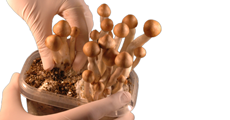
Le guide complet de la technique stérile pour les cultivateurs de champignons : méthodes, matériel et cas d'utilisation de chacune
Demande à n'importe quel cultivateur de champignons expérimenté ce qui différencie une culture réussie d'un désastre contaminé, et la réponse sera presque toujours la même : la technique stérile. Si tu veux stériliser correctement ton matériel de culture de champignons, tu dois comprendre non seulement comment faire, mais aussi pourquoi chaque méthode existe et quand l'utiliser. Ce guide passe en revue toutes les principales méthodes de stérilisation et de désinfection utilisées pour la culture de champignons à la maison, du simple passage d'une aiguille à la flamme jusqu'au cycle complet à l'autocuiseur pour le spawn de grains.
Dans ce guide : comment stériliser chez toi le matériel de culture de champignons avec cinq méthodes éprouvées : stérilisation à la flamme, cuisson à l'autocuiseur, pasteurisation, désinfection à l'alcool et Still Air Box.
Tu y trouveras aussi un tableau récapitulatif indiquant quel traitement appliquer à quel matériau, une liste complète du matériel avec liens vers la boutique, et des conseils pratiques pour garder ton espace de travail propre à chaque étape.
Tu travailles pour la première fois avec des boîtes de Petri à l'agar ou du spawn de grains ? Consulte notre guide pas à pas de l'autocuiseur pour approfondir cette méthode en particulier.
Stérilisation ou désinfection : quelle différence ?
Ces deux termes sont souvent employés l'un pour l'autre, mais ils ne désignent pas la même chose, et les confondre est une source fréquente de contamination.
La stérilisation élimine toute forme de vie microbienne : bactéries, spores de moisissures, spores de champignons et endospores bactériennes résistantes à la chaleur. Rien ne survit. Elle exige soit une chaleur élevée sous pression (comme un autocuiseur à 15 PSI), soit une chaleur sèche prolongée.
La désinfection ramène la charge microbienne à un niveau acceptable, mais ne tue pas tout. Les lingettes à l'alcool, par exemple, désinfectent les surfaces sans les stériliser. La désinfection suffit pour tes mains, tes surfaces de travail et l'extérieur des bocaux, mais jamais pour les substrats riches en nutriments comme les grains ou le mélange de farine de riz complet, où les spores survivantes trouveront largement de quoi se développer.
Astuce : une bonne règle de base : si ça va à l'intérieur d'un bocal ou d'un sac que le mycélium va coloniser, tu le stérilises. Si c'est une surface extérieure ou ta peau, tu le désinfectes.
Qu'est-ce qu'il faut stériliser ? Tableau récapitulatif
Tous les éléments de ta culture n'ont pas besoin du même traitement. Utilise ce tableau pour savoir quel niveau de propreté chaque élément doit atteindre avant de commencer à travailler.
| Spawn de grains (seigle, millet, grains de blé) | Stérilisation complète : autocuiseur à 15 PSI pendant 90 minutes |
| Bocaux de substrat PF-Tek (BRF + vermiculite) | Stérilisation complète : autocuiseur à 15 PSI pendant 60 à 90 minutes |
| Boîtes de Petri à l'agar et culture liquide | Stérilisation complète : autocuiseur à 15 PSI pendant 20 à 30 minutes |
| Substrat en vrac (CVG : fibre de coco, vermiculite, gypse) | Pasteurisation : bucket tek avec de l'eau bouillante, fermé 6 à 8 heures |
| Outils d'inoculation (aiguilles, scalpels, anses) | Stérilisation à la flamme avant chaque utilisation, puis laisser refroidir |
| Surfaces de travail (plans de travail, intérieur de la SAB) | Désinfection : nettoyage à l'alcool isopropylique à 70 % |
| Mains et gants | Désinfection : alcool isopropylique à 70 % ou gel désinfectant pour les mains |
| Extérieur des bocaux et des sacs | Désinfection : essuyer à l'alcool isopropylique à 70 % avant d'ouvrir |
Méthode 1 : stérilisation à la flamme pour les outils
La stérilisation à la flamme est le moyen le plus rapide de stériliser le petit matériel de culture en métal : aiguilles d'inoculation, scalpels et anses de transfert. La technique prend quelques secondes et peut être répétée entre chaque transfert sans interrompre ton travail.
1
Chauffe la pointe métallique à la flamme
Chauffe la pointe métallique à la flamme
Maintiens la pointe de ton aiguille ou la lame de ton scalpel dans la flamme d'un
jusqu'à ce qu'elle rougisse. La chaleur détruit instantanément toute contamination microbienne.
2
Laisse refroidir avant de toucher le substrat
Laisse refroidir avant de toucher le substrat
Une aiguille encore incandescente tuera le mycélium au contact. Attends cinq à dix secondes, ou plonge brièvement la pointe dans de l'eau stérile ou dans l'agar, sur le bord de la boîte. Si elle grésille légèrement, c'est qu'elle est encore trop chaude : attends un peu plus longtemps.
3
Re-stérilise entre chaque transfert
Re-stérilise entre chaque transfert
Chaque fois que ton outil touche une surface, même propre, repasse-le à la flamme avant le contact suivant. Ce réflexe évite la contamination croisée entre bocaux, boîtes de Petri ou cultures.
Astuce : un briquet torche au butane donne une flamme plus chaude et plus concentrée qu'un briquet jetable. Il atteint plus vite la bonne température et dépose moins de suie sur tes outils, ce qui garde tes boîtes de Petri plus propres pendant que tu travailles.
Comment stériliser le matériel de culture de champignons avec un autocuiseur
Pour les substrats riches en nutriments et les milieux de culture, rien ne remplace l'autocuiseur (la cocotte-minute). C'est la méthode sur laquelle s'appuient les cultivateurs sérieux pour stériliser leur matériel de culture à plus grande échelle, car c'est la seule technique domestique largement accessible qui détruit de façon fiable les endospores bactériennes.
Les endospores sont le vrai problème de la stérilisation des substrats. L'ébullition classique à 100 °C tue la plupart des bactéries et des moisissures, mais certaines bactéries, notamment les espèces de Bacillus, forment des spores résistantes à la chaleur qui survivent à l'ébullition normale puis germent dès que ton substrat refroidit. Un autocuiseur à 15 PSI porte le point d'ébullition de l'eau à environ 121 °C, une température suffisante pour détruire les endospores si le temps de cuisson est suffisant.
Durées indicatives à 15 PSI :
Attention : ne bâcle jamais la phase de refroidissement. Inoculer des bocaux encore chauds provoque de la condensation à l'intérieur, ce qui augmente considérablement le risque de contamination. Laisse refroidir les bocaux au moins quatre à cinq heures, voire toute la nuit, avant d'ouvrir l'autocuiseur. Consulte notre guide complet de stérilisation à l'autocuiseur pour tous les détails, y compris les erreurs courantes à éviter.
La méthode de l'autocuiseur est détaillée dans notre article complémentaire : Comment utiliser un autocuiseur pour le substrat de champignons. Ce guide t'explique comment choisir ton matériel, le déroulé complet pas à pas pour les bocaux PF-Tek et le spawn de grains, ainsi que des solutions aux problèmes les plus fréquents.
Méthode 3 : pasteurisation du substrat en vrac (CVG)
Tout n'a pas besoin d'être stérilisé. Les substrats en vrac pauvres en nutriments, comme la fibre de coco, la vermiculite et le gypse (CVG), peuvent être pasteurisés à la place. La pasteurisation chauffe le matériau à environ 60–80 °C pendant une à deux heures : assez pour tuer la plupart des organismes concurrents, mais sans éliminer tous les microbes. Les microbes bénéfiques qui survivent aident en fait ton substrat à se défendre contre les contaminations après l'inoculation.
Cette approche est de plus en plus populaire chez les cultivateurs amateurs parce qu'elle est simple, économe en énergie et étonnamment efficace. Beaucoup de cultivateurs expérimentés constatent moins de problèmes de contamination avec du CVG pasteurisé qu'avec un substrat en vrac entièrement stérilisé, justement parce que ces organismes bénéfiques survivants font concurrence aux spores de moisissures qui se posent à la surface une fois le contenant ouvert.
La méthode du bucket tek
La façon la plus courante de pasteuriser du CVG à la maison est la méthode du bucket tek :
1
Mélange tes ingrédients secs dans un seau propre de 20 litres
Mélange tes ingrédients secs dans un seau propre de 20 litres
Mélange la fibre de coco, la vermiculite et un peu de gypse. Un ratio standard est une brique de fibre de coco de 650 g, 1,5 à 2 litres de
et environ 2 cuillères à soupe de gypse.
2
Verse de l'eau bouillante sur le mélange sec
Verse de l'eau bouillante sur le mélange sec
Utilise environ 3,5 à 4,5 litres d'eau bouillante. Verse-la uniformément sur les ingrédients secs et remue brièvement pour que tout soit bien imbibé.
3
Ferme le couvercle et enroule le seau dans une couverture
Ferme le couvercle et enroule le seau dans une couverture
La couverture isole le seau et maintient la température intérieure au-dessus de 60 °C pendant plusieurs heures. C'est cette chaleur prolongée qui pasteurise le substrat. Laisse le seau fermé au moins 6 à 8 heures, ou simplement toute la nuit.
4
Laisse refroidir à température ambiante avant utilisation
Laisse refroidir à température ambiante avant utilisation
N'ajoute pas le spawn avant que le substrat soit complètement refroidi. Un substrat chaud abîmerait ou tuerait ton mycélium. Quand tu ouvres le seau, le CVG doit être humide mais pas détrempé : si tu en presses une poignée, seules quelques gouttes d'eau doivent s'en échapper (capacité au champ).
Astuce : la pasteurisation convient surtout aux substrats pauvres en nutriments comme le CVG. Si ton substrat contient des grains, du fumier ou de la sciure enrichie, utilise plutôt un autocuiseur : leur teneur plus élevée en nutriments exige une stérilisation complète pour éviter les contaminations.
Méthode 4 : désinfection à l'alcool pour les surfaces et la peau
L'alcool isopropylique (IPA) est ton désinfectant de tous les jours pour tout ce qui ne passe pas à l'autocuiseur. Il réduit rapidement la contamination de surface et s'évapore proprement sans laisser de résidus. En revanche, il ne stérilise pas : l'alcool ne peut pas détruire les endospores, et il perd en efficacité sur les surfaces visiblement sales.
Pourquoi le 70 % fonctionne mieux que le 99 %
Beaucoup de débutants sont surpris : l'alcool isopropylique à 70 % est plus efficace contre les bactéries et les champignons que l'IPA à 99 %. La raison est que l'eau contenue dans l'IPA à 70 % ralentit l'évaporation, ce qui laisse à l'alcool plus de temps de contact avec les cellules microbiennes. L'IPA pur à 99 % s'évapore presque instantanément, ce qui limite sa capacité à pénétrer les parois cellulaires. Pour la désinfection des surfaces, le 70 % est la référence en laboratoire comme en milieu médical, comme le rappellent les recommandations du CDC sur la désinfection et la stérilisation.
Utilise la désinfection à l'alcool pour :
Astuce : les lingettes imbibées d'alcool sont idéales pour désinfecter les points d'injection et les couvercles de bocaux. Elles sont pratiques, régulières et gouttent moins qu'un spray pendant les gestes de précision.
Méthode 4 : la Still Air Box (SAB), la zone d'air propre du débutant
Une hotte à flux laminaire est la solution professionnelle pour des transferts sans contamination. Mais une Still Air Box remplit le même rôle pour une fraction du prix, et elle convient parfaitement à la plupart des cultivateurs amateurs qui travaillent avec des seringues de spores, des sporées ou de petits travaux sur agar.
Une Still Air Box n'est rien d'autre qu'un grand bac en plastique transparent, généralement de 60 à 80 litres, avec deux trous de la taille d'un bras percés sur un côté. Tu travailles à l'intérieur de la boîte, où l'air est immobile. Comme il n'y a aucun mouvement d'air, les contaminants en suspension ne se déposent pas sur tes bocaux, tes boîtes de Petri ou tes outils ouverts.
1
Choisis un grand bac de rangement transparent
Choisis un grand bac de rangement transparent
Il te faut assez de place pour y glisser confortablement les deux bras et manipuler bocaux ou boîtes de Petri. Un bac transparent te permet de voir ce que tu fais sans retirer le couvercle.
2
Découpe les trous pour les bras sur un petit côté
Découpe les trous pour les bras sur un petit côté
Chaque trou doit être assez grand pour passer ton bras jusqu'au coude, soit environ 15 cm de diamètre. Lisse les bords pour qu'ils ne déchirent pas tes gants.
3
Nettoie l'intérieur à l'IPA à 70 %
Nettoie l'intérieur à l'IPA à 70 %
Avant chaque session, vaporise et essuie toutes les surfaces intérieures avec de l'alcool isopropylique. Laisse agir une minute avant de commencer, pour que le brouillard résiduel retombe.
4
Laisse l'air se stabiliser avant de travailler
Laisse l'air se stabiliser avant de travailler
Une fois l'intérieur nettoyé et ton matériel installé, attends cinq à dix minutes avant de commencer les transferts. Cela permet aux courants d'air de retomber complètement.
Attention : une Still Air Box n'est efficace que si l'air de la pièce est lui-même raisonnablement propre. Ferme les fenêtres, éteins ventilateurs et climatisation, et évite de travailler près d'une bouche d'aération. Les taux de contamination grimpent en flèche s'il y a un courant d'air dans la pièce pendant ta session.
Comment garder ton espace de travail propre : étapes pratiques
Même une stérilisation parfaite de ton substrat ne te sauvera pas si tu introduis une contamination pendant l'inoculation. Tes habitudes de travail comptent autant que les méthodes que tu utilises en amont pour stériliser ton matériel de culture de champignons. Suis ces étapes de façon régulière pour donner à tes cultures les meilleures chances.
1
Prends une douche et mets des vêtements propres avant de commencer
Prends une douche et mets des vêtements propres avant de commencer
Ta peau et tes cheveux portent des milliards de micro-organismes. Une douche rapide avant une session de culture élimine une grande partie des contaminants de surface avant même que tu touches ton matériel.
2
Sors les animaux de la pièce
Sors les animaux de la pièce
Les poils et les squames des animaux transportent des spores de moisissures et des bactéries. Même un animal bien toiletté libère en permanence des contaminants dans l'air. Garde-les hors de la pièce pendant l'inoculation et les transferts.
3
Essuie toutes les surfaces à l'IPA à 70 %
Essuie toutes les surfaces à l'IPA à 70 %
Tables, plans de travail, Still Air Box : tout doit être soigneusement nettoyé avant que tu approches tes bocaux stérilisés. Fais attention aux endroits où tu pourrais poser des bocaux ou des outils sans y penser.
4
Porte des gants en nitrile et un masque
Porte des gants en nitrile et un masque
Les gants éliminent la contamination par les empreintes digitales et permettent de redésinfecter facilement tes mains entre les étapes. Un simple masque chirurgical réduit nettement le nombre de particules que tu expires au-dessus des contenants ouverts.
5
Ferme toutes les fenêtres et éteins les ventilateurs
Ferme toutes les fenêtres et éteins les ventilateurs
Les mouvements d'air sont ton ennemi pendant les transferts. Avec un air immobile, les contaminants en suspension retombent lentement au lieu de tourbillonner au-dessus de tes bocaux ouverts. Ferme tout avant de commencer et n'ouvre pas les portes en pleine session si tu peux l'éviter.
Astuce : si tu constates des contaminations à répétition malgré une bonne technique, inspecte ton espace de culture à la recherche de moisissures cachées : derrière les murs, sous les éviers ou dans les zones mal ventilées. La pression des moisissures présentes dans l'environnement peut venir à bout même d'une excellente technique stérile. Notre guide de la contamination passe en revue les principaux coupables et t'explique comment les identifier.
Le matériel pour stériliser tes cultures de champignons à la maison
Tu n'as pas besoin d'équipement de laboratoire coûteux pour stériliser efficacement ton matériel de culture de champignons chez toi. Le tableau ci-dessous couvre tout ce qu'il te faut pour une installation de technique stérile complète, avec des liens vers les produits correspondants de notre boutique.
| Article | Utilisation | Où le trouver |
|---|---|---|
| Brûleur à alcool | Stérilisation à la flamme des aiguilles, scalpels et anses d'inoculation | |
| Lingettes à l'alcool | Désinfection des points d'injection, des couvercles de bocaux et des petites surfaces | Lingettes à l'alcool — Magic Mushrooms Shop |
| Gel désinfectant pour les mains | Désinfection des mains et des gants pendant les transferts | |
| Spray désinfectant pour surfaces | Nettoyage des surfaces, de la Still Air Box et de l'extérieur des bocaux | |
| Gants stériles en nitrile | Barrière pour les mains pendant tous les travaux d'inoculation | |
| Autocuiseur (minimum 8 litres) | Stérilisation du spawn de grains, des bocaux PF-Tek, de l'agar et de la culture liquide | Magasins de cuisine ou en ligne ; consulte notre guide de l'autocuiseur pour les recommandations de taille |
| Gamme complète de matériel de stérilisation | Tous les produits de stérilisation réunis au même endroit |
Intégrer la stérilisation à ton processus de culture
La technique stérile n'est pas une étape isolée : elle traverse tout ton processus de culture. Avant même de penser à l'inoculation, ton substrat doit être correctement stérilisé. Avant d'ouvrir un bocal, tes surfaces et tes outils doivent être désinfectés. Et pendant chaque transfert, que tu travailles avec une seringue de spores, une sporée ou des cultures sur agar, ta flamme et tes lingettes à l'alcool doivent se trouver juste à côté de toi.
Si tu suis la méthode PF-Tek, tes bocaux de substrat passent directement de l'autocuiseur à ta Still Air Box après refroidissement. Si tu travailles sur agar pour isoler des cultures ou faire des clones, le principe est le même : stérilise d'abord, transfère dans un environnement propre et re-stérilise tes outils entre chaque contact. Pour en savoir plus sur le travail sur agar, consulte notre guide pour préparer des boîtes de Petri à l'agar pour la culture de champignons.
La meilleure amélioration que tu puisses apporter à ton processus stérile, c'est de te mettre à l'autocuiseur si ce n'est pas déjà fait. C'est le seul moyen fiable de stériliser le matériel de culture de champignons qui contient des nutriments, et sans lui, la contamination est quasi inévitable sur les grains ou le substrat en vrac. Notre guide complet de l'autocuiseur couvre tout, du choix du bon modèle aux instructions pas à pas pour le spawn de grains et les bocaux PF-Tek.
Prêt à améliorer ta technique stérile ? Découvre toute la
de Magic Mushrooms Shop : briquets torche, lingettes à l'alcool, désinfectant pour surfaces, gants en nitrile et tout ce qu'il te faut pour une culture propre.
Remarque : si tu souffres d'une maladie mentale et que tu t'intéresses à la psilocybine ou à toute autre thérapie psychédélique, consulte d'abord les autorités médicales compétentes. Ne t'automédique pas : il est essentiel de bénéficier d'un accompagnement et d'un encadrement adaptés lorsque l'on utilise des psychédéliques comme médicament.


Novembre 7, 2012