
No tiene artículos en su carrito de compras.

Sasha Shulgin: The Chemist Who Taught Psychedelics to Love
Publicado de: History & Pioneers
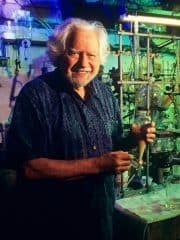
On a hillside in Lafayette, California, behind a rambling old farmhouse surrounded by almond trees, stood a tiny wooden shed. Inside that shed — no bigger than a walk-in closet — Alexander Sasha Shulgin quietly rewrote the map of human consciousness.
Over the course of fifty years, Alexander Sasha Shulgin synthesised more than 200 new psychedelic compounds. However, his real masterpiece was not a molecule. It was a love story — with chemistry, with his wife Ann, and with the idea that the human mind deserves to be explored with curiosity rather than fear.
The Early Life of Alexander Sasha Shulgin
Sasha was born on 17 June 1925 in Berkeley, California, to immigrant parents — his father a Russian-born schoolteacher, his mother a cultured woman who filled the house with language and music. As a child, Sasha was the classic quiet prodigy: more comfortable with a chemistry set than a baseball bat. By sixteen he had earned a scholarship to Harvard. By eighteen he dropped out and joined the U.S. Navy during the Second World War.
It was on a destroyer escort in the Atlantic that something happened which would shape the rest of his life. Before surgery for a thumb infection, a nurse handed him a glass of orange juice. Sasha fell asleep before the drug took effect — then realised, afterwards, that the "sedative" had been nothing but sugar crystals. The placebo fascinated him. If a few grains of sugar could make him unconscious, what was really happening inside the mind? That question never left him.
The Dow Years, and the Molecule That Changed Everything
After the war Sasha finished his PhD in biochemistry at Berkeley and joined Dow Chemical. There, in the late 1950s, he invented Zectran — the world’s first biodegradable pesticide. Dow made a fortune. In gratitude, they gave Sasha something almost unheard of: total freedom to research whatever he liked, on company time, in a private lab.
He used that freedom to explore mescaline. In 1960, he took his first mescaline trip. The experience hit him like revelation. "I understood that our entire universe is contained in the mind and the spirit," he later wrote. "We may choose not to find access to it, we may even deny its existence, but it is indeed there inside us, and there are chemicals that can catalyse its availability."
From that moment, his life had one direction. He left Dow a few years later and built the now-legendary lab at the back of his Lafayette farmhouse — four wooden walls, a handful of beakers, dusty brown bottles, and slivers of psychedelic cacti on the windowsill. From this 200-square-foot room, Alexander Sasha Shulgin would produce more novel psychedelic compounds than any human being before or since.
The Shulgin Method — Science With Skin in the Game
Sasha had a rule he never broke. Before any new molecule was shared with anyone, he tested it on himself first. Then, once he was sure it was safe, he tested it with Ann. Then with a small, trusted circle of friends — chemists, therapists, and researchers who met regularly at the Farm for dinner and discussion.
Each trial was meticulously documented. Dose, time of ingestion, onset, peak, come-down, and — most importantly — a subjective rating on the "Shulgin Rating Scale", from minus (no effect) to plus-four (the rare, transcendent "religious experience"). It was bodies-on-the-line science, fuelled by coffee, candlelight, and Ann’s hand-written notes. Decades of these original notebooks are now preserved in the Shulgin Archives on Erowid.
The Shulgin Rating Scale — used to this day by researchers and by writers of trip reports on forums around the world — was born at the Shulgin kitchen table, not in a university lab. It is one of psychedelia’s quiet inheritances.
Meeting Ann — The Love Story Behind Alexander Sasha Shulgin
In the autumn of 1978, Sasha was a widower. His first wife Nina had died of a stroke in 1977, and grief had become a quiet companion. That same autumn, a woman named Laura Ann Gotlieb — a New Zealand-born writer, mother of four, lay psychotherapist, and self-described "psychedelic enthusiast" — walked into his life.
Ann was no ordinary suitor. She had already lived three marriages, raised children across continents, and trained herself in transpersonal psychotherapy — a discipline that used altered states to help people face trauma. When she met Sasha, she later said, she finally met "a man who was true and loving — a chemistry genius whose life’s work was the invention and exploration of psychedelic drugs." The OPEN Foundation’s farewell to Ann Shulgin captures the warmth of who she was beautifully.
They courted for three years. Then, on 4 July 1981, Sasha threw an Independence Day picnic in the backyard of the Farm. Halfway through the afternoon, he stopped the music and announced a surprise: they were getting married, right there, right then. The officiant? An official from the Drug Enforcement Administration — an old friend of Sasha’s from his years of quiet collaboration with the agency.
It was, by every account, the most Shulgin wedding imaginable.
PiHKAL and TiHKAL — A Chemical Love Story, Literally
For the next decade, Ann and Sasha worked side by side. Sasha at the bench with glass flasks and a pencil behind his ear. Ann at the kitchen table, writing, shaping, interviewing their research group about the subjective quality of each experience. The result, in 1991, was PiHKAL: A Chemical Love Story — "Phenethylamines I Have Known And Loved."
The book opens with a 450-page fictionalised autobiography of their relationship, told in alternating voices. Then, in the second half, it shifts form completely: 179 detailed synthesis recipes, dose ranges, duration, and subjective effects. It is the only book in the history of chemistry written as both a love letter and a laboratory manual. You can still read the full text, freely, via the Erowid online archive of PiHKAL.
In 1997, they released the sequel: TiHKAL: Tryptamines I Have Known And Loved, covering DMT, psilocybin, ayahuasca, and dozens of tryptamine derivatives. Together, the two volumes became known simply as "the Books" — the most influential underground chemistry texts of the modern era.
The DEA Raid. Sasha’s Schedule I research licence had made him a unique figure — a chemist legally permitted to synthesise the very molecules his country had banned. After PiHKAL was published, that arrangement ended. In 1994 the DEA raided the Farm, fined him $25,000, and revoked the licence. Sasha kept working. He simply did it without permission.
The Molecules That Came Out of That Shed
To list everything Sasha invented would fill a book — which is exactly what he did. The highlights alone are extraordinary.
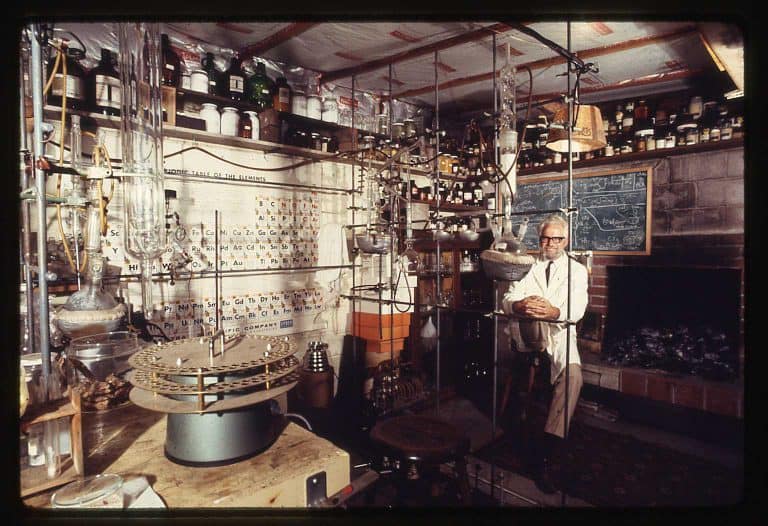 Source: The Shulgin Foundation (shulginfoundation.org)
| MDMA (re-introduction) | First synthesised by Merck in 1912, but effectively forgotten. In 1976 Sasha resynthesised it, tested it, and introduced it to psychologist Leo Zeff — who in turn introduced it to hundreds of therapists. Without him, the MAPS-led MDMA-PTSD trials of 2024 would not exist. |
| The 2C Family | 2C-B, 2C-E, 2C-I, 2C-T-7, and more — a family of phenethylamines that remain influential in research and harm-reduction circles today. |
| DOM (STP) | Synthesised in 1964. Infamously redistributed in San Francisco’s Haight-Ashbury in 1967 under the street name "STP". |
| The TiHKAL tryptamines | Dozens of novel tryptamines, including 5-MeO-DIPT and AMT, many of which inform present-day pharmaceutical research. |
| Over 150 compounds | Credited to him by name, with detailed synthesis routes. Many more are now attributed to his laboratory posthumously. |
Equally important was what Sasha refused to do. He never patented a single psychedelic. He never sold his recipes. Furthermore, he explicitly published them in full, in plain language, precisely so that no one could ever hide the knowledge behind a corporate wall. For Sasha, psychedelic chemistry was a public good — a gift to be passed forward.
The Farm — Home of Alexander Sasha Shulgin
The Farm in Lafayette became something rare: a home, a laboratory, and a meeting place all at once. Every few weeks, the Shulgins gathered their research group around a long wooden table. Dinner came first. Then — if a new compound was ready — the tasting. Afterwards, notes and long conversations about meaning, safety, therapy, and the nature of mind.
Friends described the place with quiet awe. Dusty brown bottles lined the shelves. Labelled Petri dishes shared space with family photos. Sasha in his trademark blue-denim shirt and white beard, Ann in linen and reading glasses, their cats padding between the beakers. The shed was "more like the workshop of a medieval alchemist than a modern laboratory", one visitor wrote.
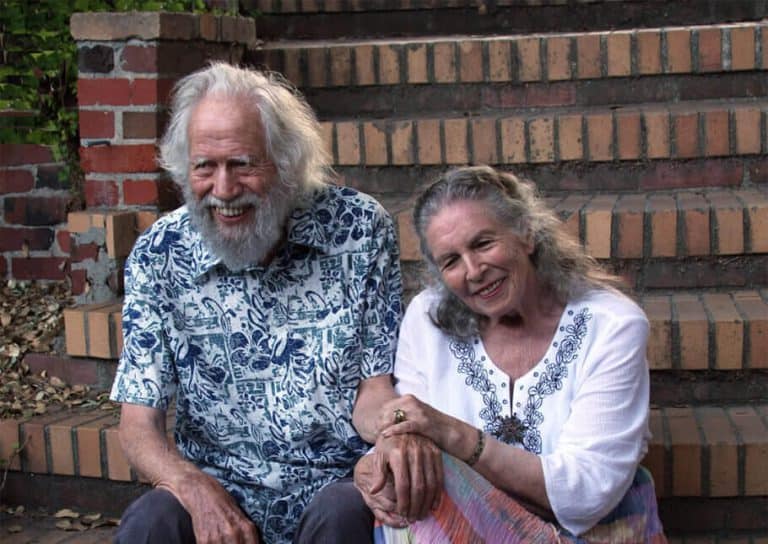
Consequently, the Shulgin Farm is now preserved as a living archive by The Shulgin Foundation — open to researchers and, occasionally, to filmmakers who want to walk through the four walls where modern psychedelic chemistry was born.
The Final Chapters
Sasha suffered a stroke in 2010 and, after years of declining health, died peacefully at the Farm on 2 June 2014 — just fifteen days before his 89th birthday. He was surrounded by Ann, his children, and close friends. His last word, his family reported, was a quiet "beautiful".
Ann stayed at the Farm, continuing to teach, write, and host visitors for another eight years. She died on 9 July 2022, at the age of 91. For the first time in four decades, the shed stood silent.
However, the quiet did not last long. Today the Alexander Shulgin Research Institute — now stewarded by a new generation of chemists and therapists — continues to explore the molecules Sasha left behind. Moreover, his influence is everywhere in the current psychedelic renaissance: in every MDMA-assisted therapy session, every clinical trial citing the Shulgin Rating Scale, and every researcher who dares to test a compound on themselves before sharing it with the world.
Why Alexander Sasha Shulgin Still Matters
You can measure a scientist in many ways. Papers published. Compounds discovered. Citations earned. By those metrics, Alexander Sasha Shulgin towers over his peers. However, those are not the measures that meant anything to him.
What Sasha gave us was simpler, and harder. He showed that curiosity can be a form of love. That a marriage can be a laboratory. That science without the scientist’s own skin in the game is only half-science. Additionally, he showed that knowledge of the human mind belongs to humanity — not to patent-holders, not to regulators, not to any single nation. For a beautiful overview of how that philosophy still shapes modern research, read the MAPS tribute The Living Legacy of Sasha Shulgin.
The magic mushroom community owes him a particular debt. Without Sasha’s insistence that psychedelic chemistry be studied openly, respectfully, and in the context of trusted human relationships, the careful work happening today at Czech psilocybin clinics, American federal research centres, and the World Ayahuasca Forum in Girona would look very different — if it existed at all.
In the end, the most Shulgin thing about Alexander Sasha Shulgin was not what he made. It was who he made it with, and why.
Explore more of the figures who shaped the psychedelic renaissance in our History & Pioneers collection — from Albert Hofmann to María Sabina to Terence McKenna.
Alexander Sasha Shulgin at a Glance
| Born | 17 June 1925, Berkeley, California |
| Died | 2 June 2014, Lafayette, California |
| Partner | Ann Shulgin (née Laura Ann Gotlieb), 1931–2022, married 4 July 1981 |
| Defining works | PiHKAL: A Chemical Love Story (1991) and TiHKAL: The Continuation (1997) |
| Compounds created | Over 150 novel psychedelics, including the 2C family, DOM, and the re-introduction of MDMA |
| Legacy | The Shulgin Foundation, the Farm, and the entire MDMA-assisted therapy movement |


May 5, 2026