
O seu carrinho de compras está vazio

Mycelium Explained: What It Is and How It Works in Magic Mushrooms
Posted under: Growing & Cultivation
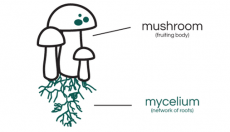
Mycelium is the living root network of a fungus — and without it, there would be no magic mushrooms. Whether you are new to cultivation or just curious about how fungi work, understanding mycelium helps you grow better and appreciate what is actually happening inside your grow kit.
Mycelium is the vegetative body of a fungus, made up of thousands of branching, thread-like structures called hyphae. It absorbs nutrients, colonises substrate, and eventually produces fruiting bodies — the mushrooms you harvest.
What Is Mycelium?
The word mycelium comes from the Greek mykes, meaning fungus. It refers to the entire network of hyphae — microscopic filaments just 1 to 30 micrometres wide — that make up the body of a fungus. While the mushroom is the visible fruiting body, mycelium is the organism itself. It is what colonises your substrate, breaks down nutrients, and triggers the formation of new mushrooms.
Think of it this way: if a mushroom is an apple, then mycelium is the entire apple tree. Most of the fungus is hidden below the surface, quietly doing the work that makes fruiting possible. In a magic mushroom grow kit, the white fluffy layer you see spreading across the substrate is healthy mycelium at work — not contamination.
How Does Mycelium Grow?
Mycelium grows by extending hyphae at their tips, pushing outward through the substrate in search of nutrients and moisture. Each hypha secretes enzymes that break down complex organic matter — cellulose, lignin, starch — into simpler compounds the fungus can absorb. This is why mycelium is so effective at colonising materials like rye grain, brown rice flour, and vermiculite, all common components in PF-tek substrates.
Growth speed depends heavily on temperature. For Psilocybe cubensis, the ideal colonisation temperature is around 26°C. Below 20°C, mycelium slows dramatically. Above 28°C, the risk of bacterial contamination rises sharply. Keeping conditions stable is the single most important factor for healthy mycelium growth — which is why mushroom growing temperature deserves careful attention.
A white, fluffy, rope-like appearance is a good sign. Healthy mycelium looks bright white and spreads evenly. Thin, wispy, or patchy growth may indicate stress. Green, black, or yellow patches are signs of contamination — discard affected material immediately.
Mycelium and the Substrate
The substrate is the growing medium that mycelium feeds on. In a ready-to-grow magic mushroom grow kit, the substrate — typically a mix of rye, vermiculite, and perlite — arrives already fully colonised. The mycelium is in a state of dormancy, held back by cold storage. Once you bring it to the right temperature, it wakes up and continues its work.
When the mycelium has completely colonised the substrate, the conditions shift to trigger fruiting. A slight temperature drop, increased humidity above 90%, and fresh air exchange all signal to the mycelium that it is time to form mushrooms. This transition from vegetative growth to fruiting is one of the most fascinating processes in mycology.
What Are Blue Spots on Mycelium?
One of the most common questions growers ask is about blue or blue-grey discolouration on the substrate or on the stems of picked mushrooms. This is called bruising, and it is completely normal. The blue colour comes from psilocin — one of the active compounds in magic mushrooms — oxidising on contact with air. In fact, bruising is a reliable sign that your mycelium is healthy and active.
To tell bruising from mould: wipe the area with a clean cotton swab. If the colour transfers to the swab, it is likely mould. If the blue stays on the substrate, it is bruising — no action needed.
Mycelium Beyond the Grow Kit
Mycelium is not only relevant to home cultivation. In forests, vast mycorrhizal networks connect tree roots underground, enabling trees to share water, carbon, and nutrients across distances of metres or even kilometres. Researchers from ETH Zurich have mapped these networks globally, confirming that up to 80% of trees in temperate forests are linked through mycelium — a phenomenon often called the wood wide web.
In ecosystems, mycelium plays a critical role in decomposition. It breaks down dead organic matter and returns carbon, nitrogen, and minerals to the soil. Without mycelium, forests would choke on their own debris. Mycologist Paul Stamets has argued in his widely viewed TED Talk that mycelium may even offer solutions to some of humanity's most pressing environmental challenges — from soil restoration to bioremediation.
Mycelium and Multiple Flushes
After you harvest your first flush of mushrooms, the mycelium is still alive and active. Given the right conditions — moisture, warmth, and fresh air — it will produce a second flush, and sometimes a third. This is why it is so important to pick mushrooms carefully, using a gentle twist-and-pull technique that minimises damage to the substrate surface. A damaged or torn surface can interrupt mycelium contact and reduce your next flush.
Once the mycelium has exhausted the nutrients in the substrate, it stops producing mushrooms. At that point, you can compost the spent substrate or, in some cases, use it outdoors in a moist shaded spot where further flushes may appear after rainfall.
Between flushes, keep your grow kit moist and at the right temperature. A brief soak in cold water — called dunking — can rehydrate the substrate and stimulate the mycelium to start a new fruiting cycle.
Mycelium in Advanced Cultivation
In advanced cultivation, growers work directly with mycelium rather than with spores. A liquid culture syringe contains live, active mycelium suspended in a sterile nutrient solution. Because the mycelium is already growing, it colonises substrate far faster than spores — typically within 7 to 14 days instead of 3 to 5 weeks. This speed also reduces the window for contamination, making liquid culture the preferred method for experienced cultivators.
Another route is grain-to-grain transfer, where fully colonised grain is mixed into fresh sterile substrate. The existing mycelium inoculates the new material from multiple contact points, achieving full colonisation quickly and consistently. This approach scales well for anyone producing larger volumes of mushrooms.
| Starting material | Spore vial, spore syringe, liquid culture, or grain spawn |
| Colonisation time (spores) | 3–5 weeks |
| Colonisation time (liquid culture) | 7–14 days |
| Ideal colonisation temperature | 26°C (79°F), dark environment |
| Signs of healthy mycelium | White, fluffy, even growth; possible blue bruising |
| Signs of contamination | Green, black, yellow, or pink patches; foul smell |
Ready to grow your own mushrooms? Browse our magic mushroom grow kits — fully colonised mycelium, ready to fruit.


November 30, 2017