
O seu carrinho de compras está vazio

Alice in Wonderland and Hallucinogens — Was It Really About Drugs?
Posted under: Psychedelic Culture
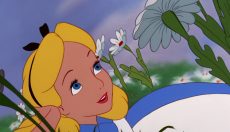
A disappearing cat. A smoking caterpillar on a mushroom. A girl who grows and shrinks after eating strange things. It sounds like a psychedelic trip — but is it? People have linked Alice in Wonderland and hallucinogens for decades. However, the real story behind Lewis Carroll's famous tale may surprise you. In this article, we look at the evidence, the myths, and the real mushroom connections.
In this article: We explore the drug theory behind Alice in Wonderland. We look at what historians actually say, how Jefferson Airplane built the psychedelic myth, and why real science makes this story even more interesting.
Alice in Wonderland: A Quick Recap
Alice's Adventures in Wonderland is a novel by Lewis Carroll. Carroll was the pen name of Charles Lutwidge Dodgson, a mathematics lecturer at Oxford. He published the story in 1865. It follows a young girl named Alice who falls down a rabbit hole into a bizarre world. There she meets strange characters, changes size, and struggles to make sense of a place where nothing is normal.
The book stood apart from everything before it. Most children's literature of the 1860s carried a moral lesson. Alice, on the other hand, offered pure imagination — playful, absurd, and full of wordplay. That made it unusual for its time. And that is also what made people wonder: did drugs inspire this story?
The Psychedelic Scenes Everyone Talks About
Read Alice in Wonderland through a modern lens, and several scenes feel psychedelic. Here are the most famous ones:
Listed together, the psychedelic reading seems obvious. But is it accurate?
What the Experts Actually Say
The short answer: most historians and scholars say no. Alice in Wonderland probably had nothing to do with drugs.
Dr. Heather Worthington, a Children's Literature lecturer at Cardiff University, studied this question in depth. She told the BBC: "The notion that the surreal aspects of the text are the consequence of drug-fuelled dreams resonates with a culture where recreational drugs are commonplace."
In other words, the drug theory says more about the reader than about the author.
Did Lewis Carroll Use Drugs?
No historical evidence shows that Carroll used drugs recreationally. His personal diaries are extensive. They mention no use of opium, laudanum, or any psychoactive substance for fun. This matters because many Victorian-era writers did use drugs openly. Samuel Taylor Coleridge composed "Kubla Khan" under laudanum. Charles Dickens and Bram Stoker both used opium-based medicines.
Carroll may have taken laudanum occasionally — a common Victorian painkiller. However, nothing connects hallucinogenic substances to any part of Alice's adventures. New York City museum curator Carolyn Vega confirmed this after studying Carroll's original manuscripts and letters. Nobody ever proved that Carroll used LSD or any hallucinogen. In fact, Albert Hofmann did not synthesise LSD until 1938 — over 70 years after the book came out.
Richard Jenkyns, professor at Oxford University, wrote in Prospect magazine that Alice in Wonderland is "probably the most purely child-centered book ever written." According to scholars, Carroll had only one goal: to entertain.
So Why Do People Believe the Drug Theory?
If the evidence points away from drugs, why does the myth persist? Three main reasons explain it.
Jefferson Airplane's "White Rabbit"
The biggest reason is the 1967 Jefferson Airplane song "White Rabbit." Grace Slick wrote the song. She used Alice imagery to describe psychedelic drug experiences. The opening line — "One pill makes you larger, and one pill makes you small" — refers to both Alice's size changes and to LSD or psilocybin.
Slick explained her personal connection: "I identified with Alice. I went from the planned, bland '50s to being in a rock band without looking back. It was my Alice moment, heading down the hole."
Bassist Jack Casady added: "The idea of taking psychedelic drugs to open you up — that was part of the environment." The song became a psychedelic anthem. It permanently fused Alice in Wonderland with drug culture.
The Disney Film
Walt Disney's 1951 animated adaptation made the story even more surreal. Swirling colours, morphing shapes, and exaggerated characters gave the film a dreamlike quality. To later audiences raised on psychedelic culture, it looked like a visual trip. Disney made the psychedelic reading of Alice feel real — even though Carroll wrote the book nearly 100 years before LSD existed.
The Human Brain Sees Patterns
Here is the deeper reason. The text is "unusual, innovative, and hard to grasp," as Worthington explains. So readers look for a simple explanation. Drugs provide that explanation. The truth — that Carroll played with logic, language, and absurdity — is harder to put in a headline. As one scholar put it: "Turning to the author offers simplicity and excitement simultaneously."
The Real Mushroom Connection
Carroll probably did not write Alice under the influence of mushrooms. Still, genuine connections between Alice in Wonderland and psychoactive fungi exist.
Amanita Muscaria in Victorian England
The red-and-white spotted mushroom — Amanita muscaria, or fly agaric — was well-known in Victorian Britain. People saw it as the classic "fairy mushroom" in folklore and illustrations. Nobody has proved that Carroll ate fly agaric. But the mushroom's cultural presence means he almost certainly knew what it looked like. Some scholars think the Caterpillar's mushroom may come from this iconic fungus — even if the link is visual, not experiential.
Alice in Wonderland Syndrome — A Real Medical Condition
In 1955, psychiatrist John Todd named a neurological condition Alice in Wonderland syndrome (AIWS) after Carroll's story. People with AIWS see objects as much smaller (micropsia) or much larger (macropsia) than they really are. They may also feel their own body changing size. Time may seem to speed up or slow down.
Migraines, viral infections, and epilepsy most commonly trigger AIWS. But people have also reported it after using psychedelics like LSD and psilocybin. Carroll himself suffered from migraines. This has led some researchers to wonder: did his own migraine episodes inspire Alice's size changes? If so, the connection is neurological, not pharmacological. Carroll may have experienced AIWS naturally — without any drugs.
Fun fact: Psilocybin — the active compound in magic mushrooms — can produce effects very similar to AIWS. Users often report micropsia, macropsia, distorted time, and a feeling that their body is growing or shrinking. The overlap with Alice's adventures is real. It is just probably a coincidence, not a cause.
Alice in Wonderland and Hallucinogens: The Verdict
Did hallucinogens inspire Alice in Wonderland? Almost certainly not. No proof shows that Lewis Carroll used psychedelic drugs. He wrote the book decades before LSD, psilocybin, or any modern hallucinogen entered popular awareness. The experts agree: Carroll was a mathematician, a storyteller, and a man who wanted to make a child laugh.
But here is the beautiful paradox. Alice in Wonderland describes the psychedelic experience more accurately than almost any other work of fiction. The size changes, the identity confusion, the distorted time, the dissolving boundaries — psilocybin users recognise these things instantly.
Perhaps that is the real magic. Carroll did not need mushrooms to create Wonderland. His imagination alone was enough. And yet, for millions of people who have tried psychedelics, Alice feels like one of their own — a fellow traveller who fell down the rabbit hole and came back to tell the story.
Curious about the real magic behind mushrooms? Explore our blog for the latest research, growing guides, and strain reviews.


March 23, 2026