Votre panier est vide.
Albert Hofmann — Le père du LSD et pionnier de la psilocybine
Publié sous: Histoire & Pionniers
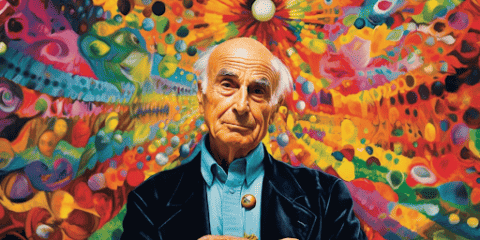
Albert Hofmann est un nom qui résonne à travers l'histoire de la science — et dans l'esprit de tous ceux qui se sont un jour interrogés sur la conscience. Né le 11 janvier 1906 à Baden, en Suisse, ce chimiste discret et méticuleux est devenu le père du LSD — et, on le sait aujourd'hui, bien plus encore. Ses découvertes n'ont pas seulement bouleversé la chimie. Elles ont ouvert un débat que le monde poursuit encore aujourd'hui.
L'essentiel en bref
| Naissance | 11 janvier 1906, Baden, Suisse |
| Décès | 29 avril 2008, Burg im Leimental, Suisse (à 102 ans) |
| Connu pour | Première synthèse et première ingestion de LSD ; isolement de la psilocybine et de la psilocine |
| Formation | Doctorat en chimie, Université de Zurich (1929) |
| Employeur | Laboratoires Sandoz, Bâle (1929–1971) |
| Citation célèbre | « Le LSD est un médicament pour l'âme. » |
Albert Hofmann : un esprit curieux dès le départ
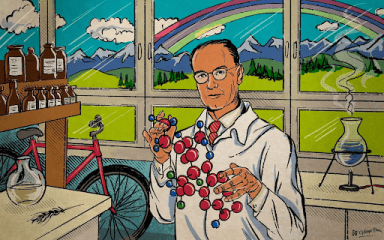
Dès son plus jeune âge, Albert Hofmann était attiré par le monde naturel d'une manière qui dépassait la simple curiosité. Il a plus tard décrit un moment de son enfance, lors d'une randonnée dans la campagne suisse, comme une sorte d'expérience mystique — un sentiment soudain et écrasant d'unité avec la nature. Cette sensation ne l'a plus jamais quitté. Il était même convaincu qu'elle était à l'origine de tout ce qui a suivi.
Après avoir obtenu son doctorat de chimie à l'Université de Zurich — avec une thèse sur la structure chimique de la chitine (la matière qui compose la carapace des insectes et des crustacés) —, Hofmann a rejoint les laboratoires Sandoz à Bâle en 1929. Il avait 23 ans. Ses premières recherches y portaient sur la scille maritime et sur les alcaloïdes de l'ergot de seigle, deux sources prometteuses de nouveaux médicaments. Grâce à ces travaux, il a mis au point plusieurs médicaments importants, dont l'hydergine (pour les troubles circulatoires), la dihydroergotamine (contre les migraines) et la méthergine (utilisée pour traiter les hémorragies après l'accouchement) — tous encore utilisés en clinique aujourd'hui.
Albert Hofmann nourrissait aussi un amour profond et sincère pour les Alpes suisses. Ses randonnées régulières en montagne n'étaient pas de simples loisirs — c'était pour lui une forme de contemplation. Ce lien avec la nature a discrètement façonné sa manière de faire de la science : l'émerveillement d'abord, la méthode ensuite.
Comment Albert Hofmann a découvert le LSD
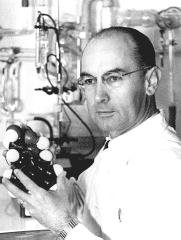
En 1938, alors qu'il passait méthodiquement en revue des dérivés de l'acide lysergique à la recherche d'un stimulant circulatoire, Albert Hofmann a synthétisé le 25e composé de la série : le diéthylamide de l'acide lysergique, ou LSD-25. Les premiers tests sur les animaux n'ayant rien révélé de remarquable, la substance a été mise de côté. Cinq ans ont passé.
Puis, le 16 avril 1943, il s'est produit quelque chose d'inattendu. En resynthétisant le LSD-25, Hofmann en a absorbé accidentellement une infime quantité par le bout des doigts. Dans l'après-midi, il a ressenti d'étranges perturbations visuelles et un état proche du rêve. Plus intrigué qu'inquiet, il a décidé d'aller plus loin.
Trois jours plus tard — le 19 avril 1943 — Hofmann a volontairement ingéré 250 microgrammes de LSD, pensant qu'il s'agissait d'une dose prudente. C'était en réalité une dose très forte. À 16 h 20, il a noté des vertiges, des distorsions visuelles et une envie irrépressible de rire. Rapidement, l'expérience est devenue envahissante. Il a demandé à son assistante de laboratoire de l'accompagner chez lui — et comme les restrictions de guerre interdisaient l'usage de la voiture privée, ils sont rentrés à vélo à travers les rues de Bâle. Cette balade à vélo d'une dizaine de kilomètres est aujourd'hui l'un des moments les plus célèbres de l'histoire de la science, célébré chaque année lors du Bicycle Day.
Une fois chez lui, l'expérience d'Hofmann s'est considérablement intensifiée. Il a écrit plus tard avoir vécu « la désintégration du monde extérieur et la dissolution de mon ego » — et avoir craint qu'un démon ne se soit emparé de lui. Pourtant, au matin, il s'est réveillé frais et dispos, avec un profond sentiment de gratitude et d'émerveillement. Il a décrit le monde comme « nouvellement créé ». Le médecin, appelé à son chevet la veille au soir, n'avait constaté aucun symptôme physique anormal, hormis des pupilles dilatées.
Le savais-tu ? Le LSD est environ 10 000 fois plus puissant que la mescaline. Les 250 microgrammes pris par Albert Hofmann — une fraction infime de gramme — représentaient pourtant une forte dose de psychédélique, quels que soient les critères.
Bien plus que le LSD : le lien avec la psilocybine
Ce que beaucoup de gens ignorent, c'est que la contribution d'Albert Hofmann à la science des psychédéliques va bien au-delà du LSD. À la fin des années 1950, l'ethnomycologue R. Gordon Wasson avait rapporté en Europe des échantillons de Psilocybe mexicana — les champignons sacrés utilisés lors des cérémonies mazatèques au Mexique. Ces échantillons ont fini par arriver dans le laboratoire d'Hofmann chez Sandoz.
En 1958, Hofmann et ses collègues ont réussi à isoler et synthétiser la psilocybine et la psilocine, les deux principaux composés psychoactifs des champignons magiques. C'était une étape majeure : pour la première fois, le principe actif des « champignons magiques » avait un nom, une structure chimique, et pouvait être reproduit de manière fiable en laboratoire. Sandoz a commencé à distribuer le composé de synthèse — commercialisé sous le nom d'Indocybin — à des instituts de recherche et des cliniques psychiatriques du monde entier. Cette diffusion a lancé des décennies de recherche clinique sur la thérapie à la psilocybine.
En 1962, Hofmann et Wasson se sont rendus au Mexique pour rencontrer María Sabina, la curandera mazatèque qui avait initié Wasson aux cérémonies du champignon. Lors d'une cérémonie rituelle, Hofmann a donné à Sabina et aux autres participants des pilules de psilocybine de synthèse. Son verdict, rendu à l'aube après une nuit entière de cérémonie : il n'y avait aucune différence entre les pilules et les champignons naturels. Pour Hofmann, c'était la preuve ultime que sa synthèse en laboratoire était identique à celle de la nature. Ce fut aussi un moment profondément marquant — un scientifique occidental recevant la confirmation d'une guérisseuse indigène qui travaillait avec ces plantes depuis des décennies.
Au-delà de la psilocybine, Albert Hofmann s'est aussi intéressé à l'
(des graines de volubilis utilisées lors des cérémonies aztèques), dont il a découvert que les composés actifs étaient étroitement apparentés au LSD — une trouvaille si surprenante qu'elle a d'abord été accueillie par des accusations de fraude scientifique, avant d'être confirmée de manière indépendante. Il a également co-écrit The Road to Eleusis (1978), une théorie fascinante selon laquelle les mystères d'Éleusis, dans la Grèce antique, reposaient sur un breuvage psychédélique issu de céréales contaminées par l'ergot de seigle. Résultat : Hofmann est devenu l'une des figures les plus influentes de l'ethnobotanique et de la pharmacologie des psychédéliques — et pas seulement de la chimie.
La philosophie d'Albert Hofmann : comprendre avant d'expérimenter
Albert Hofmann était profondément mal à l'aise face à la contre-culture des années 1960, qui a adopté le LSD comme outil récréatif. Il a vu la substance qu'il avait étudiée et documentée avec tant de soin devenir un symbole de rébellion — et, selon lui, être détournée de son usage. Il n'a jamais nié la puissance du LSD. Au contraire, c'est précisément cette puissance qui, selon lui, exigeait respect, préparation et accompagnement.
Pour autant, il ne prônait pas la prohibition. Lors de la célébration de ses 100 ans en 2006 — en présence d'environ 2 000 chercheurs, scientifiques, artistes et historiens —, Hofmann s'est exprimé publiquement sur le potentiel du LSD. Il a déclaré : « Il m'a apporté une joie intérieure, une ouverture d'esprit, de la gratitude, des yeux ouverts et une sensibilité intérieure aux miracles de la création. Je pense qu'à aucun moment de l'évolution humaine il n'a été aussi nécessaire d'avoir cette substance, le LSD. Ce n'est qu'un outil pour nous transformer en ce que nous sommes censés être. »
Il décrivait constamment le LSD comme un « médicament pour l'âme » — une formule qui a remarquablement bien vieilli au regard des recherches actuelles. Albert Hofmann estimait en outre que l'expérience psychédélique, abordée en pleine conscience, pouvait offrir ce qui manque souvent à la vie moderne : un sentiment direct et vécu de connexion avec le monde vivant. Il n'était pas un gourou et ne prétendait pas avoir toutes les réponses. C'était un scientifique qui avait entrevu quelque chose d'extraordinaire et qui a passé le reste de sa longue vie à essayer de le comprendre honnêtement.
⚠️ Albert Hofmann a toujours souligné que le contexte, la préparation et l'accompagnement sont essentiels lorsqu'on travaille avec des substances psychédéliques. Il a toujours critiqué les usages sans encadrement et sans information — et il avait de bonnes raisons de le faire.
L'héritage d'Albert Hofmann : une renaissance qu'il a contribué à lancer
Albert Hofmann est mort le 29 avril 2008, à l'âge de 102 ans, chez lui à Burg im Leimental, en Suisse. Il avait pris du LSD à de nombreuses reprises au cours de sa vie et n'a jamais cessé de plaider pour une étude responsable de cette substance. Mais son héritage ne s'est pas arrêté avec lui — il continue même de s'accélérer.
La renaissance psychédélique du XXIe siècle est, à bien des égards, l'histoire qu'Hofmann espérait voir raconter. Les recherches cliniques ont donné des résultats frappants pour la dépression résistante, l'anxiété de fin de vie, le SSPT et les addictions. La FDA américaine a accordé le statut de Breakthrough Therapy (« thérapie innovante ») à des traitements à base de psilocybine et de LSD — une reconnaissance officielle du fait que ces substances pourraient offrir des avantages significatifs par rapport aux thérapies existantes. Des institutions comme le Johns Hopkins Center for Psychedelic and Consciousness Research et la MAPS (Multidisciplinary Association for Psychedelic Studies) mènent des essais cliniques en cours, et des milliards de financements de recherche ont suivi.
Par ailleurs, la synthèse de la psilocybine réalisée par Albert Hofmann en 1958 sert aujourd'hui de socle à tout un champ de recherche sur les champignons. Grâce à ce travail fondateur, on comprend comment la psilocybine agit sur les récepteurs de la sérotonine, comment elle favorise la neuroplasticité, et pourquoi elle peut provoquer ces profondes « expériences mystiques » que les chercheurs relient aujourd'hui directement aux résultats thérapeutiques. C'est une filiation scientifique remarquable — d'un laboratoire de Bâle dans les années 1950 jusqu'aux études d'imagerie cérébrale et aux essais cliniques de phase 3 d'aujourd'hui.
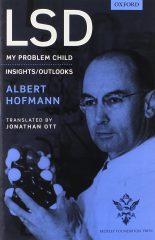
Il a également signé plus de 100 articles scientifiques au cours de sa carrière. Son autobiographie, LSD: My Problem Child (1979), reste l'un des livres les plus importants et les plus honnêtes jamais écrits sur les psychédéliques — à la fois comme ouvrage scientifique et comme réflexion personnelle. Hofmann y qualifie le LSD de son « enfant à problèmes », non par regret, mais avec les sentiments partagés d'un parent qui voit un enfant doué trébucher dans un monde qui n'était pas prêt pour lui. Aujourd'hui, le monde est peut-être enfin en train de le rattraper.
Pour aller plus loin
Pour approfondir tout ce qui touche à Hofmann, voici quelques lectures recommandées :
Albert Hofmann : science, nature et vie intérieure
L'histoire d'Albert Hofmann, c'est au fond celle d'une vraie curiosité qui rencontre une vraie humilité. Il ne cherchait pas à changer le monde. Il cherchait à comprendre les plantes, les champignons et les molécules qu'ils produisent. Pourtant, ce faisant, il a ouvert sur la conscience humaine une fenêtre que personne n'avait jamais ouverte avant lui — et au lieu de reculer, il a passé toute sa vie à regarder à travers elle, d'un œil lucide et l'esprit ouvert.
Son travail sur la psilocybine et les champignons magiques est au cœur de ce que nous faisons chez Magic-Mushrooms-Shop.com. Comme Albert Hofmann, nous pensons que ces substances méritent d'être comprises avant d'être expérimentées — et que cette compréhension passe par la connaissance, le respect et un regard honnête sur la science. Ainsi, alors que la renaissance psychédélique continue de prendre de l'ampleur, son nom reste là pour rappeler tout ce qui est possible quand la curiosité et la bienveillance travaillent main dans la main.
⚠️ Remarque importante : si tu souffres d'un trouble de santé mentale et que la thérapie assistée par la psilocybine t'intrigue, consulte d'abord un professionnel de santé qualifié. Ne t'automédique pas. Il est essentiel d'être bien entouré et accompagné lorsqu'on explore les psychédéliques comme médicament.
Tu es curieux de découvrir les composés qu'Albert Hofmann a contribué à mettre au jour ? Explore nos guides sur la psilocybine, les champignons magiques et le Bicycle Day — ou jette un œil à nos
pour commencer ton propre voyage vers la compréhension.


Septembre 12, 2023