
Votre panier est vide.

Redondo : le pop surréalisme psychédélique de Buenos Aires
Publié sous: Culture psychédélique
Portrait d'artiste : Redondo, pop surréalisme psychédélique depuis Buenos Aires (mise à jour 2026)
Buenos Aires est depuis longtemps l'une des villes les plus fertiles d'Amérique latine sur le plan créatif : un lieu où l'histoire de l'art européen, les traditions indigènes et une sensibilité typiquement argentine se rencontrent et se recombinent de façon inattendue. Juan Ángel, l'artiste connu sous le nom de Redondo, est le pur produit de cet environnement. Son travail puise dans un éventail de sources étonnamment large, des peintres classiques européens au tatouage, des fresques murales de rue à l'illustration numérique, et les fusionne en quelque chose d'incontestablement personnel.
Portrait d'artiste : Redondo est un artiste pluridisciplinaire installé à Buenos Aires. Son travail mêle peinture, illustration, street art, sculpture, aérographe et médias numériques dans un style qui allie Low Brow art, pop surréalisme, influences classiques et esthétique du tatouage traditionnel.
Son univers visuel d'inspiration psychédélique lui a valu des commandes commerciales et éditoriales sur plusieurs continents.
| Nom complet | Juan Ángel (Redondo) |
| Basé à | Buenos Aires, Argentine |
| Style | Low Brow, pop surréalisme, classique avec des touches modernes, tatouage traditionnel |
| Techniques | Peinture, illustration, aérographe, sculpture, street art, numérique, animation |
| Influences majeures | Hermenegildo Sabat, Modigliani, Mucha, Klimt, Martin Emond, Sam Kieth |
| Clients commerciaux | MTV (États-Unis), Editorial Atlántida (Argentine), Expand Magazine (Allemagne), WildCat (Angleterre) |
Un artiste autodidacte aux racines classiques
Redondo se définit comme plástica / elástica : plastique, élastique, polyvalent. Il est en grande partie autodidacte, ce qui a donné à son évolution un caractère organique, façonnée par la curiosité plutôt que par l'institution. Pourtant, son travail révèle un engagement profond envers la tradition classique européenne. Les lignes fluides et les figures allongées d'Amedeo Modigliani, le symbolisme décoratif d'Alphonse Mucha et la sensualité dorée de Gustav Klimt sont autant d'influences lisibles, mais Redondo ne se contente pas de les reproduire. Il les compresse avec l'esthétique plus brute du Low Brow et de l'art outsider, pour produire quelque chose d'une tout autre énergie.
Cette capacité à synthétiser des influences contradictoires, le raffiné et le street, le classique et le transgressif, est l'une des caractéristiques essentielles de l'œuvre de Redondo. Là où beaucoup d'artistes de la tradition psychédélique penchent vers le cosmique et le grandiose, Redondo se tourne vers l'intime et le personnage. Ses figures sont souvent étranges et légèrement dérangeantes, saisies dans des états émotionnels ou symboliques qui résistent à toute lecture facile.
Low Brow, pop surréalisme et esthétique psychédélique
Le Low Brow art, aussi appelé pop surréalisme, est né des comics underground, de la culture hot rod et des scènes de street art contre-culturelles de la Californie des années 1970 et 1980. Parmi ses figures clés, on trouve Robert Williams, Mark Ryden et Gary Baseman. Ce style rejetait les prétentions du monde de l'art institutionnel au profit d'œuvres accessibles, irrévérencieuses et profondément ancrées dans l'imagerie populaire et sous-culturelle.
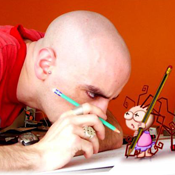
Le Low Brow art entretient aussi des affinités naturelles avec l'expérience psychédélique. Les échelles déformées, les métamorphoses surréalistes, les personnages pris entre deux états d'être : tout cela fait écho au type de pensée visuelle que les états de conscience modifiés peuvent stimuler. Redondo s'inscrit résolument dans cette tradition tout en y apportant une sensibilité typique de Buenos Aires et ses propres références classiques.
Parmi ses influences, on compte Martin Emond, dessinateur de comics néo-zélandais dont les dessins troublants et techniquement magistraux explorent la relation entre beauté et violence ; Sam Kieth, créateur de The Maxx, connu pour ses comics psychologiquement complexes et visuellement inventifs ; et Joe Scarano, dont la maîtrise technique de l'illustration a été citée par Redondo comme formatrice. Du côté classique, l'expressionnisme étiré de Modigliani, le symbolisme stylisé de Mucha et l'érotisme orné de Klimt offrent un autre type de vocabulaire, que Redondo tisse dans son imagerie de rue avec une incongruité assumée.
Travaux commerciaux : MTV, Editorial Atlántida et au-delà
Le style distinctif de Redondo a attiré une attention commerciale considérable. Sa liste de clients comprend MTV aux États-Unis, Editorial Atlántida en Argentine (l'une des maisons d'édition les plus importantes d'Amérique latine), Expand Magazine en Allemagne, WildCat en Angleterre et PielMag en Argentine. Il a également travaillé comme concept artist et character designer pour le cinéma et la publicité, ce qui prouve que son langage visuel dépasse les murs de la galerie et les pages du carnet de croquis.
Cette polyvalence commerciale en dit long sur l'approche de Redondo. Ce n'est pas un artiste qui crée pour un seul contexte. Sa capacité à appliquer son esthétique à l'illustration, à la sculpture, au street art, à l'aérographe et à l'animation numérique permet à ses images d'exister dans des cadres radicalement différents sans perdre leur caractère essentiel.
Street art et œuvres publiques
Comme beaucoup d'artistes issus du Low Brow et du pop surréalisme, Redondo travaille à la frontière entre la galerie et la rue. La peinture murale et le street art font partie de sa pratique : ils amènent son imagerie dans l'espace public et remettent en question l'idée que l'art serait réservé aux galeries et aux collectionneurs. Buenos Aires possède une tradition particulièrement riche de street art et de muralisme, et le travail de Redondo s'y inscrit naturellement tout en l'enrichissant de ses propres références interculturelles.

Croiser les personnages de Redondo sur un mur, en grand format, frontaux, chargés de symboles et de personnalité, n'a rien à voir avec la découverte de ses illustrations de plus petit format. L'échelle change le sens, et Redondo l'a clairement compris. Dans un contexte mural, ses figures deviennent des présences dans la ville plutôt que des objets dans une pièce.
Art psychédélique : une conversation mondiale
L'œuvre de Redondo se situe au croisement de plusieurs traditions artistiques, et l'esthétique psychédélique en fait partie, non pas pour documenter littéralement des expériences de drogue, mais comme une pensée visuelle qui fonctionne en dehors des catégories perceptives habituelles. Ses figures déformées, son symbolisme complexe et sa volonté de mêler le beau et l'inquiétant reflètent un mode de création d'images que la conscience psychédélique a toujours favorisé.
Cela relie Redondo à une communauté mondiale d'artistes qui explorent un territoire similaire. Comme le montre l'aperçu des mouvements d'art psychédélique de Widewalls, la tradition visionnaire traverse les continents et les cultures. Android Jones dans le Colorado, Alex Grey à New York, Robert Venosa en Europe : tous viennent d'horizons culturels et utilisent des techniques différents, mais partagent une orientation vers le visionnaire, le symbolique et le potentiel transformateur de l'art. Notre portrait de Terence McKenna explore la façon dont l'un des penseurs majeurs de la culture psychédélique concevait la relation entre états modifiés de conscience et expression artistique.
Chez Magic Mushrooms Shop, nous mettons à l'honneur des artistes comme Redondo parce que leur travail nous rappelle que la culture psychédélique ne se résume pas aux substances : c'est aussi une qualité d'attention particulière, une envie de voir autrement et un engagement à faire entrer cette autre façon de voir dans le monde grâce au savoir-faire. Pour en savoir plus sur les dimensions artistiques et culturelles de l'expérience psychédélique, notre guide sur les champignons et l'esprit mérite le détour.
Où découvrir le travail de Redondo
Le travail de Redondo couvre des supports physiques et numériques, et se retrouve sur différentes plateformes. Sa production continue d'évoluer, et il reste actif dans l'illustration, le street art et les commandes commerciales. Son langage visuel, façonné à parts égales par les rues de Buenos Aires et la tradition classique européenne, continue d'évoluer de manière difficile à prévoir et, justement pour cette raison, à suivre de près.
Tu es inspiré par l'art psychédélique ? Explore toi-même l'univers de la psilocybine avec nos
et nos
, livrés discrètement depuis Amsterdam.
Remarque : si tu souffres d'une maladie mentale et que tu es curieux d'utiliser la psilocybine ou toute autre thérapie psychédélique, consulte d'abord un professionnel de santé compétent. Ne t'auto-médique pas : il est essentiel d'être bien entouré et accompagné lorsque tu utilises des psychédéliques comme médicament.


Mars 13, 2012