
O seu carrinho de compras está vazio
What All Psychedelics Have in Common — The Largest Brain Study Ever
Posted under: Psilocybin Science & News
Published April 2026 · Psilocybin Science & News · 7 min read
In this article: In April 2026, the largest psychedelic brain study ever published appeared in Nature Medicine. Researchers from five countries scanned more than 500 brain sessions. They found that psilocybin, LSD, mescaline, DMT, and ayahuasca all do the same two things to the human brain — despite being completely different molecules.
Here is what they found, why it matters, and what it means for the future of magic mushroom research.
For decades, researchers studied each psychedelic in isolation. One lab worked on psilocybin. Another on LSD. Another on ayahuasca. The results were interesting, but difficult to compare. Every study used different methods, different brain parcellations, different analysis pipelines. The picture was fragmented.
That changed on 6 April 2026. An international team led by Danilo Bzdok, Associate Professor at McGill University's Department of Biomedical Engineering, published a landmark psychedelic brain study in Nature Medicine. For the first time, researchers pooled data from 11 independent studies across three continents and five countries — and ran everything through one unified analysis.
The result was the clearest picture yet of what psychedelics actually do to the human brain.
The Biggest Psychedelic Brain Study Ever Done
The numbers alone tell part of the story. The team analysed more than 500 brain imaging sessions from 267 unique participants. They studied five classic psychedelic substances: psilocybin (the active compound in magic mushrooms), LSD, mescaline, DMT, and ayahuasca — the DMT-containing brew used in Amazonian ceremonies.
All five substances are different at the molecular level. They come from different plants and fungi. They have different durations, different intensities, different cultural histories. And yet, when you look at what they do inside the human brain using functional MRI, a strikingly consistent pattern appears.
"This is a breakthrough in how we think about psychedelic drugs," said senior author Danilo Bzdok. "For the first time, we show there's a common denominator among drugs that we currently consider completely separate."
| Study published | Nature Medicine, 6 April 2026 |
| Lead institution | McGill University, Canada (+ 5 countries) |
| Datasets pooled | 11 independent resting-state fMRI studies |
| Brain scan sessions | 500+ |
| Unique participants | 267 |
| Substances studied | Psilocybin, LSD, mescaline, DMT, ayahuasca |
Two Things Happen in the Brain — Every Time
The psychedelic brain study identified two consistent changes in brain function that appeared across all five substances. They are not identical for every drug — there are some drug-specific differences — but the core pattern holds regardless of which psychedelic you take.
1. Brain networks become less rigid internally
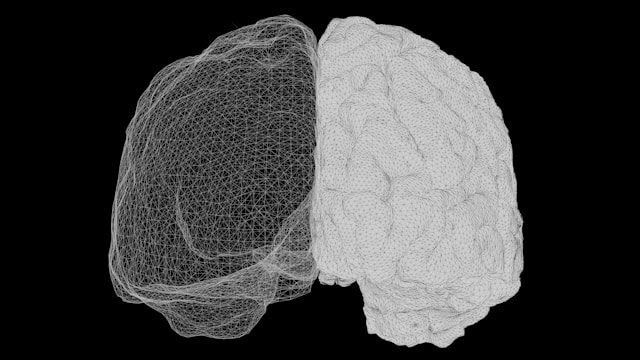
Normally, your brain is organised into tightly connected networks. Each network has its own job. The visual network processes what you see. The default mode network handles your sense of self, memory, and daydreaming. The frontoparietal network manages focused attention and decision-making. Under normal conditions, each network largely talks to itself.
Under psychedelics, the internal connections within these networks weaken. The networks become less rigidly structured. This is not damage — it is a temporary loosening of the brain's usual organisational habits. Researchers describe it as flattening the brain's processing hierarchy.
This loosening is directly linked to what people experience during a psychedelic session: the sense that fixed ideas are dissolving, that usual boundaries between thoughts and feelings have softened, that things look or feel unfamiliar in interesting ways. It is also connected to what researchers call ego dissolution — the feeling that the sense of "self" has temporarily stepped aside.
2. Brain networks start talking to each other
At the same time, connections between different networks increase significantly. Networks that rarely exchange signals begin communicating freely. In particular, the study found strong and consistent increases in connectivity between:
In plain language: the parts of the brain that deal with meaning, emotion, and self-concept start connecting directly with the parts that process sight, sound, and bodily sensation. This is thought to explain hallucinations and synesthesia — the blending of senses that many people describe during a psychedelic experience.
The study also found that key subcortical structures — especially the caudate, putamen, and thalamus — showed altered coupling with sensory areas. These regions are involved in movement control, reward processing, and the gating of sensory information. Their involvement points to altered corticostriatal signalling as one of the clearest features of the psychedelic brain state.
In simple terms: Psychedelics temporarily loosen your brain's internal organisation and open new channels of communication between areas that normally work separately. The result is a more fluid, connected, and boundary-free experience — and potentially, a more flexible mind.
What About the "Ego Dissolution" Everyone Talks About?
The default mode network (DMN) is the brain system most closely linked to your sense of self. It is most active when you are not focused on a specific task — when you are daydreaming, ruminating, or thinking about who you are and what you want. In conditions like depression, the DMN often becomes overactive, keeping people locked in repetitive, self-critical thought loops.
Previous studies suggested that psychedelics caused widespread "disintegration" of the DMN — essentially switching it off. This new mega-analysis tells a more nuanced story. Yes, within-network connectivity in the DMN does decrease under psychedelics, but the effect is weaker and more selective than earlier single-site studies suggested.
What is more robust and consistent is the increase in connections between the DMN and sensory networks. The DMN does not simply go quiet — it opens up. It begins exchanging information with parts of the brain it normally keeps at a distance. This may be why so many people describe a psychedelic session not as a void, but as a feeling of deep connection — to the world, to others, to something larger than themselves.
For a deeper look at how this connects to the therapeutic effects of psilocybin, read our guide to mushrooms and the mind.
Does It Matter Which Psychedelic You Take?
Yes — and no. The shared neural fingerprint is real and robust. But the study also found drug-specific differences at the subnetwork level.
Psilocybin and LSD (the two substances with the largest samples in the study) showed virtually identical network-level effects. This is consistent with what many experienced users report: the two substances feel similar in character, even though LSD is synthetic and psilocybin is found in Psilocybe cubensis mushrooms and related species.
DMT and ayahuasca showed overlapping but somewhat distinct profiles, particularly in how subcortical structures like the thalamus were engaged. This makes sense: ayahuasca contains beta-carbolines that slow the metabolism of DMT, changing both the duration and character of the experience.
Mescaline, the psychedelic compound in peyote and San Pedro cactus, showed the core pattern but with different specificity in some subnetworks.
The key takeaway: the mechanism is shared, but the precise shape of the experience differs. This is important for clinical research, where matching the right substance to the right condition may eventually become part of precision medicine.
Why This Psychedelic Brain Study Matters for Therapy
For years, one of the criticisms of psychedelic research was its fragmentation. Each study was small. Each used its own methods. It was hard to draw firm conclusions. Regulators and clinicians needed reliable, reproducible evidence across large samples.
This study directly addresses that gap. By pooling 11 datasets into a single Bayesian hierarchical analysis, the team produced what lead author Manesh Girn described as "the most comprehensive, probabilistically grounded map of psychedelic brain action to date." It helps resolve inconsistencies and gives the field a solid benchmark to build on.
For companies like Compass Pathways, which is preparing to file the first-ever psilocybin drug application (COMP360) with the US FDA later in 2026, this kind of neuroimaging evidence is directly relevant. Regulators want to understand why these substances work, not just that they work. This psychedelic brain study provides a clear, peer-reviewed answer.
It also opens up the possibility of using brain connectivity as a biomarker — a measurable signal that could help clinicians predict who is most likely to respond to psilocybin-assisted therapy, and at what dose. That would be a major step forward for conditions like treatment-resistant depression, where individual responses to psilocybin vary widely.
Related: Read our overview of how psychedelics are transforming mental health treatment — including the latest clinical trial results and regulatory developments in 2026.
What This Means for Magic Mushrooms Specifically
Of the five substances studied, psilocybin — the active compound in magic mushrooms — produced one of the largest and most consistent brain connectivity profiles in the dataset. This is partly because more psilocybin neuroimaging data exists than for any other classic psychedelic, but it also reflects the substance's potent and reliable effect on the brain networks in question.
The finding that psilocybin and LSD produce virtually identical connectivity patterns is notable. It suggests that the mechanism underlying therapeutic outcomes — the loosening of network rigidity, the cross-network integration — is not unique to mushrooms. But psilocybin's natural origin, shorter duration (4–6 hours vs 8–12 for LSD), and lower cardiovascular impact make it the preferred compound for clinical research.
For people who grow their own mushrooms at home using a magic mushroom grow kit, or who use magic truffles for intentional experiences, this research adds important context. The brain effects you are working with are not random or mysterious. They follow a consistent and now well-mapped pattern. Understanding that pattern can help you approach any experience with greater clarity and intention.
For those interested in lower doses, our guide to microdosing psilocybin explains how sub-perceptual doses may gently engage some of the same neuroplasticity mechanisms — without a full psychedelic experience.
The Science Keeps Accelerating
This psychedelic brain study lands at a remarkable moment. In the same week it was published, the New York Times reported that an estimated 11 million Americans used psilocybin in the past year — a 44% increase since 2019. The US Senate in Connecticut voted 35-0 to expand a psilocybin pilot programme. And New York State moved to open psilocybin therapy to all adults, not just veterans.
The science and the social change are moving together. Studies like this one provide the neurological foundation that regulators, clinicians, and policymakers need to act. The psychedelic renaissance is no longer just a cultural story — it is a science story, backed by the best journals in the world.
For context on where the law stands today, read our detailed post on psilocybin legalisation in 2026. And for a closer look at what a real psilocybin brain experiment looks like in practice, see our post on the Michael Mosley BBC psilocybin brain experiment.
Important: If you live with a mental health condition and are interested in psilocybin therapy, please speak with a qualified medical professional first. Do not self-prescribe. The research is promising — but clinical supervision makes all the difference.
Ready to explore responsibly? Browse our magic mushroom grow kits and magic truffles — and always start with our responsible use guide.


April 10, 2026