O seu carrinho de compras está vazio
The Healing Power of Magic Mushrooms: What Psilocybin Research Says in 2026
Posted under: Psilocybin Science & News
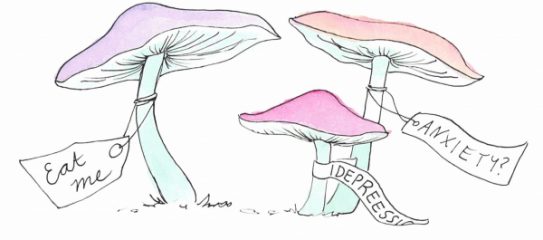
What clinical research says about the healing power of magic mushrooms — psilocybin for depression, PTSD, addiction, and end-of-life distress. Updated for 2026.
In this guide: An honest look at the healing power of magic mushrooms and what clinical research says about psilocybin. We cover depression, PTSD, addiction, end-of-life distress, and OCD — all with references to key studies.
Below, we explain the science in plain language. At the same time, we stay transparent about the limits. Psilocybin remains unapproved in most countries, and research continues.
Something significant is happening in psychiatric research. For decades, most classification systems listed psilocybin as having "no accepted medical use." Now, however, the compound sits at the centre of closely watched clinical trials around the world. Major institutions — Johns Hopkins, Imperial College London, NYU, and UCSF — have all published results that draw serious attention from scientists, regulators, and the public alike.
This article explores the healing power of magic mushrooms as studied in clinical settings. Specifically, we look at how psilocybin works in the brain and what trials currently suggest about its potential. For a broader introduction to the compound, see our guide on what magic mushrooms are.
Important: Nothing in this article constitutes medical advice. All research described here involves supervised clinical settings with trained professionals. Psilocybin has no regulatory approval as a treatment in most countries. Always consult a qualified medical professional before considering any psychedelic substance.
| Conditions under study | Depression, PTSD, addiction, OCD, end-of-life distress |
| FDA status (USA) | Breakthrough Therapy designation for depression (2018, 2019). No approved product yet. |
| Australia | Authorised for supervised psychiatric use since July 2023 |
| Oregon & Colorado (USA) | Regulated psilocybin service frameworks operational since 2023/2024 |
| Key research centres | Johns Hopkins, Imperial College London, NYU, UCSF |
| Typical trial design | 1–3 guided sessions with extensive preparation and integration |
How Psilocybin Works in the Brain
Before looking at specific conditions, it helps to understand what psilocybin does at a neurological level. As we explain in our guide on mushrooms and the mind, psilocybin binds to serotonin 5-HT2A receptors. This temporarily quiets the default mode network (DMN) — the brain system linked to rumination and repetitive self-referential thinking.

In addition, research suggests psilocybin promotes neuroplasticity. In other words, the brain forms new connections more easily. A 2025 review by Yale researchers noted that even a single dose may produce measurable changes in neural connectivity. Brain scans show these changes persisting for weeks.
Consequently, researchers believe this dual action — disrupting rigid patterns while boosting flexibility — may explain lasting shifts in perspective. However, the exact mechanisms remain under investigation. Although promising, the science has not yet reached firm conclusions.
The Healing Power of Magic Mushrooms for Depression
Depression represents the most advanced area of psilocybin research. Treatment-resistant depression — where two or more antidepressants have failed — affects millions globally. As a result, it remains one of psychiatry's greatest unmet needs.
Key Findings So Far
A widely cited 2021 phase 2 trial in The New England Journal of Medicine compared psilocybin to escitalopram (a standard SSRI) over six weeks. Both groups improved. On secondary measures, the psilocybin group reported faster onset and greater emotional well-being. Nevertheless, the primary outcome measure did not reach statistical significance.
Compass Pathways then ran a larger Phase 3 trial, publishing results in 2025. Here, the 25 mg psilocybin group showed meaningful reductions in depressive symptoms. Yet the primary endpoint again fell short of statistical significance. Researchers described the outcome as "inconclusive," although secondary measures pointed toward a real effect.
Meanwhile, a 2024 randomised trial in JAMA Network Open found significant, sustained reductions in depression among healthcare workers receiving psilocybin therapy. Most participants maintained improvement at six months.
In response to early promise, the FDA granted Breakthrough Therapy designation in 2018 and 2019. This fast-track status signals that the agency sees preliminary evidence of substantial improvement. Importantly, it does not mean the FDA has approved psilocybin. Instead, it means the agency prioritises further trials.
PTSD: Early-Stage Research
Post-traumatic stress disorder involves rigid activation of traumatic memories and an overactive fear circuit. In theory, psilocybin's ability to promote neural flexibility could help people process trauma with less avoidance.
So far, MDMA-assisted therapy has progressed further in PTSD trials. Still, psilocybin research for this condition is expanding. Early-phase studies suggest possible reductions in symptom severity. Furthermore, the 2024 JAMA trial found numerically larger PTSD improvements in the psilocybin group. However, the study design did not allow formal testing of this particular endpoint.
Importantly, psilocybin and MDMA appear to work through different pathways. Therefore, they may eventually serve different patients or different phases of recovery. For broader context, see our article on psychedelics and mental health.
Psilocybin and Addiction: What Studies Suggest
Some of the most intriguing findings about the healing power of magic mushrooms come from addiction research. Two areas have received particular attention.
Tobacco
At Johns Hopkins, Matthew Johnson led a pilot study on psilocybin-assisted smoking cessation. A significant majority of participants quit smoking. Moreover, the quit rates far exceeded those seen with standard approaches. At 12-month follow-up, many remained abstinent. A larger randomised trial is now underway to confirm these preliminary findings.
Alcohol
In 2022, researchers at NYU published a randomised trial in JAMA Psychiatry. Two psilocybin sessions produced significant reductions in heavy drinking days compared to a non-psychoactive control. In addition, participants reported improved quality of life. Although notable, these results still require replication in larger studies.
For more on this topic, see our article on psychedelics and addiction.
End-of-Life Distress and Existential Anxiety
Perhaps the most emotionally powerful psilocybin research involves people facing a terminal diagnosis. Several trials have studied the compound for cancer-related anxiety and depression.
In a 2016 Johns Hopkins study, cancer patients received a single psilocybin session. Researchers observed significant reductions in anxiety and depression scores. These effects persisted at six-month follow-up. Notably, over 80% of participants described the experience as one of the five most meaningful of their lives. A parallel NYU study reached similar conclusions.
More recently, the EU-funded PsyPal trial began enrolling patients across four European centres in 2025. This includes University Medical Center Groningen in the Netherlands. Essentially, PsyPal investigates psilocybin therapy for people with progressive, life-limiting illnesses.
Researchers describe the therapeutic effect as an "existential shift." Rather than removing fear entirely, psilocybin appears to reduce existential terror and increase acceptance. This shift seems linked to the profound experiences the compound can produce in a supported setting.
OCD and Other Areas Under Investigation
Beyond the conditions above, researchers also study psilocybin for obsessive-compulsive disorder (OCD), eating disorders, and chronic pain. For OCD specifically, early open-label trials found reductions in symptom severity lasting beyond the acute session. Researchers hypothesise that psilocybin interrupts compulsive thought loops. Nevertheless, these remain very early findings, and much larger trials must follow.
As the American Psychological Association noted in 2025, psychedelic research is expanding rapidly. Yet translating laboratory results into standard clinical practice takes time and careful work.
Regulatory Landscape in 2026
Over recent years, the regulatory picture for psilocybin has changed considerably. Below is the current state of play:
Even with this progress, broadly available psilocybin therapy remains distant. No guarantee of widespread approval exists. Furthermore, the cost and logistics of supervised therapy present significant access barriers.
Why Context Matters: The Healing Power of Magic Mushrooms Depends on Setting
One of the most consistent findings across all psilocybin research is that context matters enormously. Preparation, physical environment, psychological support, and integration afterward all shape the outcome.
Without proper preparation and support, psilocybin produces different — and generally less positive — outcomes. For this reason, every clinical trial pairs the compound with trained facilitators, thorough preparation, and follow-up integration. Neither the substance nor the setting alone delivers the result. Instead, both must work together.
For more on this critical concept, our post on set and setting explores the psychological dimensions in depth. If you are curious about lower-dose approaches, also see our guide to what microdosing is and how to microdose magic truffles.
Key takeaway: The healing power of magic mushrooms, as studied in clinical research, never comes from the compound alone. Preparation, professional guidance, and integration form essential parts of every protocol. If you explore psilocybin personally, always prioritise safety and support.
Want to learn more about magic mushrooms? Explore our range of magic truffles and microdosing products — shipped from Amsterdam since 2007.
Medical disclaimer: This article serves informational purposes only. Psilocybin lacks regulatory approval as a medicine in most countries. If you experience mental health difficulties, please consult a qualified healthcare professional. Do not self-prescribe psychedelic substances. All research here involves supervised clinical settings — results may not apply to unsupervised use.


March 23, 2026