
Votre panier est vide.

Demande à Mick : des taches bleues sur mon kit de culture de champignons magiques — bleuissement ou contamination ?
Publié sous: Culture & Cultivation
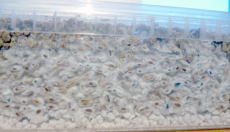
Demande à Mick : taches bleues sur mon kit de culture de champignons magiques — bleuissement normal ou contamination ? (Mise à jour 2026)
Tu jettes un œil à ton kit de culture de champignons magiques et tu remarques des taches bleues sur le mycélium ou sur le substrat. Ta première réaction, c'est sûrement l'inquiétude : y a-t-il un problème ? En bref : pas forcément. Les taches bleues sur un kit de culture de champignons magiques font partie des questions que nos clients nous posent le plus souvent, et dans la majorité des cas, la cause est totalement inoffensive. Mais mieux vaut savoir faire la différence entre un simple bleuissement et une vraie contamination. C'est justement le sujet de ce post « Demande à Mick ».
Dans cet article : Mick Mycelium t'explique ce qui provoque les taches bleues sur les kits de culture de champignons magiques, comment faire le test du coton-tige pour détecter une contamination, et à quel moment il faut vraiment s'inquiéter.
Tu trouveras aussi un guide clair des contaminants les plus courants pour les distinguer en toute confiance du bleuissement normal du mycélium.
La question
« Salut Mick, je cultive avec un kit de culture de champignons magiques depuis environ une semaine. Aujourd'hui, j'ai remarqué des taches bleues à la surface du bloc de mycélium. J'ai vraiment peur qu'il soit contaminé. Est-ce que je dois le jeter ? — Tom, Pays-Bas »
La réponse de Mick : que sont les taches bleues sur un kit de culture ?
Salut Tom, très bonne question, et pas de panique pour l'instant. Les taches bleues sur un kit de culture de champignons magiques sont presque toujours dues à un bleuissement naturel, et non à une contamination. Je t'explique ce qui se passe et comment en être sûr.
Le mycélium blanc qui colonise ton kit de culture contient de la psilocybine, le composé responsable des effets psychoactifs du champignon. Quand le mycélium est perturbé physiquement, meurtri ou stressé, il s'oxyde. Cette oxydation fait virer la zone touchée au bleu ou au bleu-vert. Le pigment en question s'appelle la quinone de psilocybine, et il s'agit d'une réaction chimique tout à fait naturelle.
Le bleuissement peut avoir plusieurs origines. Appuyer sur le sachet ou le presser le déclenche. Déplacer le kit fait cogner le bloc de mycélium à l'intérieur. Même la simple pression de la croissance contre les parois du sachet peut provoquer une coloration bleue. Dans tous ces cas, les taches bleues sont le signe d'un mycélium sain et riche en psilocybine — pas d'un problème.
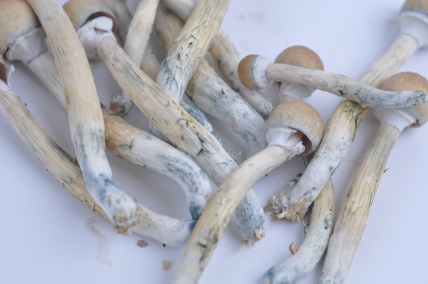
Pour mieux comprendre comment fonctionne le mycélium et pourquoi il réagit ainsi, notre article le mycélium expliqué détaille la biologie de façon accessible.
Alors, quand faut-il s'inquiéter ?
Le bleu est généralement sans danger. Les couleurs qui doivent vraiment t'alerter sont le vert, le noir, l'orange et le rose : ce sont celles des moisissures et des bactéries concurrentes. Voici un petit récapitulatif :
| Bleu / bleu-vert | Bleuissement normal — oxydation du mycélium. Aucun problème. |
| Vert vif | Moisissure Trichoderma — le contaminant le plus courant. À jeter immédiatement. |
| Noir ou gris foncé | Probablement Aspergillus ou une autre moisissure noire. À jeter immédiatement. |
| Zones humides orange ou jaunes | Contamination bactérienne (pourriture humide). À jeter immédiatement. |
| Zones roses ou rouges | Neurospora (moisissure du pain) ou infection bactérienne. À jeter immédiatement. |
| Blanc à l'aspect duveteux | Mycélium sain — c'est exactement ce que tu veux voir. |
La règle d'or : si la coloration est bleue et qu'elle s'estompe ou reste stable, c'est du bleuissement. Si tu vois n'importe quelle autre couleur — surtout du vert — agis vite. Pour un tour d'horizon complet des types de contamination et de leur aspect, consulte notre guide sur la contamination des kits de culture de champignons magiques.
Attention : n'ouvre jamais un kit de culture contaminé à l'intérieur. Les spores de moisissure se dispersent immédiatement dans l'air et peuvent contaminer d'autres kits, des surfaces, voire se loger dans ton système de ventilation. Referme le sachet et jette-le à l'extérieur.
Le test du coton-tige : comment examiner les taches bleues de plus près
Quand tu vois une tache bleue et que tu as un doute, le test du coton-tige est le moyen le plus simple de vérifier. Voici comment faire :

1
Prépare un coton-tige propre
Prépare un coton-tige propre
Prends un coton-tige stérile. Pas besoin de le stériliser à l'alcool pour ce test : un coton-tige neuf, sorti d'un paquet scellé, suffit.
2
Touche délicatement la tache bleue
Touche délicatement la tache bleue
Tamponne légèrement la zone bleue à travers le sachet de culture. N'appuie pas fort : tu vérifies simplement la texture, tu ne frottes pas. Si ton kit a un rabat ou une ouverture, tu peux toucher directement la tache, mais seulement si le kit est encore en phase de colonisation et que tu as les mains propres ou des gants.
3
Regarde ce qui reste sur le coton-tige
Regarde ce qui reste sur le coton-tige
Observe attentivement le bout du coton-tige. S'il est propre ou à peine teinté de bleu, c'est du bleuissement. S'il se charge d'une poudre ou d'une pâte colorée — surtout verte ou noire — c'est un contaminant. Les moisissures produisent des amas de spores visibles qui s'accrochent facilement au coton-tige. Pas le bleuissement.
4
Vérifie la texture de la tache
Vérifie la texture de la tache
Un mycélium bleui reste ferme et bien intégré au reste du bloc. Les zones contaminées sont souvent visqueuses, humides ou friables. Une zone molle et humide qui dégage une odeur aigre ou inhabituelle est presque toujours une contamination bactérienne, quelle que soit sa couleur.
Astuce : en cas de doute, prends une photo bien nette avec une bonne lumière et envoie-la à notre service client. On analyse des problèmes de kits de culture tous les jours et on peut généralement te donner une réponse fiable à partir d'une seule photo.
Pourquoi le bleuissement se produit-il — et est-ce que ça affecte les champignons ?
Le bleuissement se produit parce que le mycélium est un réseau vivant et que la psilocybine est un composé instable qui s'oxyde au contact de l'oxygène après une lésion des tissus. Pense à une meurtrissure sur un fruit : le tissu réagit à un choc physique, il ne pourrit pas.
La bonne nouvelle, c'est que le bleuissement n'abîme pas ton kit de culture et ne réduit pas la qualité des champignons qui en poussent. Les cultivateurs expérimentés remarquent même parfois qu'un mycélium bien colonisé qui bleuit fortement est souvent particulièrement vigoureux. La couleur bleue confirme simplement que ton kit contient bien les composés attendus.
À noter : les champignons eux-mêmes bleuissent aussi quand on les manipule. Tu verras peut-être des marques bleues sur les pieds après la cueillette. C'est normal et attendu. Notre article le mycélium expliqué détaille la science derrière ce phénomène.
Comment éviter un bleuissement inutile
Même si le bleuissement est inoffensif, tu peux le limiter en manipulant ton kit avec précaution pendant toute la culture. Ça aide aussi à garder le bloc intact et productif sur plusieurs récoltes (flushs).
Pour les bonnes pratiques d'hygiène qui protègent ton kit tout au long de sa vie, notre guide sur la stérilisation et la désinfection du matériel de culture te dit tout ce qu'il faut savoir pour garder ton espace de culture propre.
Et si les taches bleues continuent de s'étendre ?
Un bleuissement qui apparaît après avoir manipulé le kit se stabilise généralement et s'estompe en un jour ou deux. Si la coloration bleue s'étend activement sur le bloc sans cause physique évidente, mieux vaut surveiller ça de près.
Dans certains cas, un bleu qui s'étend peut indiquer que le mycélium est stressé — par exemple à cause de variations de température, d'un renouvellement d'air insuffisant ou d'un excès d'humidité. Commence par revoir tes conditions de culture. Vérifie que la température reste dans la plage recommandée et que le kit est suffisamment ventilé.
Si le bleu s'accompagne d'une autre couleur — même une petite tache verte ou orange — considère qu'il y a un risque de contamination et consulte notre guide de la contamination pour savoir quoi faire ensuite. Mieux vaut toujours réagir tôt si tu soupçonnes un problème.
En résumé : taches bleues sur un kit de culture de champignons magiques
| Cause des taches bleues | Oxydation de la psilocybine quand le mycélium est perturbé physiquement (bleuissement) |
| Est-ce dangereux ? | Non — le bleuissement est une réaction normale et inoffensive |
| Est-ce que ça réduit la qualité des champignons ? | Non |
| Comment tester | Test du coton-tige : le bleuissement ne laisse aucune couleur sur le coton-tige |
| Signes d'alerte | Zones vertes, noires, orange ou roses — elles indiquent une vraie contamination |
| Que faire en cas de contamination | Referme le sachet et jette-le immédiatement à l'extérieur |
Pour résumer : si tu vois des taches bleues sur ton kit de culture de champignons magiques, sans aucune autre couleur, sans odeur inhabituelle et sans texture humide ou visqueuse, ton kit va bien. Poursuis ta culture l'esprit tranquille. Le bleu, c'est simplement ton mycélium qui te montre qu'il est vivant et actif.
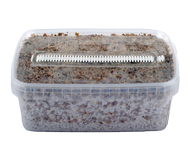
Tu te lances dans la culture avec un kit pour la première fois ?
— chacun est livré prêt à fructifier, avec un mode d'emploi complet.
Remarque : si tu souffres d'une maladie mentale et que tu es curieux de la psilocybine ou de toute autre thérapie psychédélique, demande d'abord conseil aux professionnels de santé compétents. Ne t'automédique pas : il est essentiel d'être bien accompagné et encadré quand on utilise des psychédéliques comme médicament.


Décembre 6, 2013